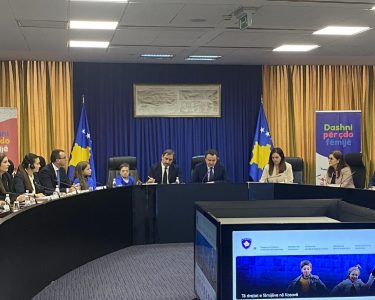

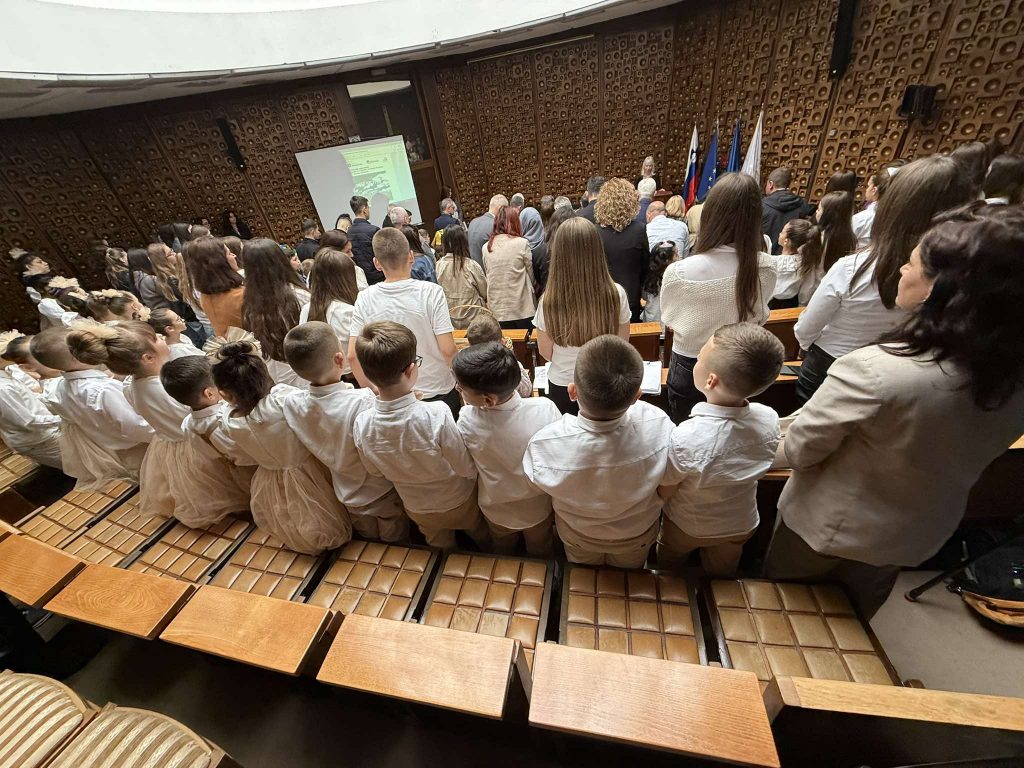
The Institute for the Promotion of Education (IPEDU), with the support of the Embassy of the Republic of Slovenia in Kosovo, organized a conference marking the 20th anniversary of the implementation of the project “Our Rights on Education for Children’s Rights in Kosovo.”
The event aimed to create a space for children and teachers to share experiences, achievements, and best practices developed throughout the project.
The Ambassador of Slovenia to Kosovo, Minca Benedejcic, stated that empowering children through human rights education is one of the key priorities of Slovenia’s foreign policy in the areas of human rights and youth empowerment.
“The aim of the ‘Our Rights’ project, based on the United Nations Convention on the Rights of the Child, is to enable young people, especially children in the phase of development and identity exploration, to learn about human rights, their own rights, the rights of children, and the importance of respecting the rights of others. Empowering children, especially through human rights education, is one of the key priorities of Slovenia’s foreign policy in the fields of human rights and youth empowerment… This year, the program includes children from non-majority Bosniak and Turkish communities, whom I particularly welcome, along with the teachers and representatives from their municipalities,” said Benedejcic.
According to Ambassador Benedejcic, IPEDU has shown excellent results in implementing the project over the past 20 years, empowering more than 100,000 children in 660 schools across Kosovo, including children from non-majority communities such as Bosniaks, Turks, Gorani, Roma, Ashkali, and Egyptians.
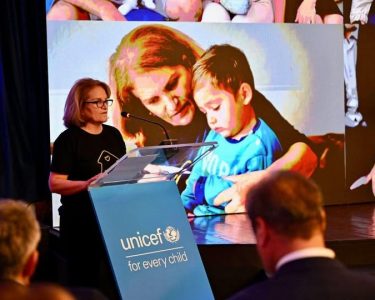
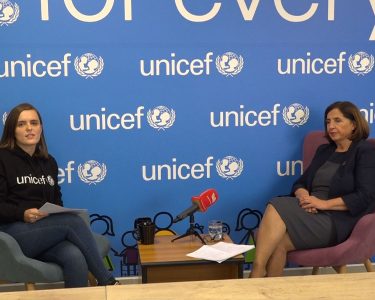
The Head of UNICEF in Kosovo, Veronika Vashchenko, stated that only one in three children with disabilities is enrolled in inclusive education.
She emphasized that many children from Roma, Ashkali, and Egyptian communities, as well as from other vulnerable groups, still face discrimination and often drop out of school.
Vashchenko called for increased access to early childhood education, as it remains limited, especially in rural areas.
“One in four children in Kosovo lives in poverty, with limited access to social services. Only one in three children with disabilities is enrolled in inclusive education. Many children—especially from Roma, Ashkali, and Egyptian communities, as well as other vulnerable groups—still face discrimination and very often drop out of school. Mental health among adolescents is a growing concern. At UNICEF, together with our partners, we are calling for increased access to early education, as it remains limited, particularly in rural areas… We must continue to strengthen inclusive education, ensuring that every child’s right is protected, regardless of origin, ability, ethnicity, or economic status,” Vashchenko emphasized.
She underlined that expanding social protection schemes to reduce poverty and increase family resilience is essential.
Meanwhile, Merita Jonuzi, representative of the Ministry of Education, Science, Technology and Innovation, said that the respect for children’s rights is the best indicator of a country’s level of democracy.
Arbesa Ismaili, a teacher at the “Mehmet Xhevori” elementary school in Prishtina, highlighted the importance of education in an environment that recognizes, respects, and empowers children’s rights.
“As a teacher and school psychologist, I experience every day how important and essential it is for children to attend school and live and grow in an environment that not only recognizes children’s rights but also respects and empowers them to protect those rights,” said Ismaili.
The “Our Rights” project has been implemented in Kosovo since the 2005/2006 school year and continues today, targeting children aged 9 to 13.
The aim of the project is to educate children about their rights through student booklets that include illustrations of 13 selected fundamental children’s rights, as well as specially designed guides for teachers.
The project’s implementation in Kosovo has developed in parallel with that in Slovenia and 25 other countries around the world, including children from Gaza and Roma children in several states.