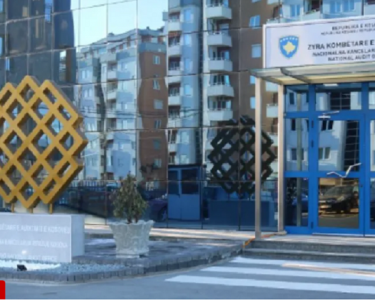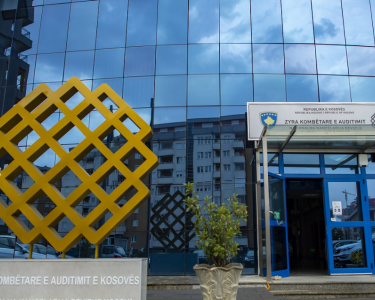
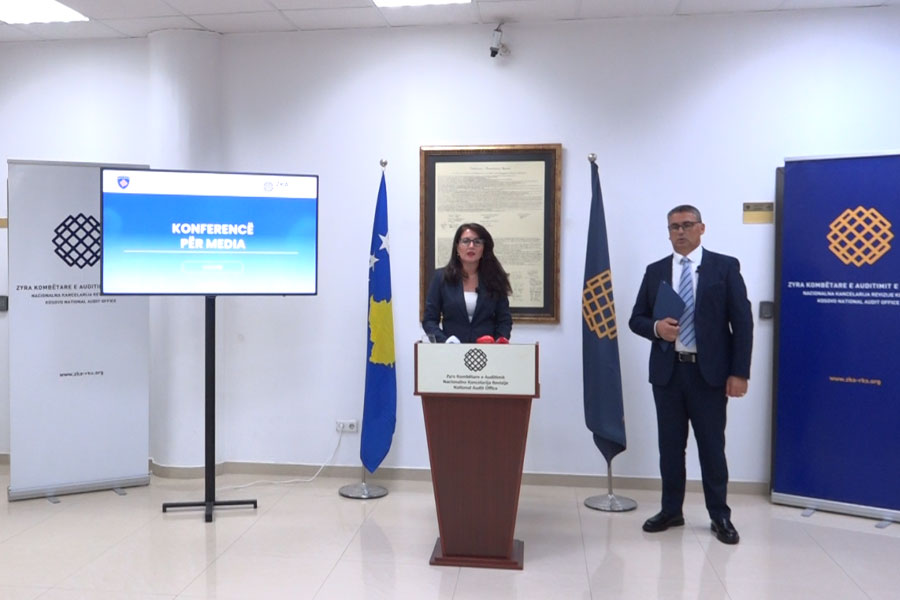
The National Audit Office (NAO) has sent 69 cases identified in 103 financial and compliance audit reports for the years 2024–2025 to the State Prosecutor’s Office. The cases mainly involve suspected violations and irregularities in public procurement, subsidies and transfers, capital investments, as well as salaries and allowances. According to the NAO, they have already received confirmation from the State Prosecutor’s Office that the raised cases have been forwarded to the respective prosecutor’s offices for further legal action.
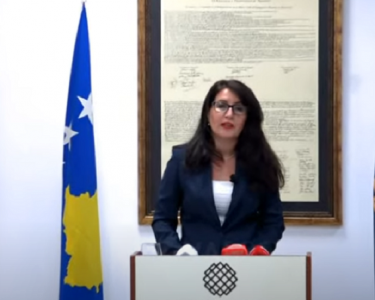
Deputy Auditor General Bezad Halilaj stated at a press conference on Wednesday that the number of recommendations issued increased from 817 to 945, but the implementation rate remained low, at only 37 percent, reflecting a regression in improving institutional practices.
“The National Audit Office (NAO) has forwarded a total of 69 cases identified in 103 financial and compliance audit reports for the 2024/2025 season to the State Prosecutor. These cases mainly concern suspected violations and irregularities in public procurement, subsidies and transfers, capital investments, and salaries and allowances. Specifically, the distribution of cases by area is: 37 cases in public procurement, 19 in subsidies and transfers, 8 in capital investments, 4 in salaries and allowances, and 1 in revenues. By type of institution, 47 cases come from municipalities, 12 from ministries, 7 from public enterprises, and 3 from other institutions. The NAO has already received confirmation from the State Prosecutor’s Office that all 69 cases have been submitted to the respective prosecutor’s offices for further legal action. According to the annual plan, after the publication of compliance and performance audit reports, newly identified cases will be analyzed and forwarded to the State Prosecutor in the coming months,” he said.
Meanwhile, Auditor General Vlora Spanca presented audit findings in three municipalities: Prishtina, Prizren, and Gjilan.
According to her, the findings show that these municipalities have demonstrated serious deficiencies in managing public assets.
“Our audit shows that the Municipality of Prishtina has shown serious deficiencies in managing public assets. This threatens legality, transparency, and public interest. The main findings identified are: the municipality has not properly managed properties under its administration, internal controls have not functioned, and the planning process has not been complete or transparent. An updated property register is missing, internal regulations have not been approved, and the 2024 list has not been approved by the municipal assembly. Cases were identified where property was given for use without following legal procedures or obtaining assembly approval. The audit conducted in the Municipality of Prizren revealed several deficiencies, such as: failure to meet legal deadlines by bidders and inaction by the municipality in enforcing bid security. Similarly, in the Municipality of Gjilan, the NAO identified several deficiencies, some of which include: over the years, the municipality has not respected legal requirements for granting the use of municipal property, providing some properties without municipal assembly approval and without public tender. These contracts are still valid. Some relate to the use of property by religious and sports institutions, and in two cases, the properties are used by two political entities,” she said.
Additionally, it was noted that procurement processes for public projects revealed deficiencies affecting transparency, competition, and efficient use of public funds.
It was also emphasized that in the audit of the System, Transmission, and Market Operator (KOSTT), deficiencies were identified during the testing phase of renewable energy producers, as well as in the process of organizing the trade of renewable energy and in the collection of revenues for the Fund.