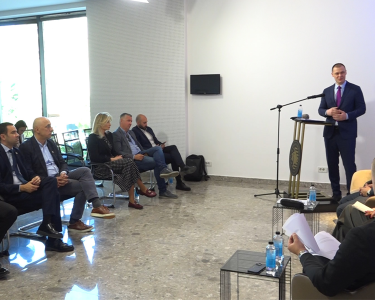
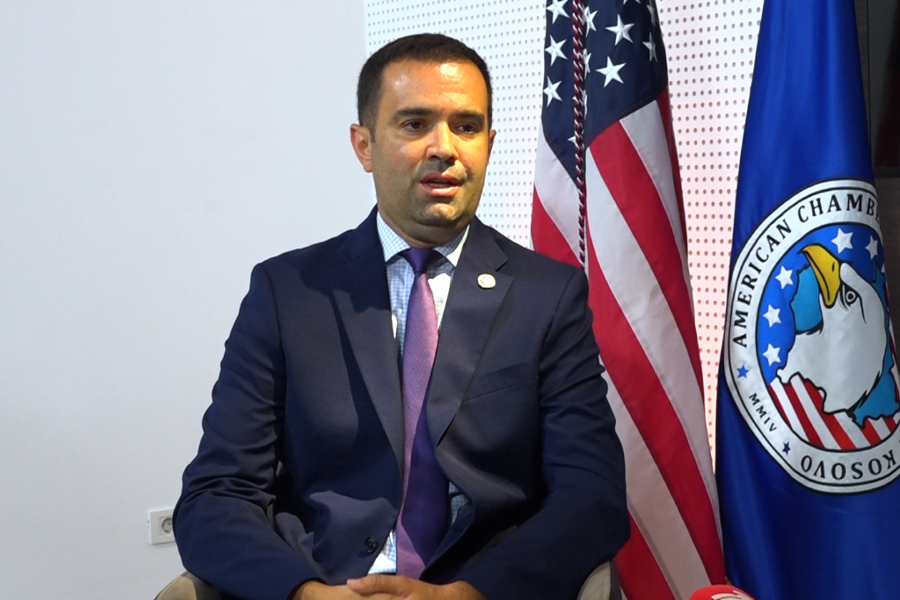
Political uncertainty and the lack of functional institutions are damaging the business climate in the country. This is what the Executive Director of the American Chamber of Commerce in Kosovo, Arian Zeka, says. According to him, delays in constituting the Assembly and forming a new Government are holding back economic reforms and fueling uncertainty among investors, KosovaPress reports.
In an interview for KosovaPress, Zeka underlines that the absence of functional institutions for more than six months has made it impossible to carry out legislative reforms, which are essential for improving the business environment.
“The biggest problem I see here is with business confidence. Since businesses, whether domestic or foreign investors, are waiting until new circumstances are created—circumstances that do not reflect legal uncertainty—the current situation naturally creates great legal uncertainty, even for domestic investors. Nobody wants to risk their capital under such conditions. It has now been more than six months since the parliamentary elections, and we still do not have a constituted Assembly, nor can we think about the creation of a new government. Under normal circumstances, the Government would amend laws, draft new laws, submit them to the Assembly, and the Assembly would assist in the process of reforming the business environment. In the current circumstances, reforming the business environment is simply not something from which we can expect any success,” Zeka emphasizes.
Zeka also speaks about the worsening trade deficit in Kosovo, highlighting the lack of stable fiscal policies over the past several years.
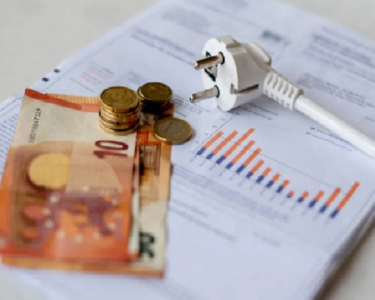
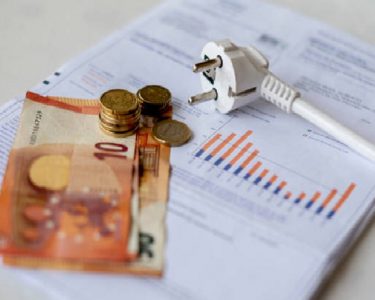
According to him, following the decision on the liberalization of the electricity market, there could be a relocation of businesses or their production activities to neighboring countries, which in turn would further deepen the trade deficit.
“From what we see in Customs data, and from regular reports published by Customs and the Kosovo Agency of Statistics, we see a worsening of the trade deficit. Following the decision on electricity market liberalization, the reduction or increase in operating costs for manufacturing businesses, the departure of some of them as announced, or the relocation of their production activities to neighboring countries, I expect the trade deficit to deepen further. Our industrial base will be reduced even more, local production activity will shrink further, and consequently our market will experience higher turnover or increased imports from other countries… In four years, we have not seen any substantial fiscal policy,” Zeka says.
He also criticizes the acting government for negligence in finalizing infrastructure projects and the lack of capital investments, describing this as a loss for the private sector and citizens.
“This is a concern we have raised for some time, knowing that capital investments are one of the two most important pillars influencing economic growth, which we have experienced over the past years. Therefore, it is irresponsible not to invest, not to channel taxpayers’ money into capital projects, which would generate greater economic multipliers. The private sector loses; the taxpayers lose, for as long as services provided to us, to the taxpayers, show no significant improvement. At the same time, we are witnessing a degradation of physical infrastructure or the non-completion of some projects that focused on physical infrastructure. We are talking about two or three highways that perhaps should have already been inaugurated during the first mandate,” Zeka says.
Furthermore, according to the head of this Chamber, the removal of customs duties for trade with the United States is expected to directly impact import growth and strengthen economic partnerships between Kosovar and American businesses.
Zeka emphasizes that this decision of the Government of Kosovo will have a positive echo in the U.S. market and could also pave the way for increased Kosovar exports in the future.
“Since customs duties have been removed for trade with that particular country, expectations now are that imports from the United States will increase. The strengthening of relations or partnerships between businesses in Kosovo and American businesses will inevitably contribute to greater promotion of Kosovo among the private sector in the U.S. This may also lead to an increase of American investments in Kosovo, but at the same time, building trust, strengthening trust between businesses here and there, as well as promoting this decision as a positive step undertaken by the Government of Kosovo in support of our economy and as a gesture of gratitude toward the United States of America for its strategic role, will inevitably have an echo in the United States. In the not-too-distant future, this could also result in an increase of Kosovo’s exports, especially if the same decision is followed by the United States of America,” Zeka said.
It should be noted that Kosovo’s acting Government has removed customs tariffs for the United States. All products originating from the U.S. will now have a zero percent tariff when entering Kosovo, as acting Prime Minister Albin Kurti announced during a government meeting on August 1.