
Hosting the 2030 Mediterranean Games in Prishtina is being considered one of the largest sports and development projects for Kosovo, with a direct impact not only on sports, but also on infrastructure, the economy, and the country’s international image.
Local institutions and international partners have already begun preparations and coordination efforts, viewing the event as a unique opportunity for Kosovo to present itself on the global stage and leave a long-term legacy.
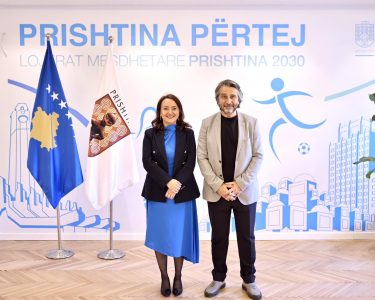
The Mayor of the Municipality of Prishtina, Përparim Rama, stressed the importance of commitment and institutional cooperation for the realization of this major project. He highlighted that organizing the Games requires time, great effort, and above all unity between the local and central governments and sports institutions, describing it as a once-in-a-lifetime opportunity that should be used to demonstrate the country’s progress.
“We are preparing for the organization of the 2030 Mediterranean Games. I think it was important for the whole team to see that this requires a lot of effort, it requires time, but above all it requires unity so that we work together — the local government, the central government, as well as the Olympic Committee — to organize these Games, because they may come only once in our lifetime. And we must use this opportunity to shine and show how much our country has progressed. Therefore, we will always remain grateful, and let us continue to cooperate despite the challenges we have with the central government. But the municipality continues to work and will move forward,” Rama emphasized.
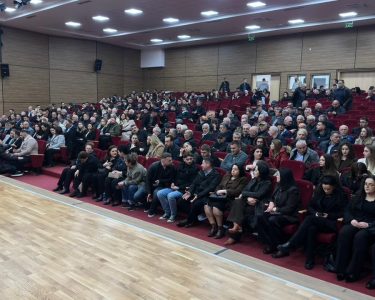
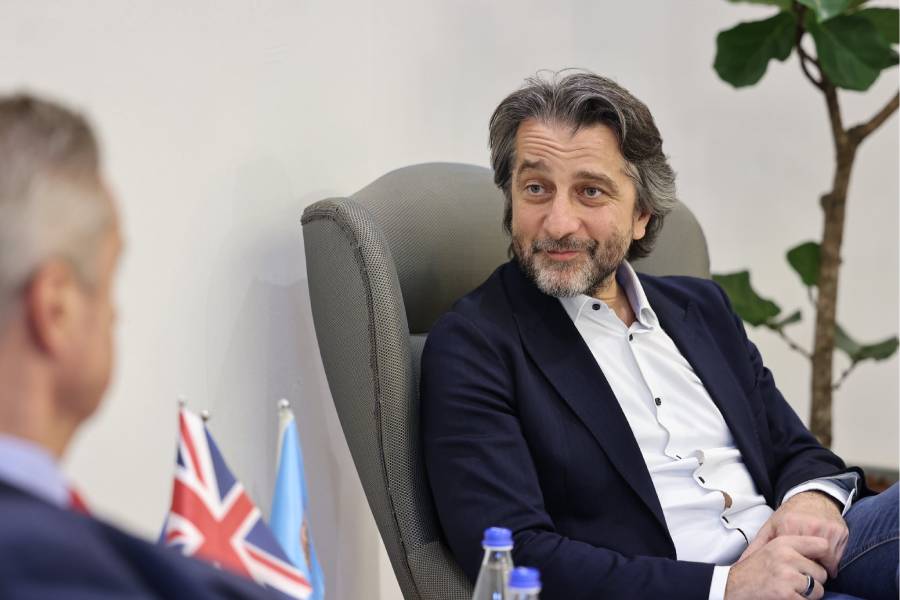
Rama made these remarks during a ceremony where the Municipality of Prishtina and the Embassy of the United Kingdom in Kosovo signed a memorandum of understanding in support of the prestigious Chevening Scholarships.
Meanwhile, the United Kingdom’s ambassador to Kosovo, Jonathan Hargreaves, focused on the importance of international cooperation and the experience that can be gained from organizing similar events.
He emphasized that meetings with British companies and the exchange of experiences are important for the preparations, while underlining the potential that Prishtina and Kosovo have to present themselves as a dynamic place with young people and development opportunities. He also stressed the long-term legacy these Games could leave behind.
“We were delighted to host you, the minister, and the president of the Committee in London, and to introduce you to several British companies with extensive experience in organizing similar Games. But it was also an opportunity to discuss the enormous potential for Prishtina and Kosovo, not only to present themselves as a dynamic place with young people, talent, and opportunities, but also the legacy that these Games will leave behind after 2030. And I think we still feel that in London since 2012. I believe we understand that this is, in a way, the real opportunity of these Games here. So let us continue to work on this together,” he said.
Meanwhile, preparations for the 2030 Mediterranean Games have also gained new momentum on the institutional level. Recently, the Assembly of Kosovo approved a special law for the organization of the Mediterranean Games, creating the legal basis for financing, infrastructure construction, and interinstitutional coordination.
This step is considered crucial for the smooth implementation of the project, as it defines the responsibilities of institutions and guarantees sustainable state support through 2030.
In this way, Kosovo aims not only to successfully host a major international sporting event, but also to build a long-term legacy in sports and urban development.