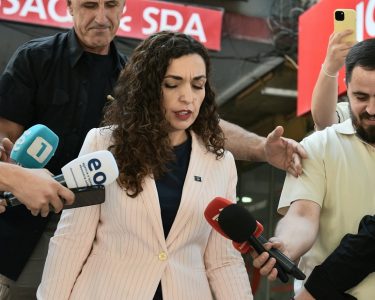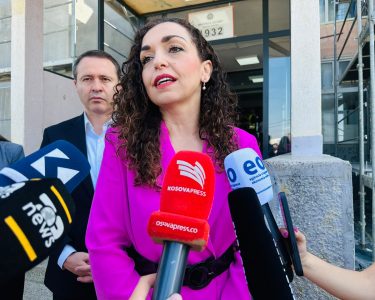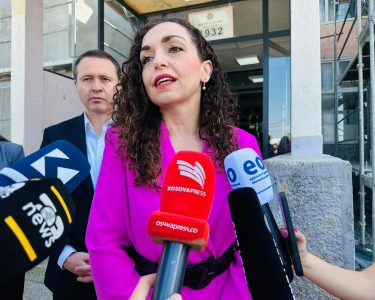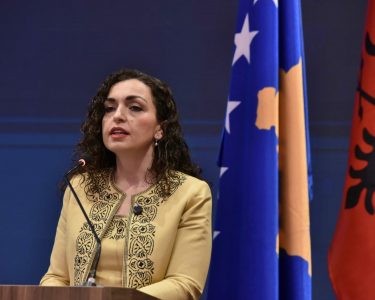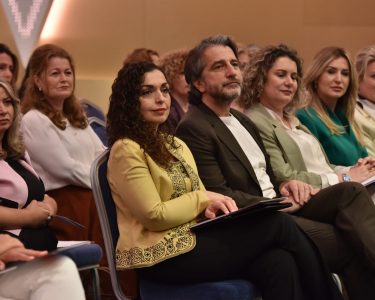

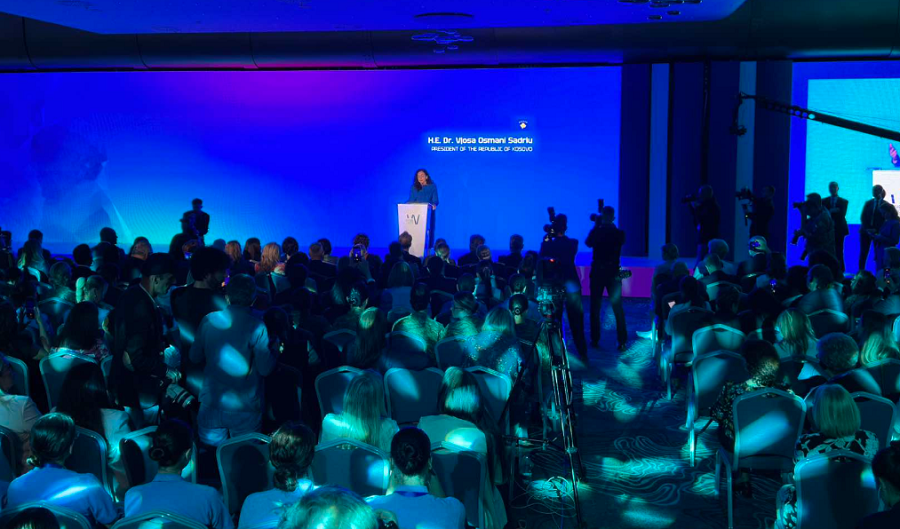
In Pristina, the third edition of the International Forum for Women, Peace, and Security has begun today, under the theme “The Security Code for Our Generation.” Around 150 speakers from 45 countries across the globe are taking part in this forum. At the opening ceremony, the need to address the wounds of war was emphasized, with this year’s theme described as a call for peace. Following the initial remarks, President Vjosa Osmani awarded presidential medals to the Mothers of Srebrenica.
Osmani said that more than two decades ago, the children of Kosovo witnessed and endured the horrors of war.
“A little more than two decades ago, the children of this country saw horrors that no child should ever experience, and mothers lost and buried their children as a result of war. And yet, in the darkest of hours, it was the women of this country who kept our broken hearts united. As you know, they never accepted to be seen as victims, but as builders — builders of peace. They fought not only for our freedom, but also for justice, dignity, and a future worth living. And they continue to do so every single day. The stories that raised the children of Kosovo were not ordinary childhood tales, but stories shaped by war. Stories of women who stitched together what war tried to tear apart. Of children who clung to their books while hiding from bombings and sniper fire. Of shattered dreams — and yet, despite the broken dreams, of hope and unwavering belief, of neighbors becoming shields, and of that unbearable silence after every explosion, where the only sound was the heartbeat of a mother searching for her child,” Osmani said.
Referring to this year’s theme, “The Security Code for Our Generation,” Osmani said it is a call to break the cycles of violence and build peace.
At the forum’s opening, the head of state said wars leave behind intergenerational damage.
“It’s the silent harm to a child’s sense of security. The invisible wound carried by young minds. It’s the unbearable pain of losing a parent, a sibling, a loved one, a home, of becoming a refugee. And as we heard today from our peacebuilders — even witnessing the rape of one’s own mother — that pain never fades. These are the questions that remain unanswered. These are the futures that never fully take shape. Children carry the burden of war into adulthood. But children are not just victims — they are also the future builders of peace, future presidents, defenders of justice. So if we don’t invest in them today, we allow conflict to shape tomorrow. That is why this forum exists. To amplify the voices that war tried to silence. To empower those who refused to be broken. To build a future where others tried to sow fear and pain,” Osmani added.
President Vjosa Osmani told attendees that Kosovo is living proof of how a nation can rise from ashes and transform trauma and violence into strength.
Meanwhile, the head of state of Antigua and Barbuda, Governor-General Rodney Williams, said that the wounds of war do not end when the war ends.
“Your nation’s journey from conflict to confidence is a testament to the power of perseverance and purpose. That we meet on this land, once devastated by war and now striving for peace, is not lost on any of us. It reminds us that peace is never a coincidence. It is earned, defended, and sustained through vision, inclusion, and courage. As a physician and head of state, I’ve long observed that peace and health are deeply interconnected. Neither is simply the absence of illness or conflict, but the presence of balance, dignity, and hope. Whether treating trauma in a clinic or advocating for justice in a nation, the mission is the same — to restore wholeness,” he stated.
At the forum’s opening, he said that while preparing for his speech, he was moved by the stories of survivors of sexual violence during the war in Kosovo.
“In preparing for this speech, I revisited Kosovo’s history and was especially moved by the legacy of President Atifete Jahjaga, Kosovo’s first female president. Her courageous decision to center the voices of survivors of sexual violence in the national healing process was not merely symbolic — it was structural. She demonstrated what leadership can look like and what peace must include. Today we talk about global security, but we must also talk about local wounds, because the trauma of war does not end when the war ends. It stays in homes, in classrooms, in the minds of children who stop dreaming, and in women who carry silent scars. Post-traumatic stress does not affect only soldiers — it seeps into the everyday lives of our communities,” he said.
NATO Secretary-General’s Special Representative, Irene Fellin, said women’s participation in peace mediation enables the achievement of agreements.
“When we talk about inclusion, we talk about women’s right to contribute to society. And when we look at it from an operational perspective, we understand that this is not just a moral issue, but a strategic choice — because it is connected to our mission. From our operational experiences, we have learned that we cannot achieve our objectives if we do not take into account the different perspectives and needs of women and men. When we plan an operation, we must plan it based on gender principles. And this brings us back to what I said earlier: training and preparation, to be ready in case of any developments. If we want to go beyond NATO’s core tasks, which are prevention and protection, then we must remember what we have learned from our research: women’s participation in peace mediation and negotiations increases the chances of achieving peace, and makes peace agreements more sustainable. And this for a simple reason, women bring a different perspective,” she declared.
The Chairwoman of the Albanian Parliament, Elisa Spiropali, said that women and children always pay the heaviest price of war.
“Despite the unspeakable atrocities committed by the Milosevic regime, Kosovo never fell prey to blind revenge. On the contrary, it worked tirelessly to turn pain into strength, to end wars and avoid conflict, and it invested in the freedom and sovereignty of nations and peoples.
The reality that this forum speaks of today speaks for itself. It reflects the profound desire and deep humanity of the people of Kosovo, their commitment to peace, and to empowering women in all spheres of life — including as builders of peace and guarantors of security,” she stated.
The International Forum for Women, Peace, and Security is organized under the leadership of President Vjosa Osmani.
Over the course of today and tomorrow, more than 30 discussion panels will be held with over 150 speakers.
This is the third edition of the forum, with the central theme being “The Security Code for Our Generation.”