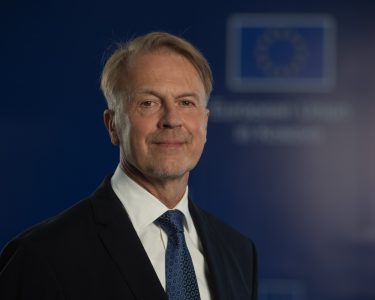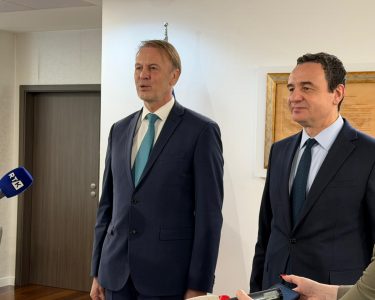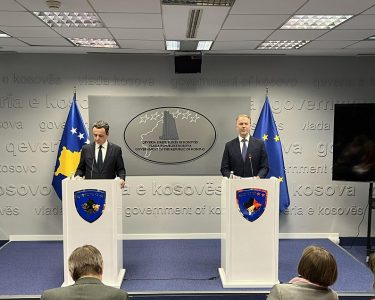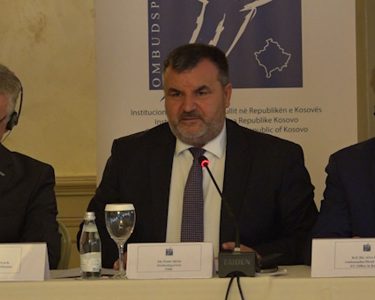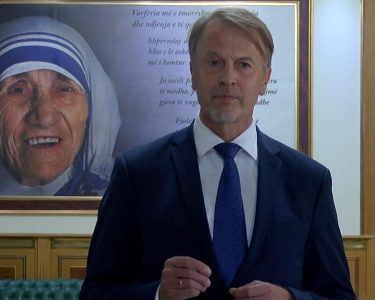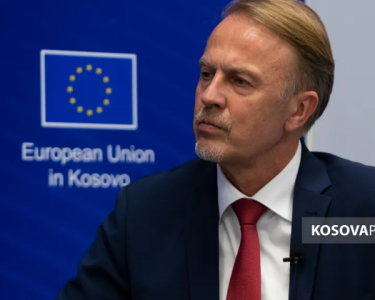
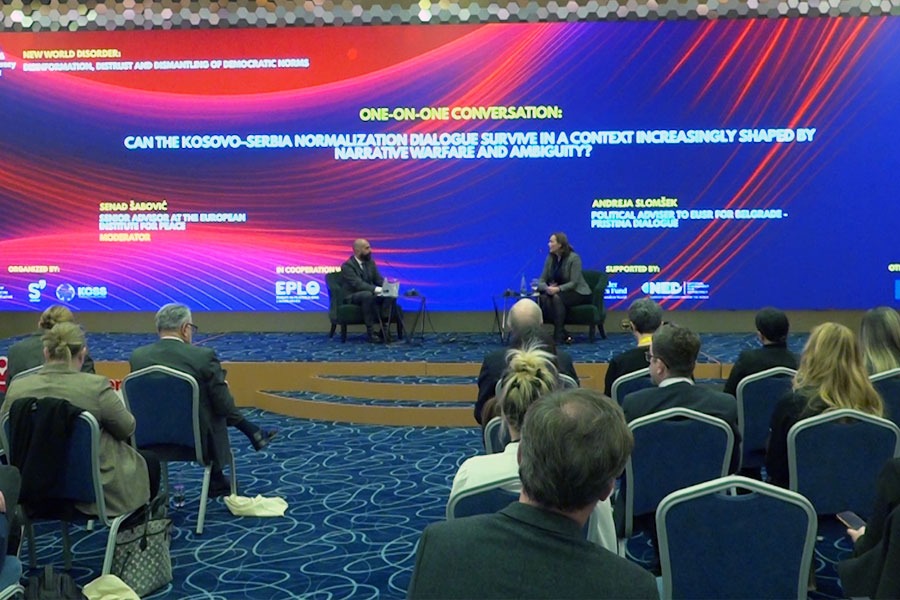
Kosovo remains sensitive to manipulation and interference through disinformation in political and security matters, said the European Union Ambassador to Kosovo, Aivo Orav. At the Kosovo Peace and Democracy Summit, themed “A New World Disorder: Disinformation, Distrust, and the Destruction of Democratic Norms,” he stated that Kosovo ranks 40th out of 41 countries on the European Media Literacy Index.
At the summit, he emphasized that “disinformation, polarization, and attacks on democratic norms threaten the foundations of trust and civic engagement.”
“Across Europe and beyond, disinformation seeks to weaken trust in institutions, polarize societies, and exploit divisions—and Kosovo is no exception. Based on findings from hibrid.info, disinformation in the Albanian language is spread mostly on social media, while in the Serbian language it is most commonly spread through traditional media, with narratives often aligned with Russian disinformation, especially regarding political and security issues. As a result, Kosovo’s information space remains susceptible to manipulation and interference. Research by our partners such as BIRN and Democracy Plus shows that critical thinking and source verification are not systematically discussed in schools and are not integrated into public education, leaving people exposed to manipulation and disinformation. Kosovo ranks 40th out of 41 countries on the European Media Literacy Index, reflecting weak institutional awareness regarding media education,” he said.
Stephen B. Heintz, president of the Rockefeller Brothers Fund, said that democracy must be protected by all actors in order to address crises and challenges.
“Democracy does not defend itself; it depends on us—citizens, journalists, academics, activists, educators, founders, and policymakers—working together to solve crises and problems, restore trust, and build a kind of ‘social fabric’ within society. When I first visited in 2023, it was already clear that civil society is the beating heart of this country’s democracy. Everyone knew that the coming years would be difficult. But civil society also understood the important and essential role they were called to play in Kosovo’s democratic project. In the years since, civil society organizations, working with local activists and courageous individuals, have done more than provide services and advocate for key reforms—they have nurtured the habits of citizenship, which Tocqueville called the ‘habits of the heart,’ essential for a vibrant democracy,” he added.
At the Peace and Democracy Summit in Kosovo, themed “A New World Disorder: Disinformation, Distrust, and the Destruction of Democratic Norms,” he said that “peace that exists only on paper is not sustainable peace.”
“It is a truth that must be spoken aloud, no matter how difficult: there is no lasting peace in Kosovo or the Western Balkans without a sincere dialogue between Albanians and Serbs. There is simply no alternative. This dialogue cannot be reduced to negotiations between governments or meetings between Brussels and Belgrade. These are necessary, of course, but peace that exists only on paper is not sustainable,” he said.
The executive director of “S’Bunker,” Bardhi Bakija, said that “the Western Balkans is the ideal testing ground for the warfare of information.”
“The region has slipped into old anxieties, manufactured ethnic myths, performative nationalism, frozen conflicts that continually reinvent themselves, and political elites who willingly and comfortably exploit fear. At the same time, global actors have discovered that the Western Balkans is the ideal testing ground for the information battlefield. The targeting is sophisticated, cheap, and unstoppable, while the damage is massive. But credibility matters more. Dialogue without credibility cannot shape any kind of peace. This is where our work begins,” Bakija concluded.
The Peace and Democracy Summit in Kosovo, themed “A New World Disorder: Disinformation, Distrust, and the Destruction of Democratic Norms,” continued with several discussion panels.