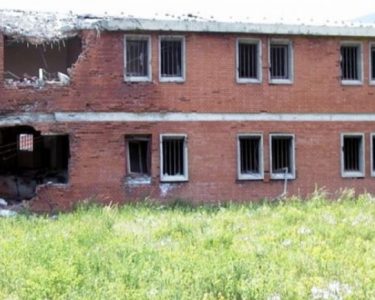


The massacre in Krusha e Madhe by Serbian armed forces during the 1999 war was described as a premeditated crime, a planned massacre aimed at the extermination of Albanians on their own land.
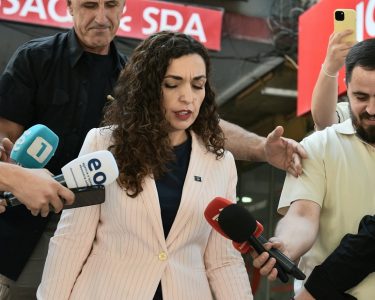
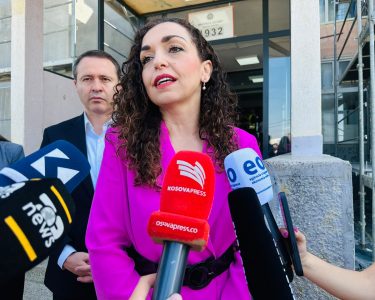
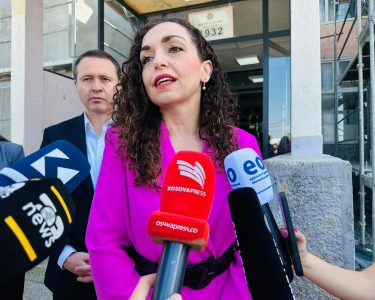
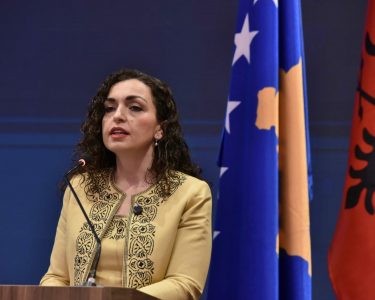
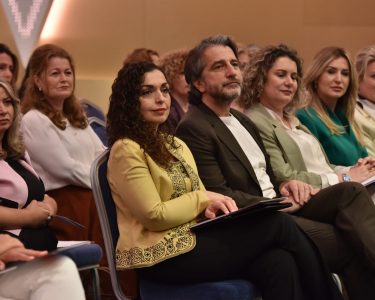
On the 27th anniversary of the Krusha e Madhe massacre, during a commemorative event for the 841 people killed by Serbia, Kosovo President Vjosa Osmani said that the tragedy has not ended until the 64 missing persons from Krusha are found.
Osmani also mentioned the fate of Ukshin Hoti among those still missing, calling for justice for all those forcibly disappeared by Serbian state forces.
“241 residents of Krusha were massacred by the forces of the genocidal regime of Serbia, among them seven children and five women, including a pregnant woman. They were not killed in battle, but in their homes. This was a premeditated crime, a planned massacre, a deliberate act aimed at erasing life, memory, and even the existence of the villagers of this area, an attempt to exterminate Albanians on their own land. The tragedy does not end here; even today 64 residents of Krusha e Madhe remain on the list of the missing, open wounds, unbearable absences that weigh every day on their families first and foremost, but also on our conscience as a nation and a state. Among these open wounds is also the still-unclarified fate of Ukshin Hoti, the irreplaceable intellectual, the courageous thinker. An injustice that has not faded with time. Whenever his name and the names of all those forcibly disappeared are mentioned, the demand for justice is renewed for the state and the families,” Osmani said.
The mayor of Rahovec, Smajl Latifi, recalled the day when the villagers were killed innocently, only because they were Albanians.
According to him, the roots of freedom grow from spilled blood, and therefore it was a sacrifice that had to be made.
“In late March 1999, Serbian armed forces in regular and combined formations attacked this freedom-loving village with all available military means, aiming to kill men, women, and children. Blood was indeed shed, while the village was emptied of its inhabitants and houses were looted and burned. Here, the weight of our freedom takes its meaning. At first stood the monuments of your son of the nation, Ukshin Hoti, who was aware that freedom required sacrifice and painful losses; he gave a personal example for freedom, dignity, and international humanity. The roots of freedom grow and strengthen from spilled blood, therefore it was a sacrifice that had to be made; otherwise, we would have lived many more years in captivity. Women and children, the elderly and the young were killed, unarmed and innocent; they had only one fault: they were Albanians,” Latifi said.
Meanwhile, the Minister for Labour, Family and War Veterans’ Affairs, and son of Ukshin Hoti, Andin Hoti, called on the international community to take an active role and pressure Serbia to open its archives and hand over the perpetrators in order to clarify the fate of the 1,570 other people still missing.
“Krusha e Madhe is one of the greatest wounds of our history, 241 killed and 64 missing, including my father… The sentences given today are just a drop in the ocean, not enough, because even 1,570 people are not numbers but human beings who are still missing every day for 27 years. From Krusha, we call on the international factor to play an active role and not remain neutral, because there can be no equality between victim and aggressor. Pressure must be exerted on Serbia, its classified archives must be opened, perpetrators must be handed over, and the fate of our loved ones must be clarified,” he said.
Meanwhile, AAK leader Ramush Haradinaj stressed that friendship with the United States must be maintained so that tragic history does not repeat itself.
“It is right to express concern about how it is possible that the KLA is still being tried. It is very hard to understand all this. In honour of the fallen today, across Kosovo hundreds of massacres—how should we proceed further, how do we honour them, is there anything more dignified we can do as a people? Some nations say the best revenge is success; we must work hard so we are never unprotected again. We must push strongly so this country is never left unprotected. We must not joke with security; security cannot be taken for granted. We cannot face a larger enemy alone, one that also has friends. To prevent Krusha and others from happening again, we must stay close to America,” Haradinaj said.
The village representative, Sejfullah Sejfullahu, confirmed that hundreds of villagers have died as a result of the severe psychological impact following the massacre.
On behalf of the residents, he called for no agreement with Serbia without the establishment of a tribunal for the genocide in Krusha.
He also addressed President Osmani, saying that despite pressure, “it cannot get any worse than this.”
“At first UNMIK and EULEX deceived and manipulated us; they came to Krusha pretending to collect evidence, took the testimonies and made them disappear in the interest of the Serbian state. It is a double killing for us in Krusha when international institutions instead of dealing with genocide crimes invest resources in fabricating evidence against KLA leaders and fighters… I confirm on behalf of the residents of Krusha e Madhe that at least hundreds of people have died due to severe psychological suffering after the massacres, including key witnesses. We demand that no agreement be reached with Serbia without a tribunal for the genocide in Krusha and without the perpetrators being punished. We know you are under pressure and will be even more, but it cannot get any worse than this,” he added.
From 25 to 27 March 1999, 241 people were massacred in Krusha in Rahovec by Serbian forces, while 893 private and public houses were burned.
The Krusha e Madhe massacre is the largest in Kosovo during the 1998–1999 war. Today, 64 people are still listed as missing from this massacre.