
Around 40 indictments have been filed so far against 156 individuals for war crimes against the innocent Albanian civilian population by Serbs in Kosovo. Since 2021, 12 people have been convicted, while three others have received acquittals.
These are the figures provided by the Special Prosecutor’s Office to KosovaPress, which adds that over 20 cases are currently in the judicial process.
Among the indictments are also those in absentia, allowed under amendments to the Criminal Procedure Code, enabling indictments and trials without the accused being present.
“From 2021 until now, 37 indictments have been filed against 156 people. Since the same year (2021), 12 convictions have been issued against 13 convicted persons, while two acquittals were given for three people. Over 20 cases are currently in court proceedings. Meanwhile, from 2023 to 2025, we have filed 15 indictments in absentia, while around 12 indictments inherited from EULEX are pending trials in absentia,” the Special Prosecutor’s Office stated.
One indictment in absentia was also filed yesterday, Friday, August 14, 2025, against 21 suspects for the forced expulsion of over 800,000 Albanian civilians from Kosovo during the war. The Prosecution’s announcement stated that all suspects had command responsibility and full control over the then Yugoslav army and the Serbian police.
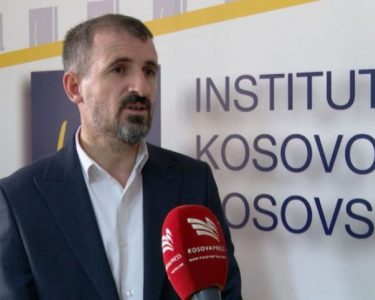
Flamur Kabashi from the Kosovo Law Institute (KLI) said this indictment is the first of its kind, involving a large number of displaced persons from Kosovo.
“It concerns a large number of citizens, and for this reason, the figure of up to 800,000, as specified, has not been encountered or seen in any other indictment. It can be said that such an indictment is the first of its kind, referring to such a large number of people expelled from Kosovo, and for this reason, this indictment is considered among the first regarding a mass number of expulsions during the war. We have been able to understand that the indictment refers to forced displacement, looting of properties, a campaign of mass expulsion of the Albanian population, and there are altogether 21 defendants,” he said.
The Special Prosecutor’s Office took over EULEX’s competencies in mid-June 2018.
Amer Alija from the Humanitarian Law Center said that the number of war crimes indictments filed in Kosovo has increased significantly.
“Two to three years after taking over the competencies, war crimes indictments were filed on average two to three per year. In the past two to three years, there have been more indictments, around 10 to 15 per year. In just the eight-month period of this year, seven indictments in absentia have been filed. This includes some indictments for which some individuals are in pre-trial detention,” he told KosovaPress.
Former Supreme Court President Fejzullah Hasani considers that the state has delayed achieving criminal justice for the crimes committed in Kosovo.
“We have been delayed considerably, and for this reason, as well as due to these obstacles over which we did not have competence to adjudicate. This prolonged period will certainly have an effect on the fulfillment of justice, but also on the effective conclusion or the issuance of conviction judgments in all these indictments, given that the very circumstances in which war crimes are committed are specific, the possibility of hiding evidence, the difficulty of identifying the perpetrators, especially when a long time has passed. I believe the prosecution is working with increased intensity, but its effects will be seen at the end, when these indictments are concluded. Justice is not served or satisfied merely by raising an indictment, but when these indictments conclude with conviction judgments,” Hasani said.
Institutions are also being called upon to pressure Serbia to investigate crimes it committed in Kosovo.
“The state of Serbia is, in a way, amnestying its own citizens, because we see that the prosecution in Serbia is asleep and is not conducting investigations as a normal institution should. Certainly, Kosovo, through the international community, through the European Union, and through the United States, must insist on exerting greater pressure on the prosecutorial bodies in Serbia so that there are more indictments and convictions for crimes against humanity committed during the war in Kosovo. Because, with the passage of time, those who committed the crimes die, as do the eyewitnesses who could testify in these proceedings. For this reason, in the dialogue process, the state of Kosovo and the state of Serbia should sign a memorandum of cooperation as soon as possible, since time is the main enemy of justice for the victims of the war,” he said.
The first indictment in absentia was filed in May 2023, with seven accused of sexual violence during the war. Two of the largest indictments include the Meja massacre, with 53 accused, and the indictment filed yesterday against 21 suspects for the expulsion of civilians.
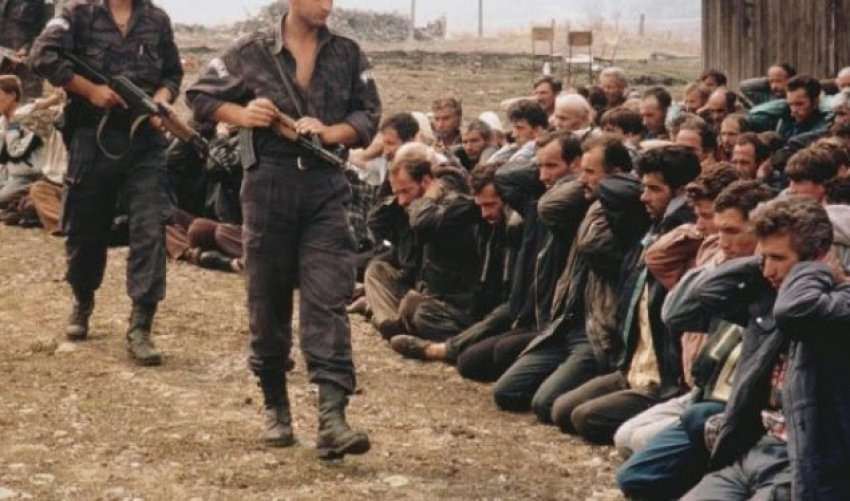
So far, the Basic Court in Prishtina has issued three judgments against four defendants in absentia; each sentenced to 15 years in prison. During the 1998/99 war, over 13,000 Albanian civilians were killed, around 20,000 men and women were sexually assaulted, and more than 1,600 are still missing. /Sh.Pajaziti/