
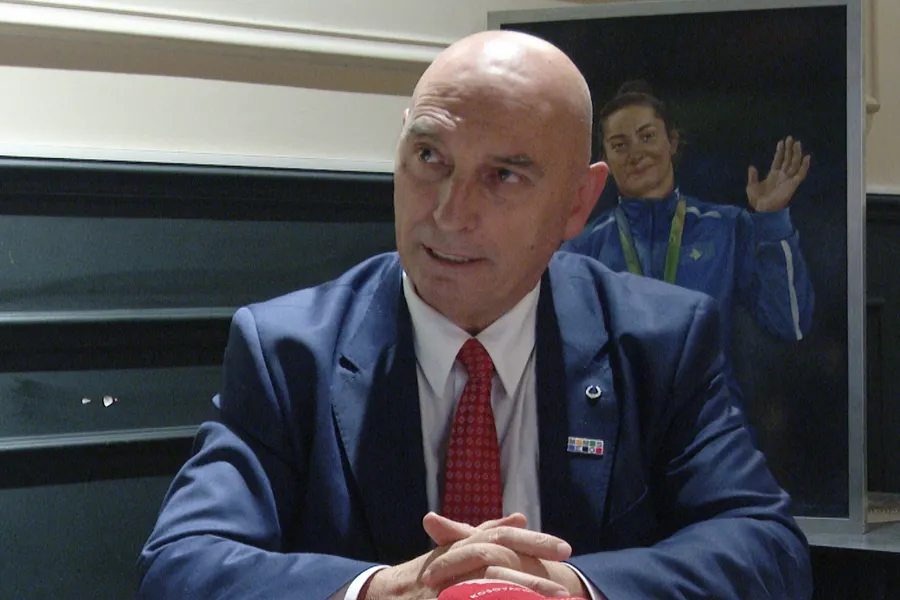
Former president of the Kosovo Olympic Committee, Besim Hasani, has reflected on the extraordinary journey of Kosovan sport. Today, Kosovo is no longer content with mere participation; it is preparing for the largest infrastructure and sports project in its history: the Mediterranean Games “Prishtina 2030.”
For Hasani, this event represents the pinnacle of a success that began with international recognition and is now transforming into a lasting legacy for future generations.
Speaking to KosovaPress, Hasani emphasized that sport has surpassed every other field in building Kosovo’s positive image. Beyond the medals, the greatest achievement is the maturity of the sports community and the trust the world now places in Kosovo.
“Sport is on the right path. Sport is the best story in the Republic of Kosovo. It can be analyzed by competent people, but I can say with full responsibility that we are the best story in Kosovo. Beyond the medals won, which are very important, there is also the embrace of genuine values in the behavior and attitude of athletes and the sports community in general. We now have plenty of references on the international stage, various delegates, and our sports organization leaders who are board members at the European level… This is a legacy resulting from that recognition. We have been entrusted for Prishtina to be the host city of the Mediterranean Games. It’s not just about holding the games; it is important to prepare the infrastructure, human resources, and physical facilities to European and international standards, which will then serve as a legacy for federations to organize various European and world championships. Sport has broken barriers and is the best story in Kosovo.”
Although sport has contributed greatly to Kosovo, Hasani stressed that even greater institutional engagement is needed, particularly in terms of infrastructure, to meet the challenges of organizing events of this scale.
“When looking at the contribution of sport to the state, the state has tried to reciprocate, and some important steps have been taken, such as permanent rewards and Olympic medal bonuses, as well as the sponsorship law. However, the state must do even more for building sports infrastructure and preparing the people who represent us internationally,” Hasani emphasized.
The selection of Prishtina as host of the 21st edition of the Mediterranean Games in September 2030 marked a turning point for the Balkans. Although Kosovo is a landlocked country, this was made possible through an agreement with Albania, where sailing competitions will take place on the Albanian coast.
The project foresees investments exceeding €250 million, which will transform stadiums, gyms, and training centers across the country. For Kosovo, 2030 is not just a year of competitions—it is the ultimate test of the organizational capacity of a state that, just a decade ago, was still fighting for the basic right to be represented with its flag and anthem. As Hasani notes, the legacy left by these games will position Kosovo as a regional sports hub for decades to come.
/ KosovaPress