
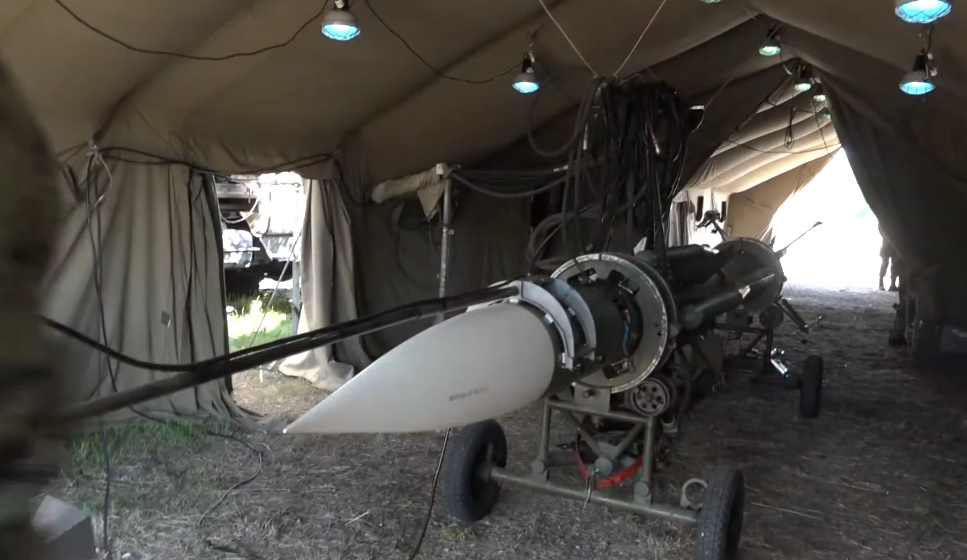
Serbia’s acquisition of CM-400 supersonic ballistic missiles from China is not considered an immediate threat to neighboring countries, including Kosovo, although security experts note that these are very powerful military systems.
However, they believe that NATO could respond by deploying Patriot anti-missile systems in Kosovo, Albania, or Croatia.
Serbian President Aleksandar Vucic confirmed on March 12 that Serbia had purchased the CM-400 supersonic missiles from China.
Missile systems expert Ismet Ibishi says the missiles acquired by Serbia pose a significant threat, but according to him, Kosovo has no reason to worry as it is protected under NATO’s umbrella.
He emphasized that NATO’s air defense systems could neutralize the missiles, while advising Kosovo to continue strengthening its ground defense capabilities, as the country does not have the capacity to counter such missile systems on its own.
“Certainly, it does pose a great danger. Every missile system, especially these, adds more power. But I see no reason for us to worry about this, because NATO has the capability. Albania is in NATO, and the air defense systems, including those missiles, can successfully intercept and destroy them in the air… But whether we like it or not, we cannot confront any missile system. As I said, air defense, especially against missile systems, is extremely costly and requires personnel trained for up to eight years. We cannot rely on that, nor do we need to. We are, once again, under NATO’s umbrella, the world’s strongest power, and I see no reason for concern,” Ibishi said.
Ibishi noted that the missiles have a range of several hundred kilometers.
“The range is said to be 300–400 kilometers, which could threaten us… not just us, but as I mentioned before, many missile systems, all with their zones of destruction, could reach us. But Kosovo, being under NATO’s umbrella, should not concern itself with these systems… As long as we are under NATO, we have nothing to do with these systems,” he said.
Military and security expert Afrim Veseli also considers that Serbia’s acquisition of this missile arsenal does not pose a real threat to Kosovo or the region.
According to the military colonel, Serbia’s CM-400 missiles, which it now possesses, are highly destructive and can reach distances of up to 400 kilometers.
“Serbia continues its old policy of gaining diplomatic advantage over other countries through threatening policies. I believe there is no danger to Kosovo, Albania, or Croatia — these three countries were mentioned most because military analyses consider many elements: economic, political, and geostrategic positions. Before a weapon is fired, the user must carefully consider its use. How could Serbia deploy these missiles when Kosovo is under NATO, along with Albania and Croatia, both NATO members, where Article 5 would automatically be triggered? Therefore, I see no risk here,” Colonel Veseli said.
Colonel Veseli also sees NATO’s prior notification about Serbia’s missile purchase as positive.
According to him, NATO and the United States were informed in advance, and a political response is expected, while anti-missile systems such as Patriots could be deployed in Kosovo, Albania, or Croatia.
“This is important because the European Union has long maintained a soft policy toward Serbia. Now is the time to take a stronger stance, similar to President Trump and the United States. It cannot be imagined that Serbia opens chapters for EU accession while buying weapons from China and threatening its neighbors. This goes against EU principles. However, this will not happen… very positive, even though NATO knew this in advance. Even before the missiles arrive, NATO and U.S. intelligence had this information. We will see how things develop, and of course, there will be a political reaction, and Patriot anti-missile systems could be deployed in Kosovo, Albania, or Croatia,” Veseli stated.
With this missile purchase, Serbia becomes the first country after Pakistan to possess CM-400 missiles and the only country in Europe to have them.
In March 2025, Croatia, Albania, and Kosovo signed a Defense and Security Cooperation Declaration, which Serbian officials described as a threat to Serbia’s security.