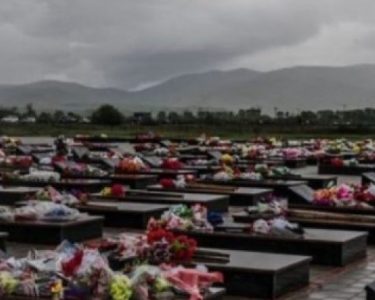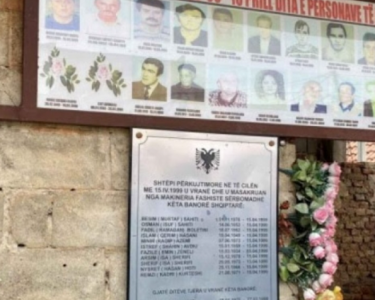

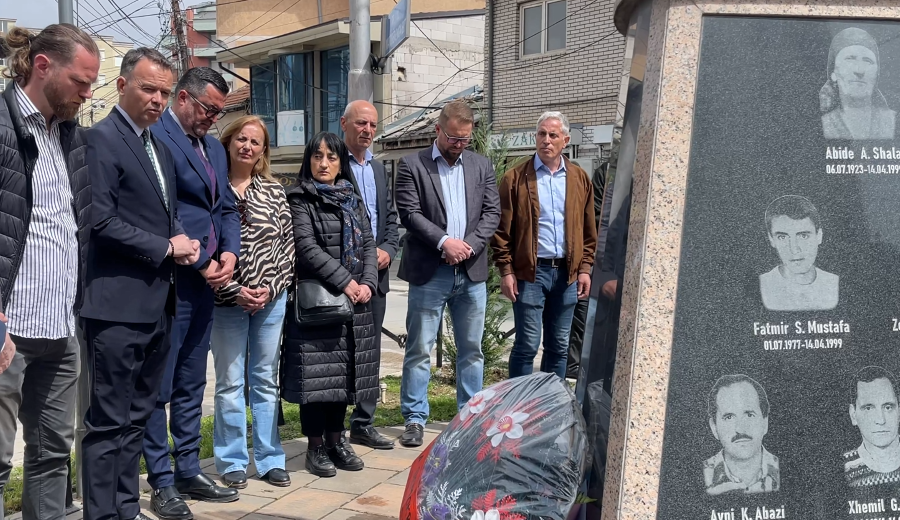
Marked by pain, low attendance, and many unanswered questions, the 27th anniversary of the Kovaçëve Massacre in Mitrovica was commemorated today. On April 14, 1999, Serbian forces killed 31 Albanian civilians after forcibly removing them from their homes and executing them.
Shahdie Pllana-Hoti, who lost two brothers and her husband, says the memories of that day remain vivid and painful, describing the moments of separation and execution as unforgettable.
“My two brothers, Enes and Emir Pllana, and my husband, Xhemil Hoti, were killed. For 27 years now, every time this anniversary comes, you relive it the same way, because every smallest detail comes back. First, when they came and knocked—the military police officer who said: ‘Brother, come, they are forcing us out’; when we started leaving the apartment, when they separated us, when we heard the gunshots. My scream reached the sky; even the sky began to cry. It had been nice weather, sunny and warm. The moment they separated us and the gunfire started, even the sky began to cry—believe me, a gentle rain began to fall,” Pllana-Hoti recounts.
She expressed dissatisfaction with the institutional and social treatment of this event, emphasizing that the victims of this massacre are not treated the same as others and that commemorations are marked by low participation.
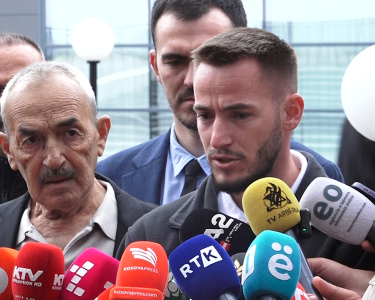
Meanwhile, Fisnik Sejdiu, a relative of the victims, said that the commemoration of the martyrs should be larger in the coming years, adding that the perpetrators of the crimes must face justice.
The Mayor of South Mitrovica, Faton Peci, described this as one of the largest massacres in the country and the most severe in Mitrovica, stressing that crimes against innocent civilians were part of the policies of Slobodan Milosevic’s regime.
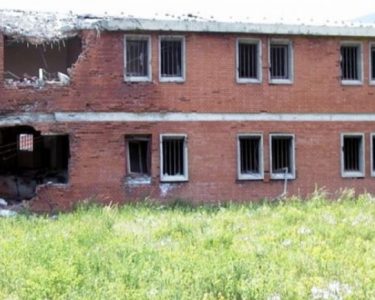
According to Halit Barani from the Council for the Protection of Human Rights and Freedoms, the victims were forcibly taken from their homes by a Serbian paramilitary group and executed near the “Meto Bajraktari” school.
“Here, 27 years ago, on April 14, 1999, in the afternoon hours, a group called the ‘Frangjësit’ from Belgrade—Serb Chetnik criminals led by the chief criminal Oliver Ivanovic, together with Igor Simic and others—took 31 Albanians, mostly young men, out of their apartments and homes, lined them up in front of the ‘Meto Bajraktari’ school and executed them one by one. Some were taken into the yard of the Kurshumliu house, Haki Kurshumliu, and four of those who were waiting in line to be executed were released by Oliver Ivanovic. For this reason, they are not here today; I don’t know why, but they should have been present and given statements to the media. The 31 bodies were then taken, removed from here, and buried in a sloped field between the villages of Suhodoll and Vidimriq in an attempt to make them disappear. Later, on September 25, 26, and 27, 1999, their exhumation took place—26 were identified, while five remain unidentified and are still in the Rahovec morgue, along with many other missing persons,” Barani said.
Barani also stated that four people were arrested in connection with the case, but three were acquitted, while Oliver Ivanovic had been sentenced to nine years in prison.
Even after 27 years, the Kovaçëve Massacre remains an open wound for the families and the city of Mitrovica. The lack of full justice and equal treatment for the victims continues to be emphasized by relatives, who demand not only punishment for those responsible but also dignified and institutional commemoration of this event. For them, April 14 is not just a date of remembrance, but a lasting reminder of the crimes committed and an obligation to never forget them.