
24 years ago, the trial of former Serbian President Slobodan Milosevic, known as the “Butcher of the Balkans,” began.
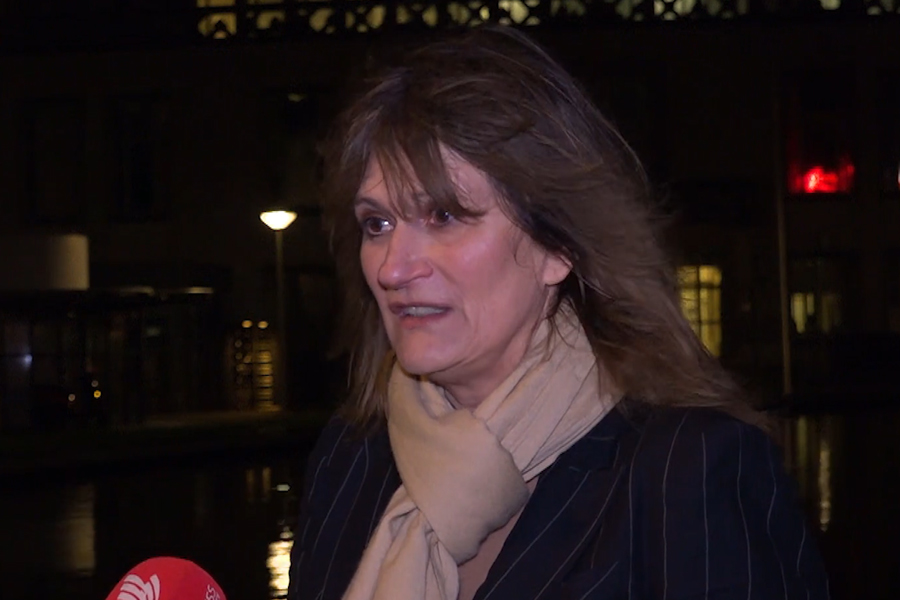
KosovaPress presents an interview with researcher at the Hague Tribunal for the former Yugoslavia, Nevenka Tromp, conducted at the former building known as the Hague Tribunal.
Tromp recalls February 2, the day the trial started, noting the crowds of journalists around the building.
“24 years ago, the trial against Milosevic began in this building behind me. If you look at archival footage, the whole square was filled with satellite antennas from media around the world. You couldn’t get through the crowd of journalists—it was the top news worldwide. And now, 24 years later, we have a similar situation with the Kosovo Specialist Chambers, where Kosovo leaders, wartime leaders, opponents of Milosevic’s regime, are giving their closing statements in a criminal trial against them,” she said.
Milosevic was tried for war crimes, crimes against humanity, and genocide in Croatia, Bosnia, and Kosovo.
The author of the book The Unfinished Trial of Slobodan Milosevic spoke to KosovaPress about the significance of the trial, especially for Kosovo.
Tromp emphasized that during Milosevic’s time in power, massive crimes and atrocities occurred.
“First of all, Milosevic was president for almost ten years, initially of Serbia and then of the Federal Republic of Yugoslavia. During this time, there were three consecutive wars in which massive crimes and atrocities occurred. After 1995, when Milosevic was one of the architects of the Dayton Agreement for Bosnia, he attempted to rehabilitate his image, as we remember photos from Paris in December 1995, where he shook hands with Alija Izetbegovic, President of Bosnia, Franjo Tudjman, President of Croatia, and Bill Clinton. But he failed to secure a positive place in history. He could not leave Kosovo free, and by entering the Kosovo war, he cemented himself in world history as a negative figure, a person who abused political power and was responsible for massive atrocities. Initially, he was only indicted for Kosovo because, after Dayton, he believed no one would indict him for Croatia and Bosnia-Herzegovina. But once he lost power in October 2000 and was transferred to The Hague solely on the Kosovo indictment, in June 2001 the prosecution expanded the indictment with two additional charges: one for crimes in Croatia from 1991 to 1995, and one for crimes in Bosnia-Herzegovina, including genocide.”
Tromp added that this trial was particularly significant because, for the first time, genocide was being judged at an individual level.
“This was big news, because genocide was being tried individually in relation to the Yugoslav wars. For the first time, a case for genocide was also brought against a state—against Serbia—at the highest UN court here in The Hague. Through Milosevic’s indictment, the world understood that there is a way to confront genocide at both the individual level, as a president, and at the state level. Why there was no genocide charge for Kosovo in the indictment remained unresolved, because his death and later developments in international criminal law halted any further investigation of possible genocide evidence in Kosovo in 1998–1999,” Tromp explained to KosovaPress.
The trial against Milosevic began on February 12, 2002, and continued until March 2006 but did not reach a final verdict because he died in custody.
Tromp said that had the trial concluded with a conviction, it would have made it much harder today to try the former leaders of the Kosovo Liberation Army.
“From a legal perspective, a conviction against him would have been very significant. His confirmed personal responsibility under the law would have implicated the Serbian military leadership much more directly in criminality. I am confident that it would have been far more difficult, 20 years later, for the Kosovo Specialist Chambers to try KLA leaders for crimes in Kosovo. It would seem very immoral and detached from reality compared to what a verdict against Milosevic as head of state would have contained. I have no doubt that out of the 66 counts in the indictment, he might not have been found guilty of all, but for the majority, yes. And the Kosovo indictment was very important because it strengthened the narrative of asymmetrical responsibility in war—which means that no other party, as an individual or a state, bore greater role and responsibility for the violent disintegration and crimes than Milosevic, the Serbian political, military, and police leadership, and ultimately Serbia as a state,” she concluded.