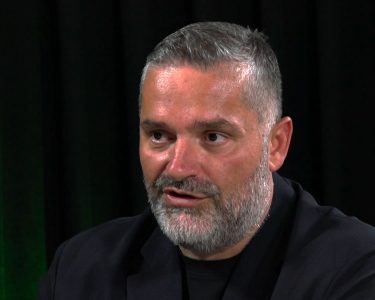

The Specialist Court is a political institution that will not bring justice and will only strengthen Serbian nationalists who want to change the narrative of the 1990–1999 period, says transitional justice expert Aidan Hehir in an interview with KosovaPress.
Hehir — a scholar of transitional justice, humanitarian intervention, and state-building in Kosovo from the University of Westminster in the UK — emphasizes that the process known as “the big trial” in The Hague has been excessively prolonged.
The former commanders of the Kosovo Liberation Army (KLA), Hashim Thaçi, Kadri Veseli, Jakup Krasniqi, and Rexhep Selimi, have been held in pre-trial detention in The Hague since November 2020.
The Office of the Specialist Prosecutor has charged Thaçi and the others with alleged war crimes. They have pleaded not guilty to all counts of the indictment.
Their trial began on April 3, 2023 — nearly three years after the indictment was confirmed and since the former KLA leaders have been held in the detention center in The Hague.
“Yes, in a word [the process in The Hague has been prolonged]. This was a court established in 2014–2015. It is still going on now. It is a court that should never have been created. It lacks the most important element: local legitimacy. It is a court that was imposed on Kosovo by the international community. At the time it was established, Hashim Thaçi even said, ‘I’m encouraging people to vote for the establishment of this court, not because I want to establish it, but because I’ve been told that it must be established.’ That is coercion. That is the international community bullying a sovereign state, the government of a sovereign state, the parliament of a sovereign state, to establish a court. And why? Why was this court established? You don’t need to be a genius or a conspiracy theorist to understand why. It was established to appease Serbia. To say to Serbia: look, we are giving you this. Serbia obviously wanted this court to be created. It wants to change the narrative about the 1990s. It wants to create this ongoing continuous conveyer belt through which Kosovo Albanians militants are tried for crimes against humanity, a process that will go on for years and years. That fits their narrative of the war, which says that there were two sides involved in a civil war who both did terrible things. A narrative that says: ‘they are just as bad as we are.’ So, the only reason this court was created was to serve Serbian interests,” says Hehir.
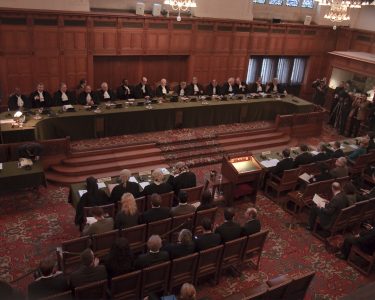
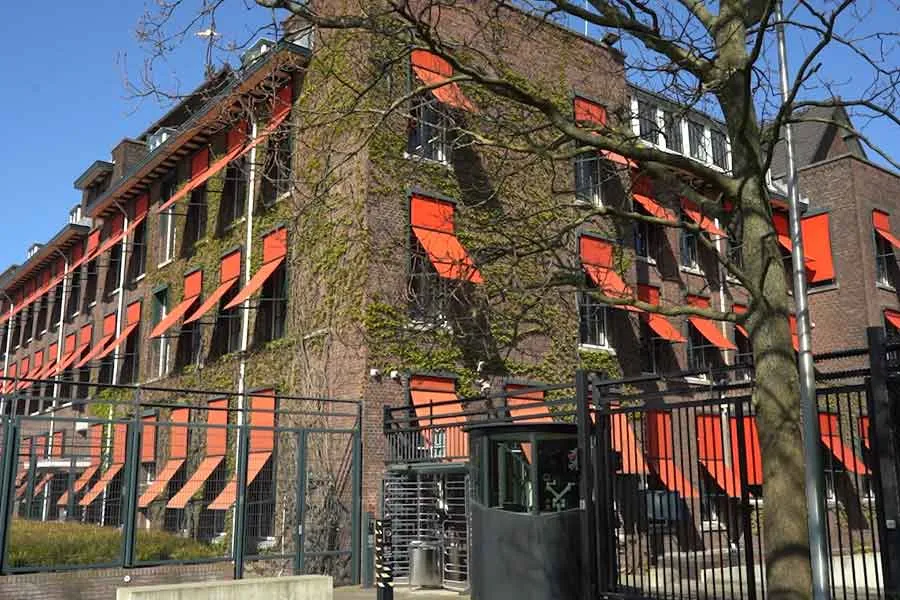
The Specialist Chambers are part of Kosovo’s judicial system but operate with international staff in The Hague, Netherlands.
The European Union is the main financial backer of the Specialist Court, which was established in 2015 by the Kosovo Assembly following international pressure.
Third countries also contribute to this court: the United States, Switzerland, Canada, Norway, and Turkey. The United States contributes by funding personnel appointed by them.
The Court has been continually criticized for extensive redactions and its lack of public access.
Even Kosovo’s Ombudsperson, Naim Qelaj, has expressed concerns about the Court’s operations. Qelaj has questioned whether the Specialist Court is respecting the principles of a fair and impartial trial.
Professor Hehir says that precisely due to the lack of transparency, perceptions of this institution in Kosovo are overwhelmingly negative.
“It is a deeply political institution, created for political reasons, and its existence — like that of UNMIK and EULEX in Kosovo — proves that the international community is not necessarily acting in Kosovo’s interest in every case… This court is simply, as I said, a political body that will not bring justice. The only thing it will do is strengthen Serbian nationalists who want to change the narrative about the 1990s,” says Hehir.
A month ago, the Office of the Specialist Prosecutor concluded its case in the Thaçi and others trial. A total of 125 witnesses have testified in court against the former KLA leaders, and thousands of pages of documents have been submitted as material evidence.
Defense attorneys have already announced motions to dismiss the charges. What is known now is that if these motions are rejected, they will call several witnesses.
The defense of the former KLA commanders has considered the prosecution’s case weak and has declared that they expect a positive outcome at the end of the trial.
So far, the Specialist Court has issued two convictionfor alleged war crimes and other offenses related to the administration of justice.
“This court is nominally a court of Kosovo, but it is located in The Hague, so fundamentally it is a strange court, though its legal composition differs from that of the ICTY,” says Aidan Hehir./KosovaPress