Security, development, and migration will be the main topics discussed at the Berlin Process Summit, to be held on October 22 in London. The six Western Balkan countries will not be signing any new agreements this time, as in previous years, but there will be joint declarations focused on the regional common market and energy. Meanwhile, the host country, the United Kingdom, is expected to emphasize migration, the fight against organized crime, and corruption. Kosovo will be represented at the summit by the acting Prime Minister, Albin Kurti.
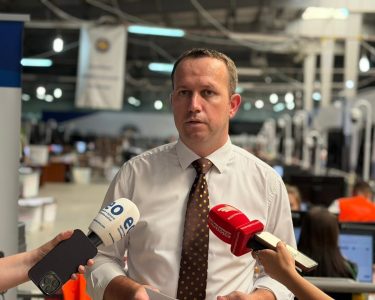
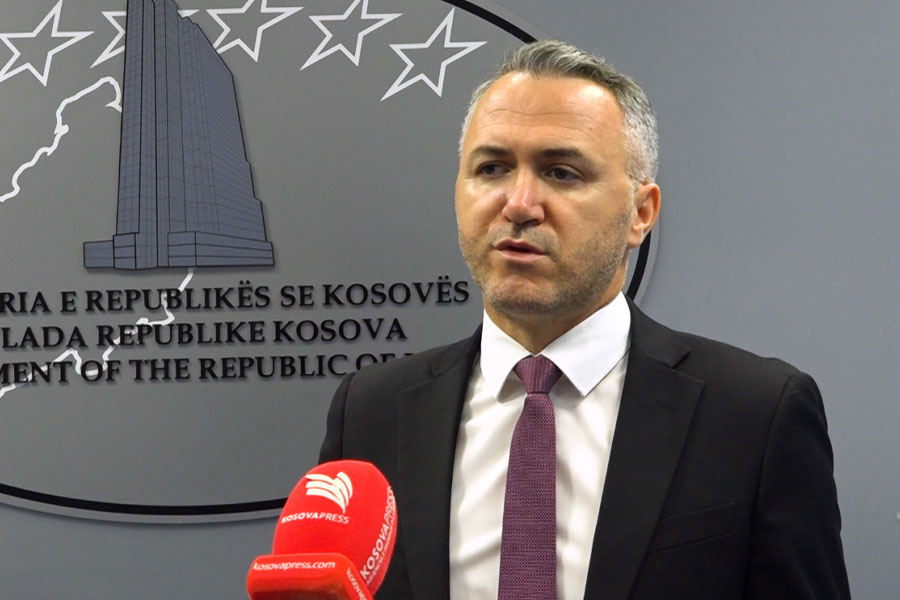
This was announced to KosovaPress by Jeton Zulfaj, advisor to the acting Prime Minister, Albin Kurti.
The Berlin Process aims to accelerate the integration of Western Balkan countries into the European Union (EU) through strengthened regional cooperation and political, economic, and technical support from EU member states, particularly from Germany.
“Next week, the Prime Minister will travel to London to participate in the Berlin Process Summit. This time, the United Kingdom is the host. The topics will be threefold: security, development, and migration… Attention should be paid to the statements that will be issued at the host level after the Home Affairs Ministerial Summit, which also covers migration. The UK has placed emphasis on migration in the sense of combating crime and corruption, organized crime… There will be some achievements at the Home Affairs Ministerial, while at the Economic one there will be several, let’s say, declarations and reinforcements of the regional common market, its deepening in the context of CEFTA decisions on energy, where there will also be consideration of issuing Green Bonds, known for capital projects in the field of energy. There are also initiatives aimed at attracting direct investment in the economy, and there will be an event organized by the UK Agency during the summit. However, in general, there are no new agreements at this Summit, unlike the previous three years. So there will be no signing of new agreements, but there are many achievements in the areas of economy, internal affairs, energy, business forums, and issues that will further deepen the regional common market,” he said.
Last year’s Berlin Process Summit was held in Germany, where two agreements were signed — on free trade and higher education.
Zulfaj said that acting Prime Minister Albin Kurti will also raise the issue of the non-implementation of the agreement on free movement using only ID cards, which Bosnia and Herzegovina still fails to implement.
According to Zulfaj, the acting Prime Minister will also address Serbia’s non-implementation of the higher education agreement.
“The non-compliance with the agreement on free movement using ID cards by Bosnia and Herzegovina will certainly be raised at the Summit, as an example of the non-implementation of agreements we have already signed, including the agreement on higher education institutions and professional recognition. All these agreements are closely linked to the mobility of citizens in the Western Balkans. They directly affect not only students but also workers. At this summit, we aim to achieve a joint declaration on the portability of social insurance — meaning that workers who move can carry with them their health and employment insurance. However, to reach that point, we must first ensure the implementation of the agreements on free movement, education, higher education recognition, and professional qualifications,” he added.
Zulfaj also spoke to KosovaPress about the recent visit to Kosovo by the President of the European Commission, Ursula von der Leyen.
He said that Kosovo asked the EU President for greater efforts to grant Kosovo candidate status.
In addition, Zulfaj provided details about the request submitted to the EU for a strategic dialogue.
“Kosovo is the only one among all potential candidate states that has not yet received candidate status — and this is the start of the process. Therefore, the emphasis has been that there must be more effort from EU institutions, with President Von der Leyen, who is an influential figure, to convince the member states, because responsibilities are divided. Kosovo must fulfill its domestic obligations in terms of reforms, while when it comes to decision-making, the EU must take its part. At the moment, we are still at the questionnaire stage, and I think this issue has been raised in the meeting to move things forward. Three documents have been presented for a strategic dialogue that the EU itself has initiated with the Western Balkans. We have identified three priority areas: information technology, agriculture, and defense. These are the three sectors where we see comparative advantages in the region, meaning we want to invest much more, especially since we have a talented youth as an important driver of economic development,” he stated.
Speaking about the removal of punitive measures against Kosovo, Zulfaj said that the European Union should lift them entirely.
The EU imposed these measures against Kosovo in 2023 following tensions in the north.
In June of this year, the European Union decided on a gradual removal of the measures.”We have requested a full removal of the measures so that they don’t remain as a negative image for the country. The ease with which they were imposed is not being matched by an equal willingness to remove them. Meanwhile, the conditions or criteria for their imposition were addressed a long time ago. There was no doubt that the mayors, along with the elections, were legitimate — just as the four northern mayors were elected with few votes due to the Serb community’s boycott. The same happens now — one can only become mayor through elections. Anyone who doubted that was baseless in their doubts. The measures are the shadow of that unfounded doubt, driven by the EU’s rush to impose them quickly, which now causes internal difficulties in their removal. But I believe that as institutions and as a society, we must continue to repeat our request and put pressure on the European Union to fulfill its obligations,” Zulfaj concluded.