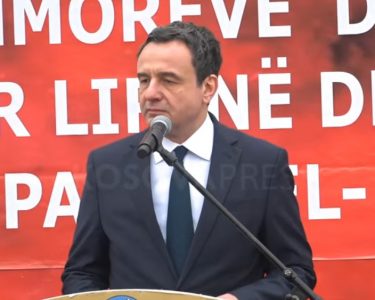

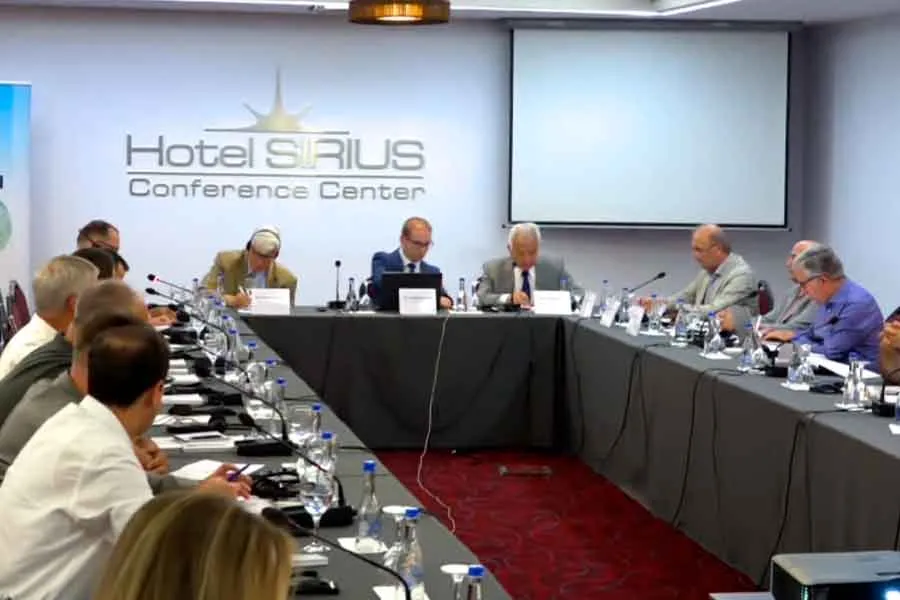
Serbia is promoting the narrative that they have Illyrian origins, by appropriating what belongs to Albanians. This was stated at the conference of the Institute for Studies of Hybrid Warfare “Octopus”, where the topic “Vidovdan between myth and geopolitics, its role in the Serbian project” was discussed. At this conference, it was emphasized that Vidovdan has played a destabilizing role by inciting interethnic tensions and political division.
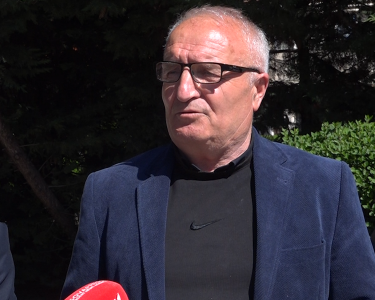
The terrorist act in Banjska, as mentioned, was organized and supplied using the Vidovdan myth. Senior researcher Gurakuç Kuçi stated that the Serbs are promoting the narrative that they have Illyrian origins.
“There is now a Serbian narrative that is being constantly promoted, which says that Serbs have Illyrian origins. They have taken girls and boys who take photos in front of monasteries in Kosovo wearing Illyrian clothing and present these in various academic symposiums, but also on social networks and wherever they get the chance, claiming they have such an origin. So, the level of propaganda has reached a point where even though they arrived at the end of the 6th century, beginning of the 7th, they are now trying to appropriate what belongs to Albanians,” he stated.
Former Minister of Internal Affairs, Bejtush Gashi, said that the Vidovdan myth occupies a central place in Serbian political mythology.
“Vidovdan has played a destabilizing role, inciting interethnic tensions, political division, and existential fear among the non-Serb population, especially among the Albanians of Kosovo. This myth functions as a strategic instrument of mobilization where the historical past – the Battle of Kosovo – is reprocessed to justify revisionist and interventionist stances in the contemporary reality. This rhetoric translates into practices such as interference in Kosovo’s internal affairs through Serbian parallel structures in the north of the country, strengthening the threat discourse toward Kosovo Serbs to justify the presence or potential military intervention, development of defense and security doctrines in Serbia which include Kosovo as an inseparable part of the state territory,” he stated.
According to Gashi, the Vidovdan anniversary is a platform for symbolic and operational activation of structures.
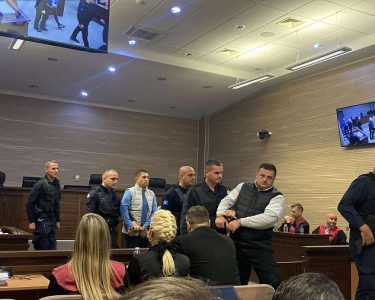
“Reports from domestic intelligence and security agencies, as well as international open sources, confirm that paramilitary and criminal groups in northern Kosovo, as was the case in the Banjska terrorist act, are organized and supplied through sophisticated lines and logistical and operational support from Serbia using the Vidovdan myth for mobilization and justification. In this context, Vidovdan anniversaries are not just commemorative ceremonies but also platforms for symbolic and operational activation of these structures, often present at gatherings in symbolic military uniforms, nationalist chants which incite fear and insecurity among non-Serb citizens,” he added.
The dean of Universum College, Stephan Keck, gave his broad views on the issue of myths, stating that the Battle of Kosovo quickly became a subject of mythology.
“The Battle of Kosovo quickly became a subject of mythology – like many historical myths – adapted to reflect later historical circumstances. For at least two countries, it is partly history and partly myth, with multiple religious roots and a strange calendar connection to a number of historical events. It is the perfect event to be loaded with hidden meanings. This paper will contribute to this discussion by offering other examples of how history turns into myth. I have selected three case studies, and they are from distant countries,” he said.
Professor from the Institute of Albanology, Zymer Neziri, also said that the Serbian church and state use saints for their nationalistic and chauvinistic goals.
“Serbian state policy is a political instrument of the Serbian state before and after Milošević, including now with Vučić and those who will come after him, because no change is expected in the attitudes they have had so far toward the Albanian issue. It is a policy to boast before generations with the nonexistent victory of 1389, to steal someone else’s victory and to deny the coalition with neighbors and turn defeat into victory. The Serbian church policy, with its oath in Prishtina at the 1389 battle monument, seeks for Saint Vitus to forgive the crimes committed against Albanian neighbors and also to bless them to continue with genocide and ethnocide at the beginning of the 21st century,” he said.
At the conference, it was said that elements of the Vidovdan myth have been preserved, repackaged, and refined during the regime of Aleksandar Vučić.