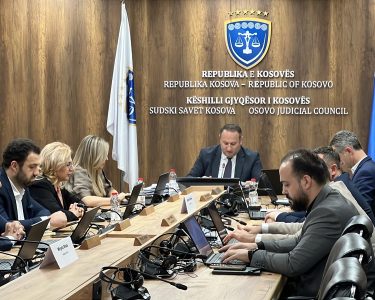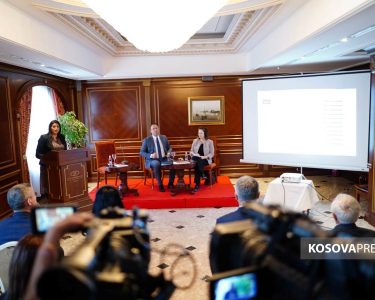

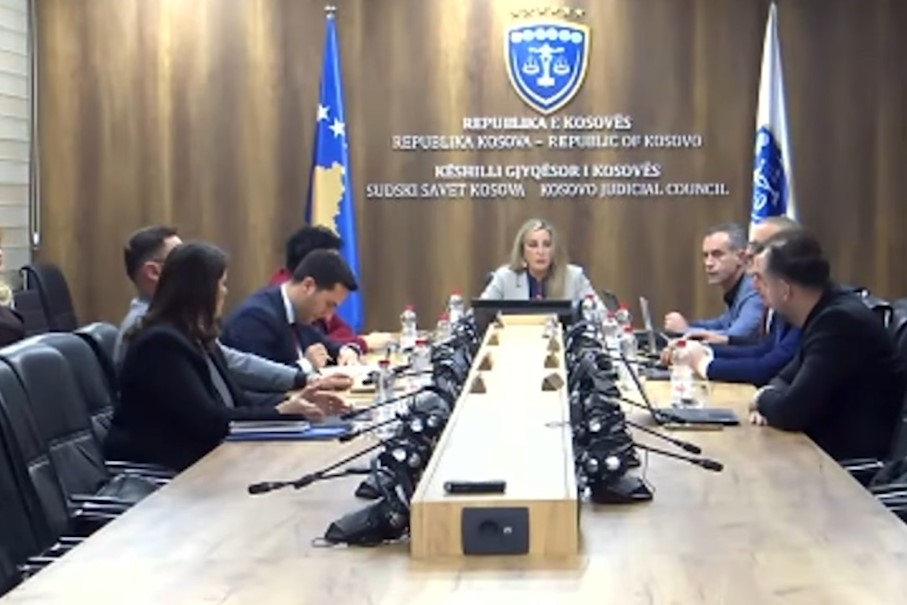
The Kosovo Judicial Council (KJC) failed to elect a new chair due to a lack of quorum, with members of the Council expressing concern over the situation.
Two candidates were in the race for the position of chair: Rrustem Thaci, a member elected from the Supreme Court, and Besnik Bislimaj from the Court of Appeals.
At the beginning of the meeting, Deputy Chair of the KJC, Arjeta Sadiku, informed members that Judge Fahret Vellija had notified the Council that, due to health reasons, he would not be able to attend the meeting. His absence left the Council without the required quorum.
“We are again with 8 members present. Judge Fahret Vellija has informed us that, for health reasons, he cannot attend today’s Council meeting. Again, there is no quorum to hold the meeting, considering we are in an important process of electing the chair. The Council ensures full transparency in informing the public about all its activities, as the interest and purpose is to provide accurate information. Apart from discussions, we do not have the quorum to hold the regular KJC meeting,” she said.
Judge Rrustem Thaci, also a candidate for chair of the Kosovo Judicial Council, expressed concern over repeated failed meetings and stressed that Council members must vote independently.
“It is extremely important that the chair of the KJC is elected. It has not been common in this institution to fail meetings due to lack of quorum, and I deeply believe we all share responsibility for the failure of meetings and specifically for not electing the chair. I believe the election of the chair should be a purely ceremonial aspect, as the KJC is a collegial body where work and processes must be transparent and voting must be free and democratic, while those elected must be legitimized by the majority of members who vote freely and without influence,” he said.
He added that any coordination with political structures or interest groups undermines the independence of the process.
“It is unprecedented and unacceptable if we, as KJC members, coordinate actions with political structures or interest groups to influence not only the election process but also the independence of the KJC. Any attempt to influence members of the KJC, to favor members, or pressure from inside or outside the system is unacceptable. It is our duty to strengthen and promote judicial independence, ensuring everyone can express their free will without feeling threatened,” Thaci stated.
KJC member Artan Abazi criticized the repeated absences of judges from meetings, stressing that members have a legal and constitutional obligation to attend.
“These emails we are receiving about absence from KJC meetings—without prejudging health conditions, as I have no medical documentation in front of me—still leave us without clarity. We do not know the reasons for absence. Notifications are being sent very late. This is concerning. Let those who benefit from postponing meetings tell us publicly why this is happening; they should not be afraid,” he said.
Deputy Chair Arjeta Sadiku said she does not want to believe that someone is intentionally boycotting meetings, but noted that no medical evidence has been submitted for the absence of Judge Vellija.
She added that she will not set a new date for the next meeting until he provides documentation and confirms whether he can attend.
The Kosovo Judicial Council launched a competition for a new chair on March 12, open until March 26, 2026. According to the Council’s regulations, the position of chair and deputy chair must be filled within 30 days from the moment they become vacant.
The Council currently has nine members. The previous chair, Albert Zogaj, served until early March.