
During a period of geopolitical tensions in the Balkans, the development of military relations between Albania, Croatia, and Kosovo has been caught up in a disinformation campaign. According to an article published on the portal Kosovo Online, this alliance was presented as an attempt to act “outside the NATO framework” and the interests of the European Union. Security experts in Kosovo consider this “part of the hybrid war that Serbia is waging against Kosovo.”
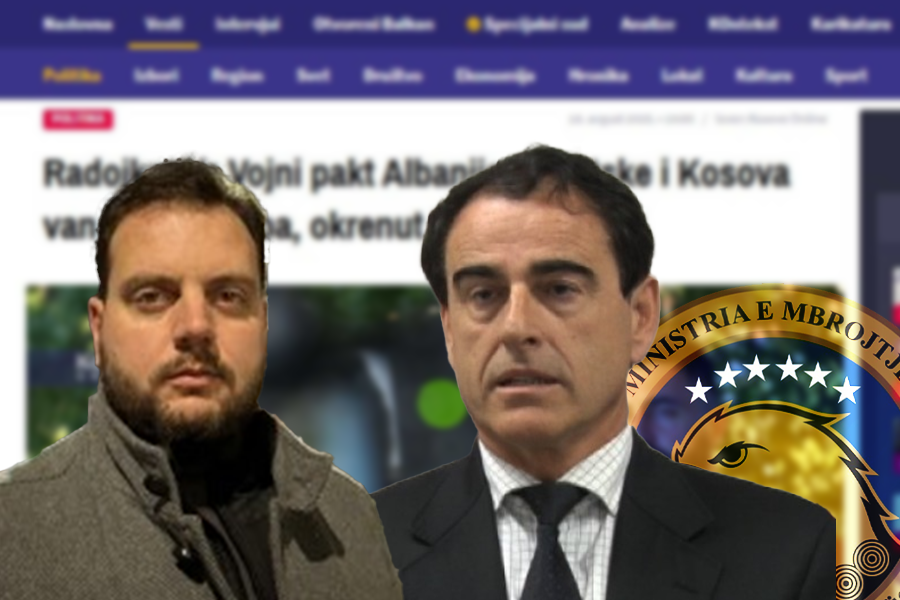
In the article published by Kosovo Online titled “Radojković: The military pact of Albania, Croatia and Kosovo outside the NATO framework is directed toward Washington”, Serbian historian Stefan Radojković attempted to portray this cooperation as an opportunity to increase U.S. influence in the region, describing the alliance as an initiative to “fight malign influences and hybrid warfare.”
However, such claims are rejected by security experts in Kosovo, and KosovaPress has not yet received a response to its questions sent to Kosovo Online regarding this issue.
Security affairs expert Korab Blakaj told KosovaPress that Serbia develops such narratives through portals that are part of hybrid warfare.
“The portal spreading this narrative is part of Serbia’s hybrid war against Kosovo and promotes such narratives. This is absolutely false, because the alliance or agreement signed between Albania, Croatia, and Kosovo does not contradict NATO at all, as both Croatia and Albania are NATO members. Moreover, it does not contradict NATO because this alliance does not affect or oppose NATO’s interests, and it was established following the model of other alliances that also exist within NATO,” said Korab Blakaj.
These claims are also denied by security expert Nuredin Ibishi, who emphasized that the Kosovo-Albania-Croatia military alliance was created to establish a common defense system and has no territorial claims against other states, unlike Serbia toward Kosovo.
“This is an agreement for common defense, a new alliance among three friendly countries, aimed at creating a joint defense system. They have no territorial claims against other states, which means they have no aggressive intentions toward others, unlike Serbia with its territorial claims. Therefore, there is no reason for concern, either for NATO or for other countries, because neither Croatia, Albania, nor Kosovo have territorial claims, unlike Serbia toward Kosovo,” added Ibishi.
Kosovo’s Ministry of Defense also stated that despite Serbia’s stance, Kosovo will continue cooperating with countries sharing the same security perspective.
“It is clear that the trilateral agreement is a regional initiative and not under NATO’s framework, but NATO does not prohibit such alliances. Despite Serbia’s positions, Kosovo will continue cooperation with countries with which we share a security outlook, joint engagement against hybrid warfare, and the defense of democratic values. If Serbia feels threatened and disputes the strong Kosovo-Croatia-Albania relations, that is its problem. This initiative will expand,” said spokesperson Liridona Gashi in a written response.
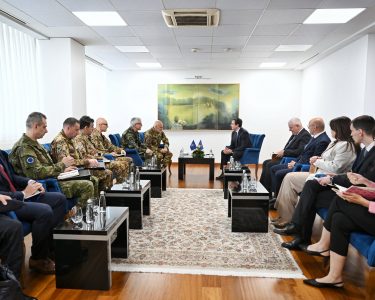
On March 18, Kosovo, Albania, and Croatia signed a declaration in Tirana committing to strengthen cooperation in defense and security.
Kosovo’s Minister of Defense, Ejup Maqedonci, signed the declaration together with his counterparts from Albania, Pirro Vengu, and Croatia, Ivan Anušić.
The declaration on defense cooperation between Croatia, Albania, and Kosovo triggered strong reactions in Serbia, where Serbian officials considered the agreement “an anti-Serb move” aiming to confirm Kosovo’s statehood and weaken Belgrade.