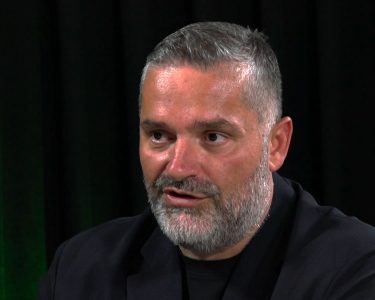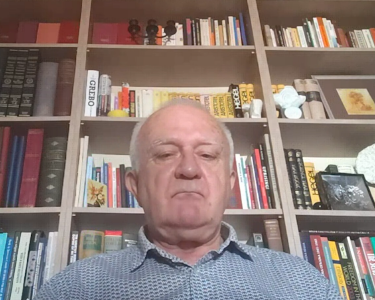

Since December of last year, no quality checks of petroleum derivatives have been carried out in the Kosovo market. This is according to Jakup Gashi, owner of the laboratory “Sierra Lab”, who spoke to the program Shtylla, produced by the KosovaPress News Agency.
Meanwhile, citizens complain that they are affected not only financially but also in terms of health.
Jakup Gashi, owner of the Sierra Lab petroleum quality control laboratory, emphasizes that oil operators are operating in an uncontrolled market. According to him, this is done with full awareness of the Ministry of Industry, Entrepreneurship, and Trade (MINT).
“There has been no control since before December of last year; the last control was at the end of November. In reality, oil operators are operating in an uncontrolled market. This is done with the full awareness of MINT, which is responsible for inspections but has avoided internal control. At the same time, import control falls under the responsibility of customs, which is primarily a tax collector. They verify excise, but not quality. Other products are imported into Kosovo and other countries—so why isn’t the same control applied to them, or why only to oil? This system was created intentionally or with full awareness, in full coordination with oil operators, institutions, or the Government of Kosovo, which in itself contains a scandal… We have accredited labs, like KOSALABI, EKSFISI, and us, to meet criteria and standards. However, the responsibility has been placed on customs,” he stated.
Gashi explains that the lack of control has opened the door to manipula“When the market is uncontrolled, it is easy for both exporters and importers to manipulate quality. An uncontrolled market cannot guarantee quality. We cannot say that previous controls provided full security, but at least there was some assurance. Now, every day we receive complaints from citizens about oil being mixed with water or poor quality, which has even led to vehicle damage. But this responsibility lies with the Ministry of Trade and the Government of Kosovo. Comparing 2023 to 2024, 70,000 more liters have been imported, which is unusual given the population migration, dry areas, and nearly unchanged number of vehicles. These liters have increased,” he emphasized.tion of oil quality, directly harming vehicles and consumers.
Since December of last year, no quality checks of petroleum derivatives have been carried out in the Kosovo market. This is according to Jakup Gashi, owner of the laboratory “Sierra Lab”, who spoke to the program Shtylla, produced by the KosovaPress News Agency.
Meanwhile, citizens complain that they are affected not only financially but also in terms of health.
Jakup Gashi, owner of the Sierra Lab petroleum quality control laboratory, emphasizes that oil operators are operating in an uncontrolled market. According to him, this is done with full awareness of the Ministry of Industry, Entrepreneurship, and Trade (MINT).
Selatin Kaçaniku from the Consumer Protection Association criticizes the lack of political will to protect citizens.
“Unfortunately, we have had very bitter experiences with poor oil quality… Quality has improved significantly, but problems remain. The fact that the government, together with MINT and customs, still cannot properly utilize certified laboratories for controlling oil imports shows that we are not well off in terms of lubricant quality or market standards… No government legislature has prioritized the consumer, and no political party has a program for consumer protection,” Kacaniku said.
Media have repeatedly reported damages suffered by vehicle owners due to poor-quality oil. Citizens interviewed also confirm that the oil they use is not of good quality.
Fatushe Nikaj, calling for quality inspections, said that state institutions should monitor oil.
“The state should have control over oil. There should be inspections. When the state functions, everything functions,” she emphasized.
Besnik Feka, a citizen, says it is necessary to monitor oil quality, as it harms both citizens and vehicles.
“The relevant ministry should have inspection commissions. It is necessary to control oil quality because it is in everyone’s interest. Citizens and vehicles are harmed, leading to major consequences and damage to vehicles,” he said.
Beyond vehicle damage, financial losses, and other economic impacts, poor-quality oil also directly affects human health.
Pulmonologist Besim Morina says that the burning of fuels, including vehicle diesel, is the main source of air pollution in Kosovo.
“The burning of fuels, diesel from vehicles, is the main source of air pollution in Kosovo and elsewhere. In Kosovo, especially urban areas, this is much more pronounced. The presence of diesel vehicles worsens air quality far more than other fuels. Diesel also contains sulfur oxides, which are major air pollutants that impair lung function, worsen asthma, and cause other health problems,” he said.
In March this year, the Ministry of Industry, Entrepreneurship, and Trade signed an agreement with Kosovo Customs to transfer testing from private laboratories to the state laboratory. The official statement from the ministry emphasized:
“This agreement guarantees that laboratory tests will be conducted without any financial burden on MINT or businesses, ensuring transparency and integrity in the process, as well as improving quality control standards.” The agreement is intended to facilitate trade, prevent monopolization, reduce high testing costs, and improve product quality control.
However, Jakup Gashi from Sierra Lab calls the agreement illegal.
The Shtylla team also contacted the head of the Kosovo Oil Operators Association, Fadil Berjani, regarding whether oil quality is being checked in the market and whether his business has undergone quality checks since December last year. Berjani responded that he is “on vacation.”
Similarly, the Ministry of Industry and Kosovo Customs have remained silent in response to repeated inquiries.
Shtylla airs weekly and is dedicated exclusively to economics, featuring investigative reports, exclusive stories, statistics, finance, and more.