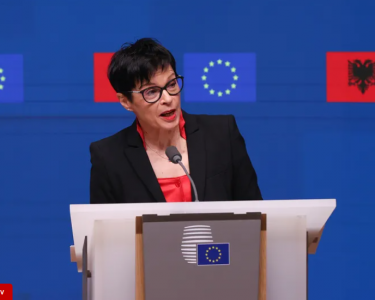
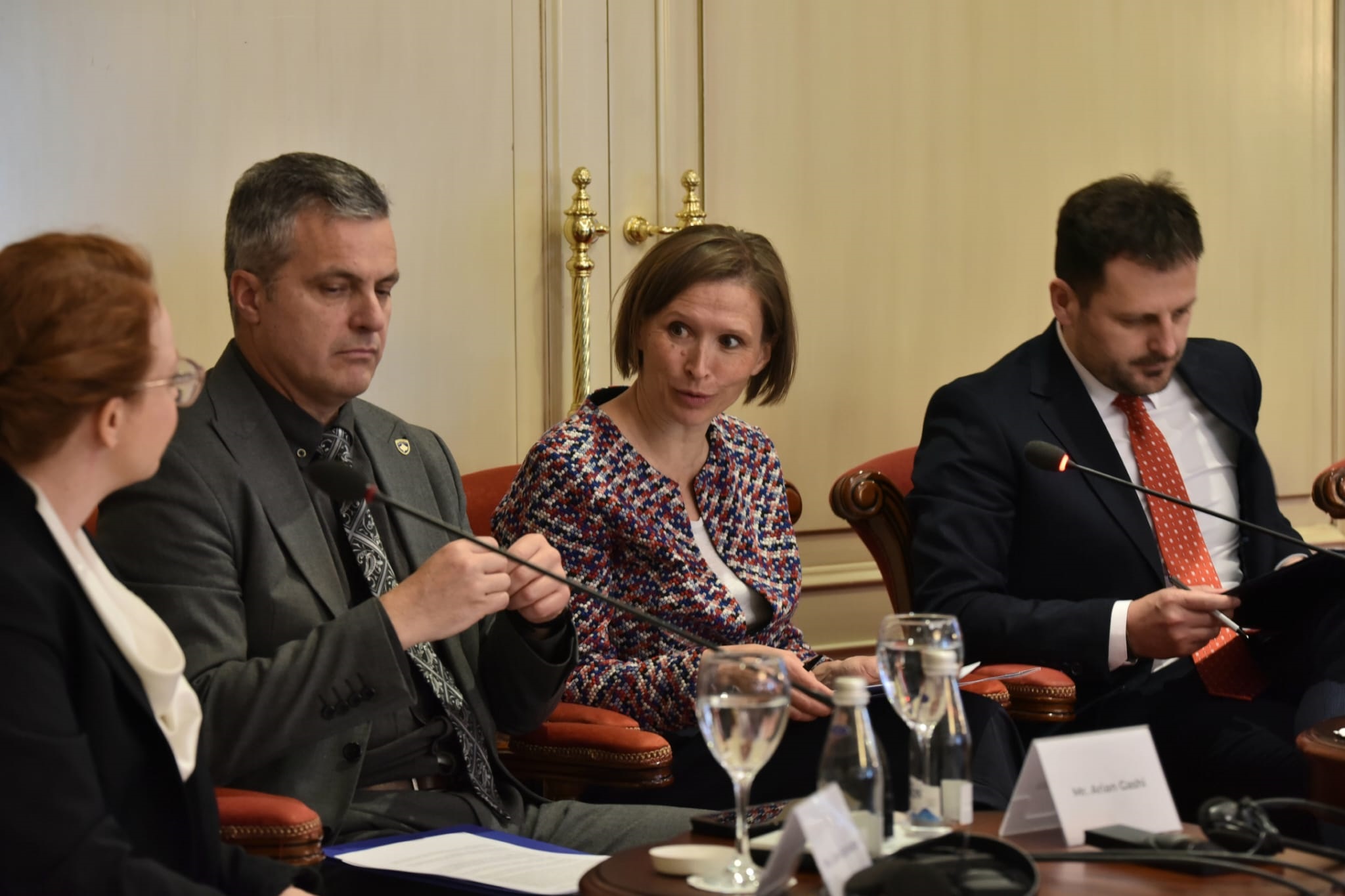
Acting Head of the EU Office in Kosovo, Eva Palatova, said that the European Commission will use information on Kosovo from the latest regional justice survey conducted by the World Bank to measure the progress of reforms carried out by the country.
According to the survey, citizens believe there is less corruption in the justice system, while businesses say the opposite. Another finding is that trust in the judicial system increased by 6 percent in the 2025 measurements compared to previous assessments in the courts.
In addition, Palatova stated that the European Union welcomes the formation of Kosovo’s new institutions following the snap elections of June 7 so that, as she said, the country can move forward with the necessary reforms in the context of the EU integration process.
She also said that the EU expects a spirit of compromise in the establishment of these institutions.
“We are carefully analyzing the information collected through this survey because it reflects the level of efficiency, equality, and independence of the judiciary. This helps us better understand how the justice system is functioning in practice. It provides us with a clear and useful overview, which is then included in the annual report for all countries, including Kosovo, particularly for assessment on one side and recommendations for our advocacy on the other regarding reforms requested by various stakeholders within the rule of law system.
Considering Kosovo’s medium-term objective of starting accession negotiations, the key elements in this regard, as determined by the European Commission’s methodology, are specifically Cluster 1, which focuses on fundamentals and covers Chapters 23 and 24 directly related to the judiciary and the rule of law.
Therefore, thanks to this survey, we will engage our Kosovo counterparts, many of whom are able to contribute because advisory mechanisms are in place, and we highly appreciate this. We also welcome the formation of political institutions after the June 7 elections, and we hope this process will be guided by a spirit of compromise. I hope Kosovo will very soon have institutions capable of advancing the necessary reforms in the context of the EU integration process,” Palatova said, according to KosovaPress.
Deputy Minister of Justice Genc Nimoni said that the World Bank report is of particular importance because it helps Kosovo institutions not only identify the progress achieved but also address challenges in improving and advancing the rule of law.
Meanwhile, World Bank senior specialist in this field, Klaus Decker, said that regarding the independence of the justice system, the results are interesting. Comparing data from 2020 with the 2025 survey, he said that citizens, judges, and prosecutors see positive developments, while businesses and lawyers are more critical.