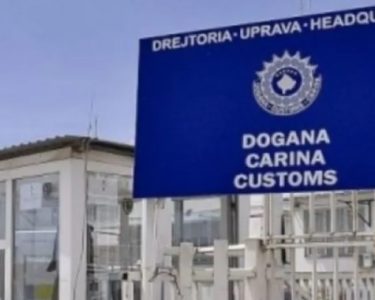

Kosovo recorded its highest ever level of imports in 2025, reaching €7.11 billion, while exports reached €943 million, according to the Director of the Kosovo Customs, Agron Llugaliu.
In an interview with KosovaPress’s exclusive economic program “Shtylla,” Llugaliu said this is the first time Kosovo’s imports have exceeded the €7 billion mark, marking an increase compared to the previous year.
“For imports, the top products are mineral products, mostly fuels and derivatives used for various purposes. Then come transport vehicles as finished products, machinery, mechanical equipment, cement and steel, plastics, and their products in terms of import value. These are the top five products imported into our country by value.
As for exports, most of the dominant products are base metals and articles made of base metals, plastics and their articles, prepared foods, beverages, alcohol and tobacco, various manufactured goods such as furniture, and mineral products in general,” he emphasized.
Thus, according to the Director of Kosovo Customs, Agron Llugaliu, the record import of €7.11 billion was achieved, alongside exports reaching only €943 million.
“Customs had another satisfactory performance last year, generating revenue for Kosovo’s budget of €1.668 billion. This represents nearly an 8% increase compared to the previous year, when revenue was €1.532 billion.
But what contributed to this increase in imports?”
“The start of free trade agreements with the EU, Turkey, and most recently the United States has had a significant effect on tax exemptions, which in fact has a negative impact on the total revenue we collect, increasing by €48 million compared to the previous year, reaching around €425 million for 2024.”
Llugaliu expressed optimism for the new year, while clarifying how revenues are collected.
“We expect to have similar performance. I believe we will continue to see revenue growth if local and global economic conditions do not present any major surprises. Moreover, it is worth noting that despite all the success we have achieved, nearly 98% of the revenues we collect come from voluntary business declarations. Only 2.4% of the remainder comes from amounts collected by Customs based on actions, information, or reassessments undertaken, which are additional revenues for the annual budget,” Llugaliu emphasized.
He does not see Kosovo’s export level as bad, although it remains far below imports.
“In 2025, exports totaled around €943 million, while imports amounted to €7.11 billion. In the previous year, imports were about €6.35 billion. This shows an almost normal year-on-year growth dynamic, roughly in line with the country’s economic growth. Both quantity and value have increased, as even in our product weight indicators, there has been significant growth,” he said.
However, he admits there is still much work to be done to increase exports.
“This reflects the state of our industry in general. We observe a significant increase compared to five to six years ago, with exports having doubled. Last year, exports reached €1 billion. We have policies that are extremely supportive of business, but the industry cannot catch up overnight. Several historical factors, from the time of former Yugoslavia, followed by the privatization process, have affected the ability to fully transition from a social economy to an open market economy, so that production capacities are effectively utilized. Delays in supportive policies, especially for producers, as well as the legal uncertainty before Kosovo’s independence in 2008, also affected foreign investment. These factors have influenced the current export trend,” he said.
During the interview, Llugaliu also spoke about customs procedures, for which Kosovo ranks highly.
“In May 2024, we implemented the new Customs Code, fully harmonized with the European Union’s customs code, offering the latest facilitation measures used in EU countries. Moreover, since 2017, Kosovo has been a member of the World Customs Organization and part of several conventions, including the Kyoto Convention, allowing us to have the most advanced system for trade facilitation.
An objective and reliable measure is customs clearance time, monitored monthly by CEFTA’s secretariat in Brussels. Kosovo has ranked first for several years, meaning we have the best customs clearance times. I believe this is the most accurate measure of our performance,” he said.
However, all this work until last year was carried out with a relatively small staff.
Speaker 2: “We now have generally consolidated capacities. Last year, alongside other reforms, we recruited 107 new officials. However, we still need more staff due to new offices and economic growth. Compared to 2008, export and import shipments have doubled, but staff numbers have not increased since then. Therefore, increasing personnel is essential. We are working with the Ministry of Finance to raise the allowed recruitment number. We now have a merit-based recruitment system built with EU support and expert guidance over nine months, establishing a solid foundation for recruitment based on merit,” Llugaliu declared.
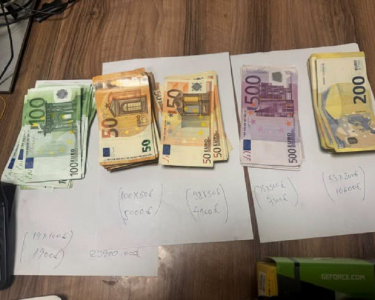
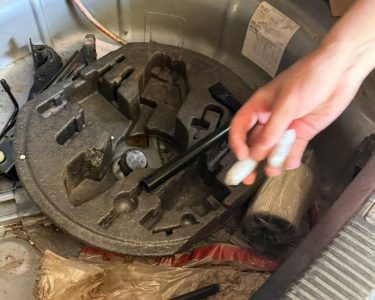
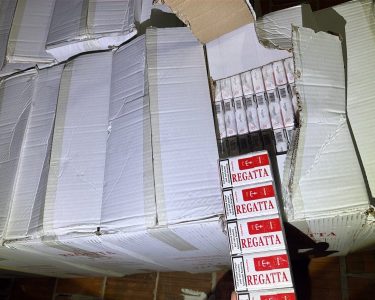
Regarding the fight against smuggling, the Customs Director said that goods worth millions of euros were seized last year, though he denied an increase in illegal activity.
“Given the significant increase in revenues on one hand and the increase in detections on the other, I believe we have been highly effective in combating smuggling and informality in general. Last year, about €18.4 million worth of goods were seized, including smuggled items. I do not believe smuggling has increased; rather, efficiency in detection has improved, thanks to legislation reforms, promotions within the organization, and the recruitment of 107 new officials, whose early results are already visible,” he said.
Llugaliu also highlighted that Kosovo Customs is highly ranked internationally.
“We perform well, except for issues with Serbia, which are more political. We have efficient cooperation with all other countries. Since 2022, we have customs clearance at Albania’s Port of Durrës, helping both our market and Albania’s, with shipments to Durrës growing over 25% year-on-year, while other ports have slightly decreased. We are also consistently involved in joint operations coordinated by the World Customs Organization in areas like counterfeit drugs, fraud, and weapons. Year after year, we rank among the top ten in detection results among over 150 participating countries,” Llugaliu said.
Llugaliu has held this position since April 2021.