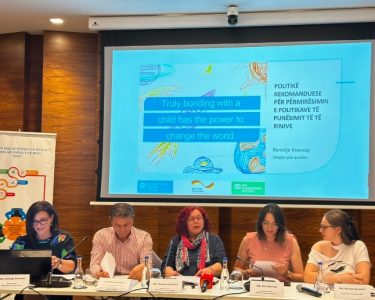

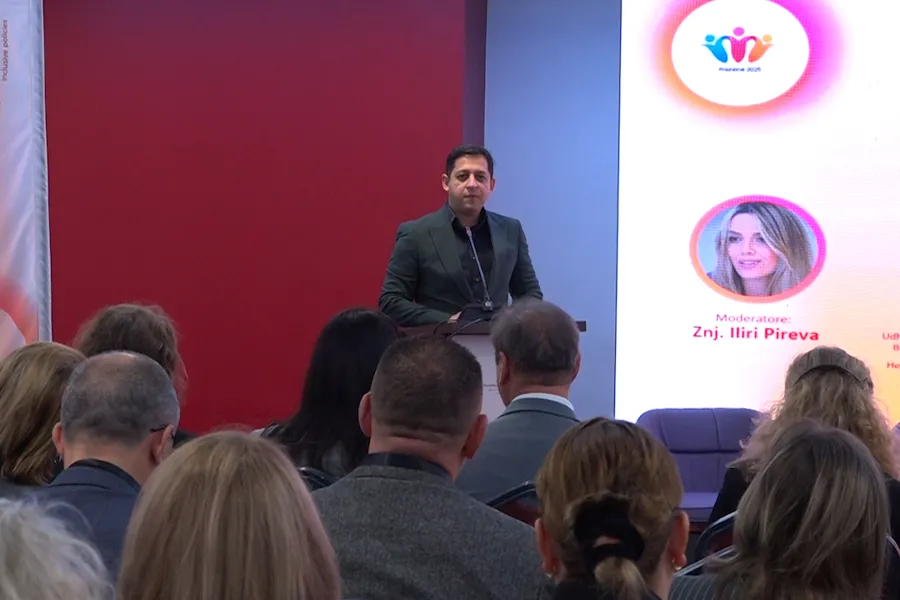
The Regional Summit in Kosovo reaffirmed its commitment to combating racial discrimination and promoting the inclusion of Roma, Ashkali, and Egyptian communities.
The regional summit against racial discrimination in Prishtina, held for the sixth time, focused on institutional cooperation with civil society to advance inclusive policies and strengthen mechanisms against discrimination, especially targeting Roma, Ashkali, and Egyptian communities.
Participants emphasized the importance of the role of NGOs and government-established mechanisms in addressing shared challenges and sharing success experiences toward a more equal society.
Beate Elsasser, Head of Cooperation at the Swiss Cooperation Office, Embassy of Switzerland in Kosovo, spoke about supporting civil society through various programs.
“The government has a duty to ensure non-discrimination and inclusion, but civil society organizations play a central role in shaping and implementing policies, as well as driving societal change. We have supported civil society in Kosovo through various programs such as the Civil Society Foundation, as well as projects led by organizers present here. We call it social inclusion for Roma, Ashkali, and Egyptian communities. These partnerships have allowed us to support the fight against discrimination and promote inclusive policies in education and housing, as well as equality policies,” Elsasser emphasized.
Habit Hajredini, Director of the Office for Good Governance, Human Rights, Gender Equality, and Equal Opportunities at the Prime Minister’s Office of Kosovo, noted that this was the sixth time they gathered at this summit, but this time to review progress, challenges, and next steps.
“This time we bring together civil society and institutions, not only to exchange needs but also to review progress, challenges, and next steps we will take. The topics covered during these two days focus on combating discrimination. Naturally, this is in the interest of our country, society, state, and institutions, but also the region in general. The process of taking action by Western Balkan countries has flowed from the Berlin Process. As countries of the Western Balkans, including Kosovo, we are committed to taking concrete actions to prevent and combat discrimination against Roma. Through cooperation with civil society and NGOs, we have taken immediate measures to prevent and combat discrimination against Roma, Ashkali, and Egyptian communities. As you know, the government has created an adequate mechanism and structure to prevent and combat discrimination,” Hajredini said.
Isak Skenderi, Executive Director of the Network of Roma, Ashkali, and Egyptian Communities in Kosovo, delivered his speech with motivational words.
“For many years, all those who have worked in civil society have spoken about a better society, a society based on equality, justice, and dignity for all. These aspirations often start as ideas, sometimes as convictions, long before they take the form of policies, programs, or public commitments. I have had the fortune, over these years, not only to carry these aspirations but also to see some of them materialize through joint efforts and partnerships built on shared values. Experience has taught me a fundamental lesson: progress is never the result of an individual vision; change only becomes possible when others choose to take ownership of that vision, question established practices, challenge systems when they remain inadequate, and accept the responsibility that meaningful change entails,” Skenderi said.
Human rights activists note that Kosovo’s Law on Protection from Discrimination has strong potential on paper, but its implementation remains limited and ineffective in many areas of life, including employment, access to services, and treatment of marginalized communities, challenging the efforts of the summits and civil society support programs.