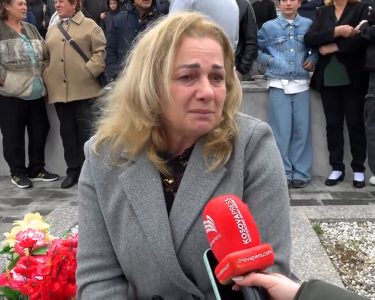

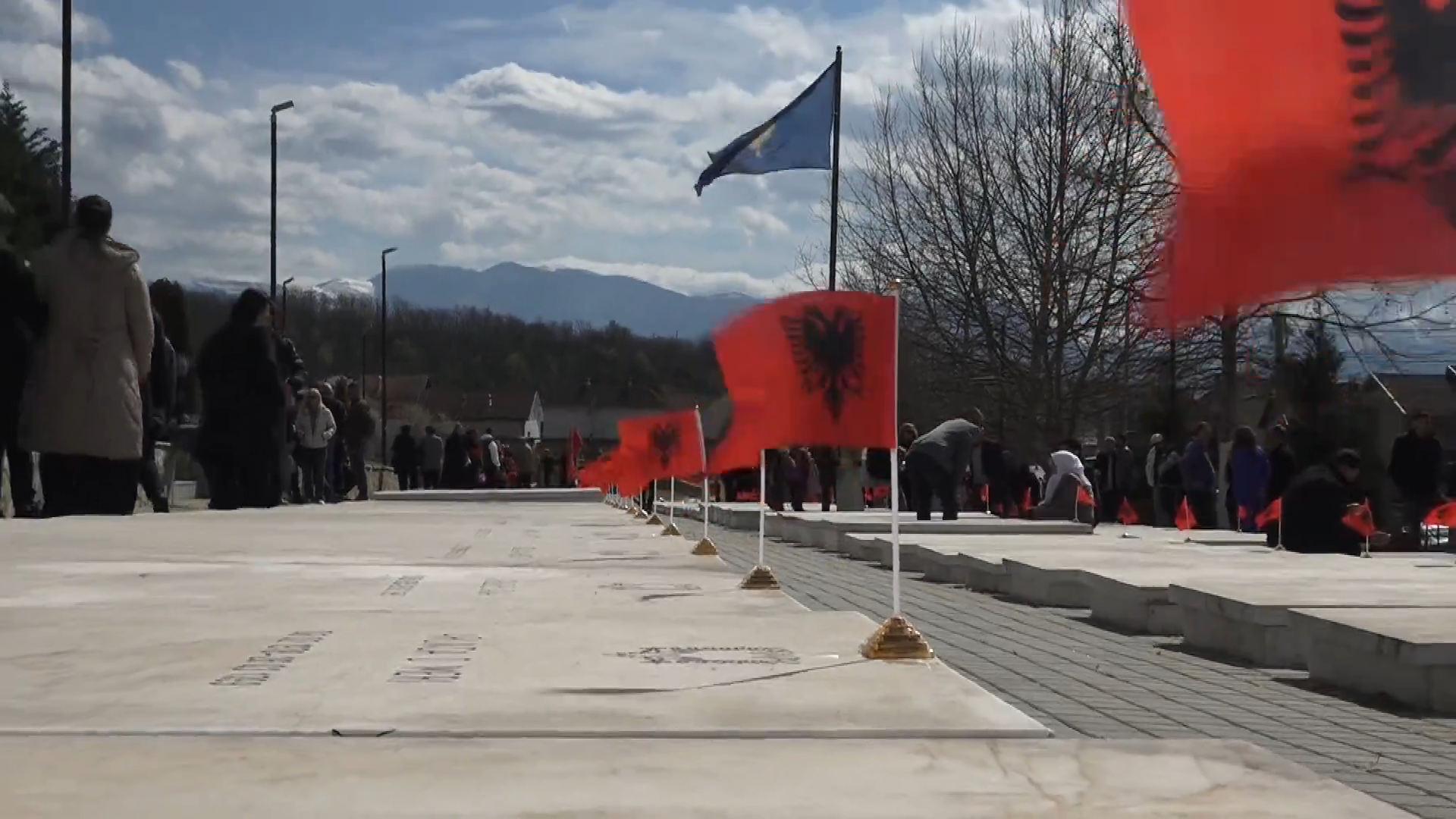
Exactly on the 27th anniversary of the start of the NATO bombing that led to the liberation of Kosovo, new evidence has been found in Rahovec that, according to officials, further justifies NATO’s intervention.
Kushtrim Gara from the Government Commission on Missing Persons said that at the “Përzhina” site, remains were discovered belonging to Rahovec residents, likely belonging to at least one person.
“We will wait until all necessary forensic examinations are completed to confirm the exact number of individuals and exhumed victims. We will continue working at this site in the coming days, as it is already a marked area that has been continuously treated over the past 27 years. In the early post-war months it was first examined by German forensic teams, then in 2002 and 2007 by international forensic teams within the UNMIK mission, and most recently we, as the Government Commission together with colleagues from the Institute of Forensic Medicine and the Police Directorate for War Crimes Investigation, have returned to this location. Based on all the data we have collected and analyzed in detail, we have concluded that in this area there continue to be or may be mortal remains of at least eight war victims, or at least five of whom are still on the list of missing persons.”
Gara said that there are also 10 more locations that will be excavated in the coming weeks.
“The site we are treating as a top priority, as presented at the end of last year, is this location in Rahovec. In addition, we have at least three other locations already addressed within this process, which we continue to refer to as an ongoing process of identification or correction of possible misidentifications. Together with colleagues from the Police Directorate for War Crimes Investigation, the Institute of Forensic Medicine, and with the support of our international partners, especially the International Committee of the Red Cross, and data from international archives, we have a number of locations—up to 10—that will be part of the agenda in the coming weeks. However, I am still speaking only about preliminary data, as we as institutions, together with the police and forensic institute, are continuously working to address the challenge we face, which is the lack of reliable information,” he added.
He also reiterated that the most concerning and challenging locations remain those inside Serbia, as Serbian authorities do not share information about them.
Last year, excavations were carried out at 32 locations, while over the past 27 years searches have been conducted at around 2,700 sites in an effort to find human remains.