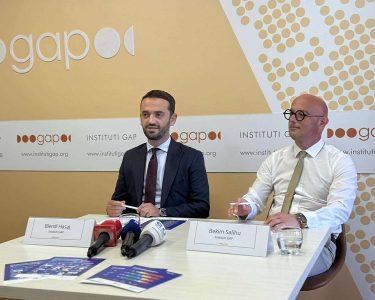
Kosovo ranks poorly compared to other countries in the sector of budget consultations with the public. Based on a pilot project implemented by the GAP Institute in 2023, regarding Kosovo’s standing in the budget transparency survey, it turns out that our country scored only 9 out of 100 possible points.
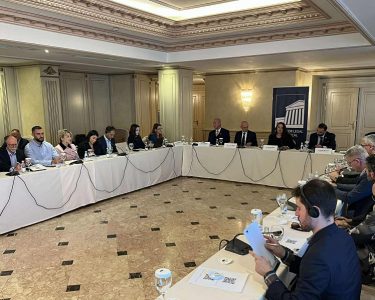
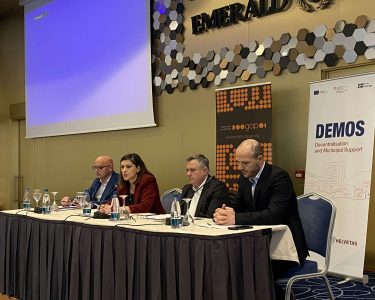
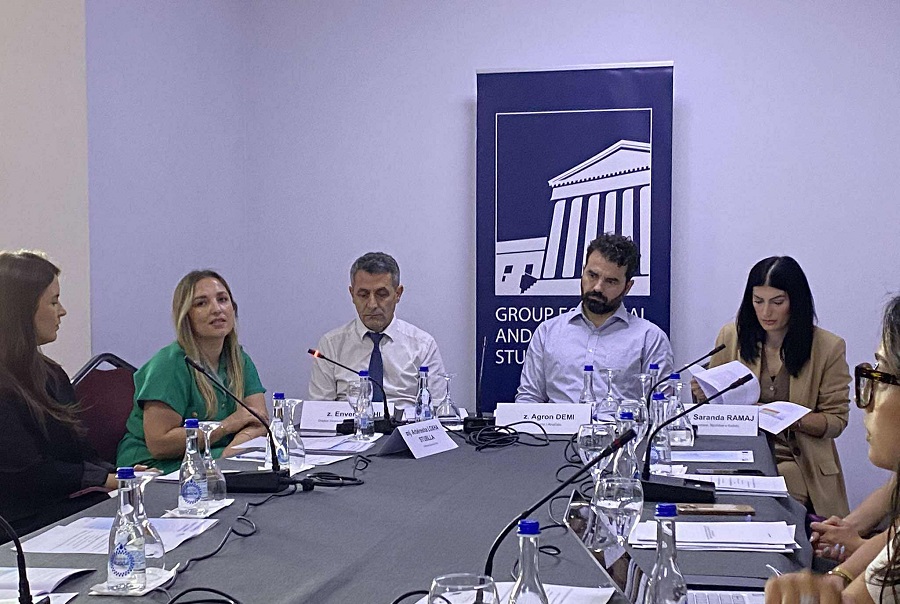
This was said at a roundtable discussion organized by the Group for Legal and Political Studies (GLPS) on the topic: “Public funds, public health: Analysis of health sector budget transparency in Kosovo.”
It was emphasized that in Kosovo, the process of budget consultations with the public, non-governmental organizations, and the media is at the lowest possible level.
The author of the analysis “Public funds, public health: Analysis of health sector budget transparency in Kosovo”, Agron Demi, said that the Ministry of Health publishes budget reports, but they do not present many details. In addition, he said that the method of publishing on the web, such as in Word or PDF, makes them difficult to read.
While presenting the results of the analysis, Demi emphasized that the University Clinical Service of Kosovo (UCCK/SHSKUK) has made progress in publishing budget reports, but again criticized the way they are published.
“Kosovo is not part of the open budget survey carried out every year in many countries by the International Budget Partnership. In 2023, a pilot project was implemented by the GAP Institute to assess where Kosovo stands in this budget transparency survey. It shows that we are ranked very poorly compared to other countries, where in the sector of public consultations Kosovo scored only 9 out of 100 possible points. The process of budget consultations with the public, NGOs, and the media is at the lowest possible level. … In the case of the UCCK, since 2022 there has been greater proactivity in publishing budget reports and more detail or professionalism regarding the content being published. … The problem that affects both the Ministry and UCCK is that these reports are published in PDF and Word formats. … At the Ministry of Health, there are even monthly reports published. However, although they are monthly, these reports do not provide more information than the most basic requests,” Demi stressed.
Demi further pointed out that at the central level, not only the Ministry of Health but no other ministry carries out discussions with the public.
“The budget discussion involves only the UCCK and the Ministry of Finance or the Ministry of Health, but nowhere in this process is the public included. … At the central level, not only the MoH but no other ministries ever implement budget discussions with the public. Civil society organizations are not invited, public discussions with journalists are not held – it is a completely closed process,” said Demi.
Among other things, Demi highlighted that Kosovo also performs poorly in terms of parliamentary oversight and auditing of public funds in the health sector.
He said that out of a maximum of 100 points, Kosovo received only 53 points for parliamentary oversight.
The Assembly of Kosovo and its Committee on Health have the legal authority to oversee how public funds are spent in the health sector. This includes reviewing budget laws, financial reports, and audit findings.
“Parliamentary oversight remains weak. Out of a maximum of 100 points, Kosovo scored 53 in parliamentary oversight. If you go to the Assembly’s website to seek information regarding the activities of the Health Committee, there are no transcripts or minutes of oversight activities since 2020,” said Demi.
Meanwhile, the financial director of the University Clinical Service of Kosovo (UCCK/SHSKUK), Enver Gashi, said that at the central level there is no possibility of direct public discussion about the budget.
According to him, in board meetings where the budget is discussed, civil society and journalists participate.
Regarding misuse of funds, Gashi said he could not say whether it has happened or not, as this matter belongs to the competent institutions.
“Over the years, the health sector in Kosovo has faced numerous cases of budget misuse, underlining the urgent need for greater transparency and accountability in public spending. A prominent example includes the Fund for Treatment Outside Public Institutions, through which the state spent nearly €70 million between 2013 and 2020 for private hospital services, both inside and outside the country, while still owing €30 million for treatments. Payments to specific Turkish hospitals increased significantly during this time, from €30,000 in 2013 to more than €2.5 million annually, raising concerns about unjustified referrals, favoritism, and lack of oversight,” the report “Public funds, public health: Analysis of health sector budget transparency in Kosovo” states.
As part of this analysis, several recommendations are given, stating that all financial reports should be published in machine-readable formats (e.g., Excel, CSV) and included in Kosovo’s Open Data Portal to allow independent analysis by CSOs, journalists, and the public.
Furthermore, the reports should include clear categories of expenditures, comparisons between planned and actual spending, as well as summaries that can also be understood by non-experts.
Part of the recommendations is that public hearings or online consultations should be introduced during the budget planning phase, allowing contributions from civil society, health professionals, and the general public.