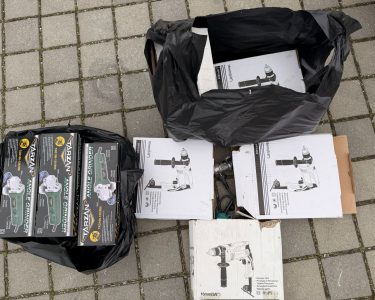
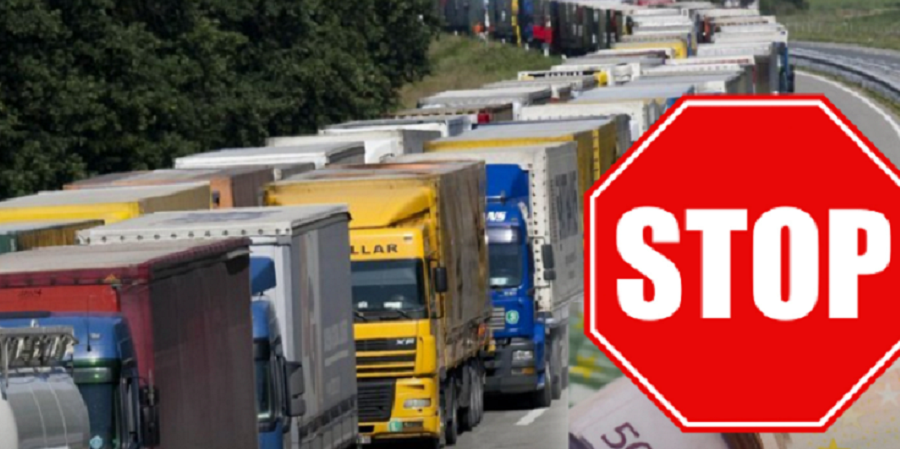
Serbian goods have returned strongly to the Kosovo market this year, after a decline in recent years. Kosovo has more than doubled the import of products originating from Serbia in the first five months of this year compared to the same period in 2024.
Although calls for boycotting Serbian products are widespread, these goods continue to be sold in Kosovo’s market.
Most citizens surveyed by KosovaPress say they do not purchase food or other products originating from Serbia. They believe that favoring local products strengthens Kosovo’s economy and helps increase the state budget, while imports not only benefit other countries but also impose more taxes and costs on local consumers.
Of course, Serbian products should be boycotted, says citizen Basri Hoxha, who adds that it is essential for the state to invest in agriculture and the local economy, so that consumers, according to him, have access to quality and affordable alternatives.
“I don’t buy them and have been a constant critic. We should at least learn from our enemies – they don’t buy ours, so why should we buy theirs? But to be fair, those with lower standards are often tempted by the price, so we must understand that too… There may be various motives, but mainly due to their centuries-long hostility towards Albanians – why help them? It’s a great misfortune for our nation that right after the war, our ministries and institutions didn’t support our farmers to produce more and provide for our people. They should’ve opened farms throughout Kosovo – for cattle, poultry, fruit, and vegetables. It’s our own fault that we import millions worth from Serbia, but I don’t blame the people, I blame our political leaders and government,” he said.
Meanwhile, Valdet Spahijaj highlights that awareness about boycotting Serbian products has increased since the war. However, as he notes, some individuals still buy them, perhaps for personal or economic reasons. He points out that Kosovo now has plenty of diverse local products, so there is no reason to continue consuming Serbian goods.
“As for Serbian products, we used to buy them before the war, but after the war we became more aware, and most people no longer buy them, considering we now have not just one or two, but three to four varieties of a single product. There’s no need to buy theirs – we’ve consumed enough. Citizens’ awareness has surely increased, and most no longer buy them, though some still do,” Spahijaj said.
Citizen Musa Kalaveshi says he tries not to buy Serbian products, considering it a matter of principle and humanity. According to him, there is no reason to consume foreign products when local alternatives exist. This stance reflects a moral conviction and support for domestic products, emphasizing the importance of individual awareness in consumer choices.
“I try not to buy them… First of all, it’s a human issue – why buy something foreign when we have our own products?” he emphasized.
Citizen Sejdi Halimi also emphasizes the importance of supporting local products, stating that their consumption directly impacts the country’s economic development. Even if quality may not always be top-tier, he believes that the more local products are consumed, the better their standards will become.
“No, because we have our own products. Maybe the quality is not always perfect, but the more we consume local products, the more the quality will improve. So it’s better to consume domestic products… If we in Kosovo support local producers, the state budget will increase, and things will get better because opportunities are better. When we import, we pay customs, VAT, and all the extra costs – so let’s favor our products and leave the others for someone else to buy,” Halimi said.
Jashar Miftari also expresses a firm stance against buying Serbian goods, saying: “I don’t buy them because I don’t like them.” For him, this is not only a matter of patriotism but a personal conviction built on history and relations with Serbia.
He emphasizes that he no longer trusts those he sees as enemies and sees no reason to support them through consumption.
“No, never, because I don’t buy them… I don’t buy them because I don’t like them… It’s not just about patriotism – we don’t buy from enemies, we don’t trust them anymore,” Miftari emphasized.
According to official data from the Kosovo Customs, in just the first five months of this year, Kosovo imported goods from Serbia worth over 91 million euros – about 117% more than in the same period last year when it was 42 million euros.
At the same time, Kosovo continues to face a negative trade balance, which continues to harm the country, especially considering the low level of exports due to a lack of subsidies and unfavorable policies for local producers.