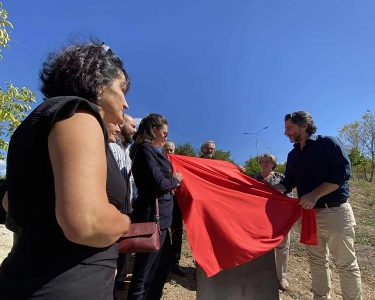

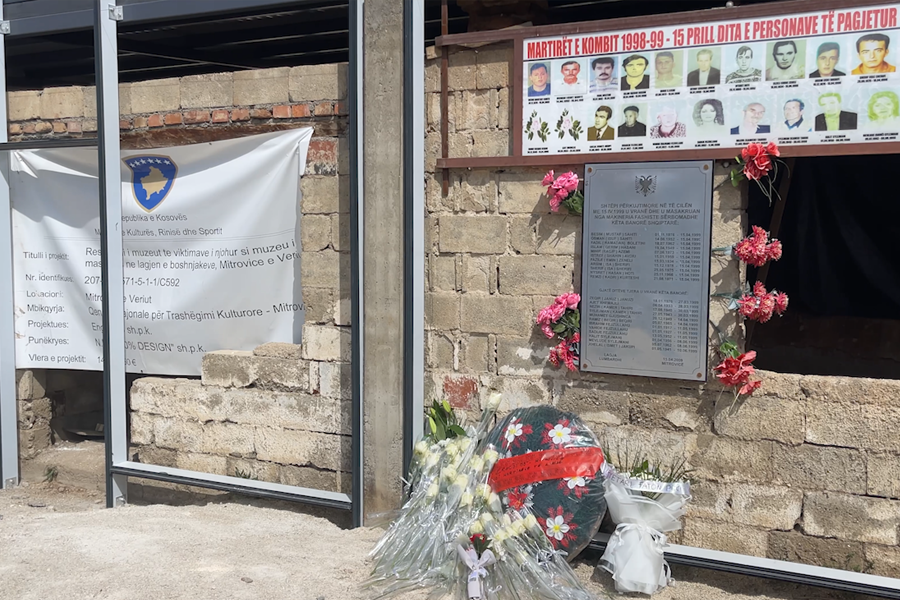
More than two and a half decades after the war, the testimonies of survivors and family members of the victims of the massacre in the Bosniak neighborhood in North Mitrovica continue to bear witness to the crimes committed against Albanian civilians.
Through painful memories, Bujar Sahiti describes to KosovaPress the moment when they were forcibly taken out of their homes, when men were separated from their families, and many of them were killed or went missing, while demands for justice and institutional handling of these crimes remain unresolved.
“They gathered us in my uncle’s house, they mistreated us, they did everything to us. They kept our parents here. My father, my uncle’s son, and my uncle were detained, but my uncle was later released. They also threw us out of the house, beat us, and took everything we had. I cannot speak. We found my father in 2013, in the cemetery up there. My uncle’s son was found in Bajram Rexhepi’s yard, while one cousin of my father is still missing. We have a lot of pain, 27 years is a long time for us, for parents…,” said Sahiti.
He said that the family had planned to leave for Albania, but they were stopped by armed masked individuals.
“We were supposed to go to Albania. At 09:30 AM we were supposed to leave by bus, but Serbs with masks came in, we didn’t know who they were. They entered our yard and took our money and gold. They only separated the men: ‘you, you, come here’. They threw us out, and as soon as we came out a bit further up, they shot with automatic weapons. We thought they had killed us immediately, but they didn’t let us return. Later, along the road, there was Serbian police who told us: ‘go, go, head to Albania, we’ve stopped you enough’, joking around,” Sahiti recounts.
Sahiti also recalls his final moment with his father.
“When that meeting was held, everyone spoke before me. I was a representative of the Lumbardh and Bosniak neighborhoods. I took the floor and addressed Mayor Bajram Rexhepi: ‘Mayor, the house of Mustafë Sahiti has been put up for sale. I haven’t spoken with the owner, but the whole neighborhood is talking that it is for sale. I have a request: this house must not be sold for any price. In this house people were killed, massacred, looted, and expelled by Serbian Chetnik gangs. This house should be declared a site of Serbian genocide.’ His response was not very advanced for me and the neighborhood. He said: ‘property is sacred, whoever wants to sell it sells it, whoever doesn’t want to doesn’t’,” he said.
He says that according to testimonies, evidence was found at the scene proving executions.
“According to witnesses, even this Bujar who spoke, his family members are here: his father, his uncle’s son. When the French KFOR entered here, they did not find the bodies, but it is true that they found Kalashnikov shell casings, around 7–8 kilograms. There were also traces that prove execution. Now it is up to the investigation, the intelligence agency, the judiciary, and the prosecution to deal with this case and clarify how it came to the killings. People of different ages were killed here. Serbia’s fascist genocide did not distinguish whether someone was armed, KLA, civilian, or a person with disabilities. We have an Albanian mother who was in a wheelchair and they killed her eye just because she was Albanian. Serbia’s fascist goal was to erase everything Albanian from the face of the earth, so that Albanians would never return here, and for this Dardanian region to remain Serbian. But thank God, thanks to the Kosovo Liberation Army, activists, and patriots inside and outside the homeland, we survive today,” he concluded.
Family members of the victims of the Bosniak neighborhood massacre say they are still waiting for justice and clarification of the fate of the missing, calling on institutions to seriously deal with this case that has remained unresolved for more than two and a half decades.