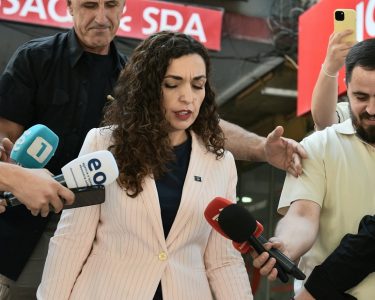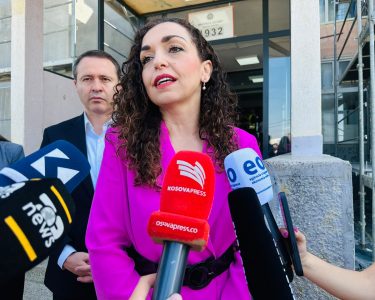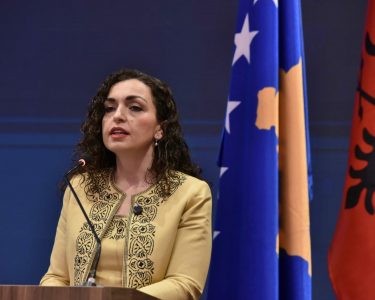


The Assembly of Kosovo cannot be blocked because of the failure to elect a deputy speaker from the Serb community, said President Vjosa Osmani. She underlined that the Assembly has a quorum, has elected the speaker and four deputy speakers, and therefore, according to her, it is functional. Osmani said that blocking the legislature would mean giving the Serb List a veto as an instrument, which would create a precedent in the future for total state paralysis.
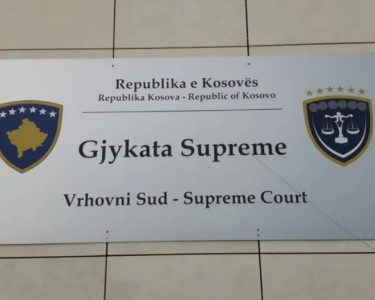
On September 5, the Constitutional Court imposed a temporary measure until September 30, through which it prohibited the elected deputies of the Assembly from taking action or proceeding with the formation of a new government.
Deputies of the Serb List on August 30 addressed the Constitutional Court regarding the vote for the Serb deputy speaker of the Kosovo Assembly. Their complaint came after the new speaker of the Assembly, Dimal Basha, put to vote separately the candidates for deputy speaker from the non-Serb minority communities and from the Serb community.
The representative from the non-Serb communities, Emilija Rexhepi, was elected deputy speaker of the Assembly, while the ten deputies of the Serb community did not manage to secure the 61 votes required to obtain this post, including deputy Nenad Rashiq.
At a press conference on Tuesday, Osmani accused the Serb List of aiming to block the state of Kosovo, while she also made public the comments sent to the Constitutional Court regarding the constitution of the Assembly.
“In conditions where the constitution of the Assembly is blocked because of just one deputy speaker, despite the fact that the Presidency has sufficient quorum and has a speaker, and the deputies have taken the oath provided by the Constitution, at that moment the legitimate representation of citizens in the highest representative institution is prevented, and consequently the exercise of sovereignty as well… Blocking the constitution of the Assembly due to the failure to elect only one deputy speaker during the constitutive session, while the Presidency has quorum, would seriously undermine not only functionality but also the very foundations on which our republic was built… The aim is that for one deputy speaker the entire state be blocked. A state without institutions is a failed state. It is the duty of each of us to block every attempt to achieve the goal of blocking the state of Kosovo… As long as the Presidency of the Assembly has quorum and the Assembly has elected a speaker in accordance with the Constitution, the Assembly as an institution must not be blocked. Such a blockage as an instrument would also in the future create a precedent for total state paralysis… For us, that position, which belongs to the Serb community, not to one party, remains for the Serb community. No one else will take that place, but it will simply be filled in a subsequent session without blocking the constitution of the Assembly,” she said.
Osmani emphasized that the principles established by the Constitutional Court itself, the text of the Constitution, the spirit of the Constitution, the decisions of the European Court of Human Rights, and the opinions of the Venice Commission require that no community or party that has the right to a deputy speaker may block the constitution of the Assembly.
“As you know, Kosovo has the most advanced system for protecting the rights of communities. But these guaranteed rights cannot be abused in a way that violates their very purpose. The entire essence of the comments we have submitted today is based on Article 57 of the Constitution of Kosovo, which stipulates that there are two prerequisites for the realization of the rights of communities. The first prerequisite is the obligation to act in accordance with the laws of Kosovo. I believe there is no need for comment that the Serb List does not do this. The second obligation is that during the effective exercise of the rights of communities, the rights of others must not be violated. It is our assessment that exercising this right in a way that blocks the Assembly infringes on the rights of all other deputies, by denying them their role and function in a constituted assembly,” declared Osmani.
She called on the Constitutional Court, in its decision-making on this case, to be guided by the protection of the interests of Kosovo and the Constitution, not allowing the Serb List to have a veto over the formation of the country’s institutions.
“Any other determination risks legitimizing dangerous procedural blockages at the level of constitutional norm, legally binding. A veto over the republic has never been the intention of the founders of the state and the drafters of the constitution. By giving such a veto to one party that represents a community, and consequently a veto not only over the Assembly but also over the government, the Republic would be reduced to a piece of paper, instead of being a daily act in defense of sovereignty. It is in the hands of this court to protect the state from the threat that looms. This decision is not about the position of the deputy speaker from the Serb community, but is related to the functionality of the state as a whole. I hope that the court, apart from the one I have mentioned earlier, will be guided by the protection of Kosovo’s best interest and in accordance with the Constitution,” she added.
Osmani was also asked about the procedure for voting deputy speakers of the Assembly from non-majority communities.
She said that voting as a package for candidates for deputy speaker of the Assembly from the non-Serb minority and Serb communities is not foreseen in the Constitution, therefore she has not submitted comments to the Constitutional Court on this issue, and considers it secondary.
“As for the issue of the package, we have not submitted comments. It seems to me a secondary, tertiary, or even lower issue… A package is not required in the Constitution of Kosovo. I have dealt with constitutional requirements; regarding rules and practices, the Assembly and the deputies may submit comments,” she said.
Speaking about the criticism and attacks on the Constitutional Court and the reaction of the internationals, Osmani said that the Constitutional Court and its judges are not some kind of “sanctity” about which no one can speak.
“The Constitution does not prohibit, nor does global practice prohibit, us from commenting on court decisions. It is not forbidden anywhere, it is a lie. Nor is criticism in relation to the court forbidden, I am talking about professional criticism… The Republic of Kosovo is a state where freedom of expression is guaranteed, and this also means the freedom to disagree with the rulings of the Constitutional Court while still implementing them. We all implement them, regardless of whether we agree or how absurd they sometimes seem to us… Let us not pretend that the Constitutional Court and its judges are some sanctity. They are a public institution and we can also talk about their work,” Osmani emphasized.
In addition, she said that at the moment when the temporary measure of the Constitutional Court expires and a decision is made in the spirit of constituting the Assembly, on that very day she will mandate the LVV candidate for prime minister.
Meanwhile, she repeated her stance regarding the judge from the Serb community, Radomir Llaban, saying that his presence in that institution represents a concern for every citizen of Kosovo.
The constitutive session of the Assembly of Kosovo was closed on August 30 by speaker Dimal Basha, even though the deputies did not manage to elect the deputy speaker from the Serb community, alongside the election of the speaker and the other four deputy speakers of the legislature.
Basha, in his justification, said that he had taken this step so that the state would not be blocked and so that the Assembly could continue its work, and consequently also form the government after the parliamentary elections.