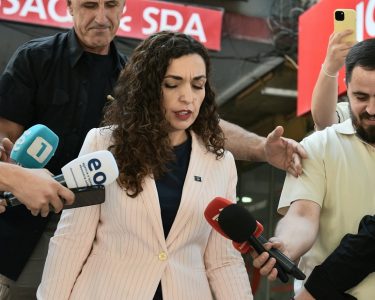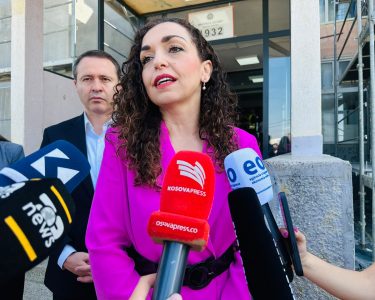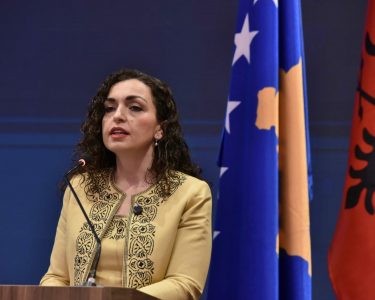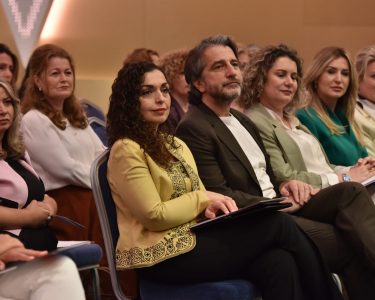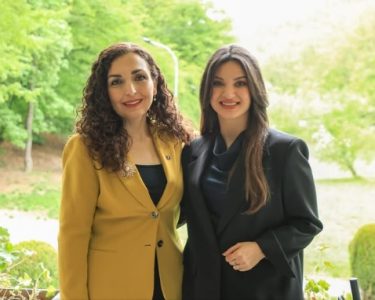

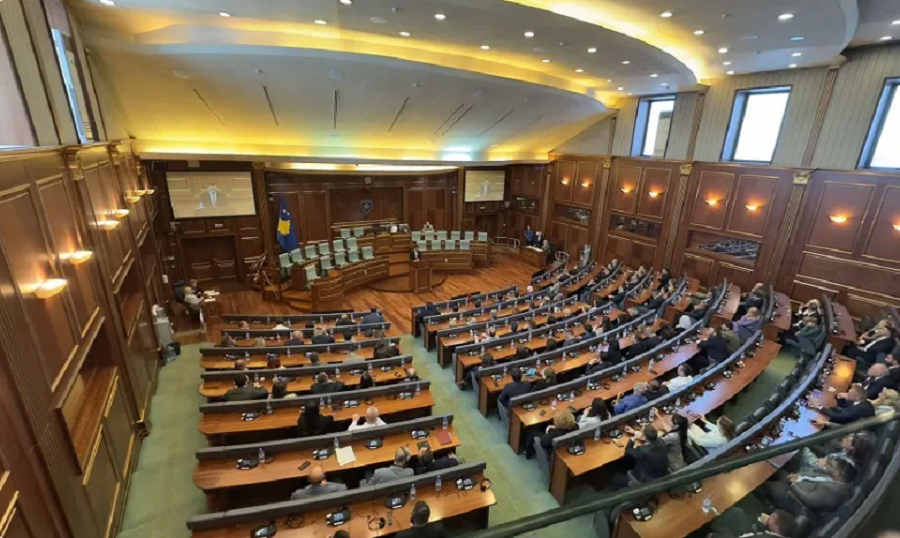
The President of Kosovo, Vjosa Osmani, is being criticized for aligning with the Vetëvendosje Movement regarding the constitution of the Assembly of Kosovo. After submitting her comments to the Constitutional Court following the Serbian List’s appeal over the failure to elect a deputy speaker from the Serbian community, political analysts say that the President’s claims that the state is being targeted for blockage over a deputy speaker are unsustainable and “resemble more of a political pamphlet,” reports KosovaPress.
On September 9, President Vjosa Osmani sent her comments to the Constitutional Court, where, among other things, she emphasized that the Assembly is functional, has elected the speaker and four deputy speakers, and that the Serbian List should not be allowed to veto the formation of new institutions after the February 9 elections.
On September 5, the Constitutional Court issued a temporary measure until September 30, preventing the elected members of the Assembly from taking actions or proceeding with the formation of a new government.
On August 30, the Serbian List deputies had approached the Constitutional Court regarding the vote for the Serbian deputy speaker in the Assembly of Kosovo.
Their appeal came after the newly elected speaker of the Assembly, Dimal Basha, submitted the candidates for deputy speakers from the non-Serb and Serbian minority communities to separate votes.
The representative from non-Serb communities, Emilija Rexhepi, was elected deputy speaker, while ten deputies from the Serbian community, including Nenad Rashiq, failed to secure the required 61 votes for the post.
On August 26, the Assembly elected Dimal Basha as speaker, three deputy speakers from the Albanian community, and Rexhepi from the non-Serb community.
According to former diplomat Blerim Canaj, President Osmani’s stance on the constitution of the Assembly was not unifying, but rather a reflection of her alignment with Vetëvendosje and the Guxo Party.
According to him, through her statements at the Tuesday press conference, the President intervened and attempted to influence a possible decision of the Constitutional Court.
“What the President sent me seemed more like a political pamphlet. Second, it was clear that the President is fully aligned with Vetëvendosje, and third, it was an intervention in the eventual decision of the Constitutional Court. At the end, she even tried to justify it by mentioning that we have the right to comment on the decisions of the Court. She was not unifying there. It would only be unifying if we consider Vetëvendosje and the Guxo List, because I didn’t see anything else. I say this because it is not right for the President to try to influence the Court’s decision, as ultimately she should ensure a decision in accordance with the Constitution of Kosovo. The President is the protector of the Constitution, so it is not good for her to give influencing opinions to the Court. I didn’t like it much, but it appeared more as her attempt to step onto a stage with something,” he said.
Meanwhile, researcher at the Kosovo Democratic Institute (KDI), Vullnet Bugaqku, told KosovaPress that the legal arguments presented by President Vjosa Osmani to the Constitutional Court are unsustainable, as so far there has been no tendency from any political subject to block the functioning of institutions.
On the contrary, according to him, the candidates presented by non-majority communities for deputy speaker of the Assembly of Kosovo were not voted on as a package.
“This is a procedural matter in which the Constitutional Court uses it as a kind of standard for collecting documentation, evidence, and evaluating institutional actors regarding the resolution of an issue before it. In this case, we have the request submitted by the Serbian List. The President has the right to give her assessment, and she evaluates that the Assembly should continue its normal function. According to the arguments used by the President, she assesses that the Constitution does not give any political subject the space or possibility to block the functioning of institutions. However, I assess that there is no tendency from any political subject to block the Assembly. On the contrary, in the sessions held, we saw a tendency not to vote in packages the candidates proposed by non-majority communities. It is up to the Constitutional Court to evaluate and decide whether any arguments or legal comments presented by the parties are sustainable,” Bugaqku stated.
The constitutive session of the Assembly of Kosovo was closed on August 30 by Speaker Dimal Basha, although deputies did not manage to elect the deputy speaker from the Serbian community alongside the election of the speaker and the other four deputy speakers.
In his reasoning, Basha said he took this action to avoid blocking the state and to allow the Assembly to continue its work, and therefore also to form the government after the parliamentary elections.
However, this procedure did not start, as the Constitutional Court issued a temporary measure until September 30, preventing deputies from taking any action regarding the Assembly and from proceeding further with the formation of the government.