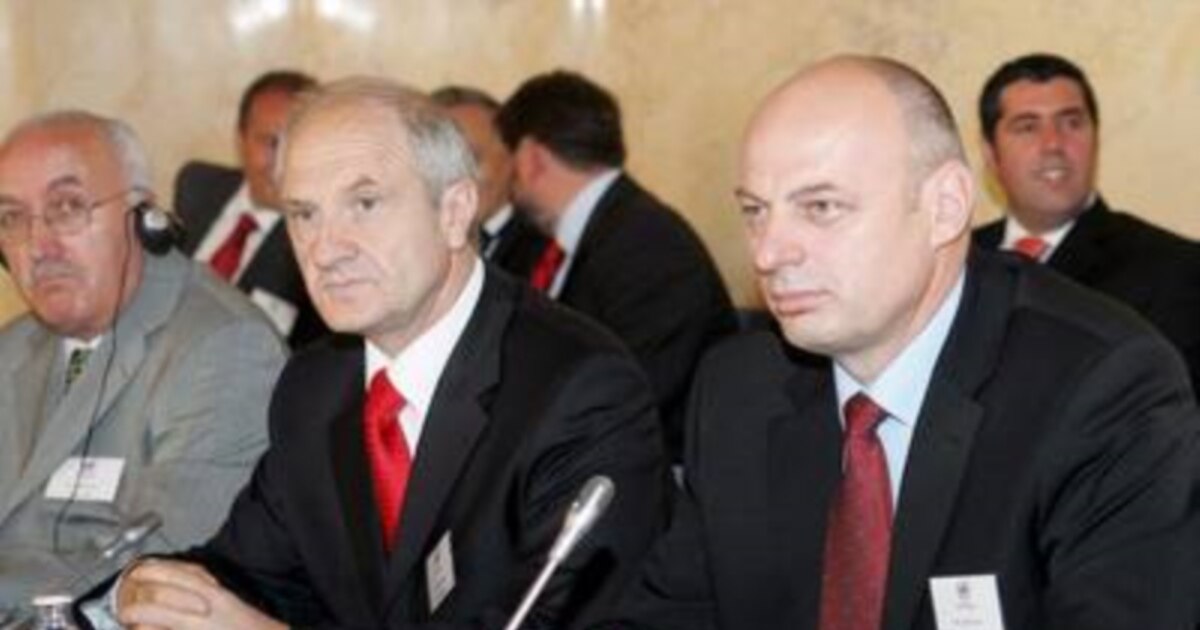
On July 24, 2006, the first meeting between the highest-ranking officials of Kosovo and Serbia since the liberation of Kosovo took place.
At the Niederösterreich Palace in Vienna, Austria, Kosovo President Fatmir Sejdiu and Prime Minister Agim Ceku met with their Serbian counterparts, President Boris Tadic and Prime Minister Vojislav Kostunica.
As expected, no agreement was reached, but UN Secretary-General’s Special Envoy Martti Ahtisaari considered the meeting a success because the leaders had met face to face.
In Kosovo, the meeting was described as the “meeting of the elephants.” The Vetëvendosje Movement protested against the talks in Prishtina.
But what happened next?
On July 27, 2006, Tomislav Nikolic, leader of the Serbian Radical Party, threatened war if Kosovo gained independence. On July 28, 2006, the International Crisis Group published a report titled “An Army for Kosovo?”, stating that Kosovo should have its own army after its status was resolved, which it said should be independence.
Meanwhile, on August 7, 2006, talks between Kosovo and Serbian authorities continued in Vienna, focusing on decentralization. The Albanian delegation was led by Veton Surroi. Following the talks, it was reported that minimal progress had been made.
On October 28 and 29, 2006, Serbia held a referendum on a new constitution that had been drafted within a few months without public debate. The constitution emphasized that Kosovo was an “integral part of Serbia.” In a report titled “Serbia’s New Constitution: Democracy Going Backwards,” the International Crisis Group criticized both the content of the constitution and the way it had been drafted.
In December 2006, it was announced that the publication of Martti Ahtisaari’s proposal for Kosovo’s final status would be postponed until January 2007, with the possibility of further delays.
January 24, 2007: The Parliamentary Assembly of the Council of Europe adopted Resolution 1533 concerning Kosovo’s final status. Some provisions of the draft resolution presented to representatives from across Europe were removed after representatives aligned with Serbia, Russia and Greece voted against their inclusion in the final resolution. One of the provisions concerned independence, stating that Kosovo should become independent in order to ensure peace in the Balkans. The adopted resolution did not contain the word “independence,” but said that a negotiated solution was preferred by the Council and that, if no agreement could be reached, a final solution would have to be imposed.
January 26, 2007: Ahtisaari met with the so-called Contact Group, comprising the United States, the United Kingdom, France, Germany, Italy and Russia. There was no media statement, and the meeting was held behind closed doors, but it was reported that Ahtisaari had informed the group that he would propose conditional independence. It was reported worldwide that Kosovo would receive conditional independence. The media reported that Russia was skeptical of Ahtisaari’s plan. NATO Secretary General Jaap de Hoop Scheffer said that NATO supported Ahtisaari’s plan regarding Kosovo’s status.
February 2, 2007: Martti Ahtisaari presented his proposal in Belgrade and Prishtina. Although the word “independence” was not mentioned, everyone, including Serbian President Boris Tadic, believed that the proposal was leading Kosovo toward independence.
February 10, 2007: The Vetëvendosje Movement organized a protest in Prishtina against the Ahtisaari package, which it believed did not provide Kosovo with independence. Some protesters began clashing with the police, which consisted of both Kosovo and international personnel. The police responded with violence against the protesters, leaving dozens injured. On February 11, it was announced that two protesters (Vetëvendosje said three) had died from injuries sustained during the police violence the previous day. The victims were Arben Xheladini (born in 1972) from Prishtina and Mon Balaj (born in 1976) from Besiana. The Council for the Defence of Human Rights and Freedoms (CDHRF) condemned the police violence against the protesters and called the actions of the police a crime. The CDHRF, together with Prishtina officials, called for a comprehensive investigation into what had happened. Following the protests, Vetëvendosje leader Albin Kurti was arrested at the movement’s offices.
February 12, 2007: Kosovo’s Minister of Internal Affairs, Fatmir Rexhepi, resigned following the violence during the February 10 protests organized by Vetëvendosje, in which two young Albanians were killed. He said he felt a moral responsibility, although neither UNMIK police nor the Kosovo Police Service were under his control. On the same day, the Council for the Defence of Human Rights and Freedoms (CDHRF) visited Albin Kurti in detention.
February 13, 2007: Mon Balaj was buried in Besiana (formerly Podujeva). The CDHRF called for the dismissal of UNMIK Police Chief Stephen Curtis.
February 14, 2007: Stephen Curtis, head of the international police in Kosovo, resigned following a request by Chief Administrator Joachim Ruecker.
February 21, 2007: New negotiations were held in Vienna with the aim of finding a compromise. Following the talks, it was announced that no progress had been made and that the positions of both sides remained unchanged: the Albanians wanted independence, while the Serbs offered autonomy. Both Ahtisaari and his aides had signaled that the negotiations were unlikely to produce results. Albert Rohan, a member of Ahtisaari’s team, told the BBC that these negotiations were the last chance for a compromise.
March 3, 2007: A peaceful protest organized by the Vetëvendosje Movement was held in Prishtina.
March 10, 2007: Talks between Kosovo Albanians and Serbs on Kosovo’s final status ended in Vienna without an agreement. Kosovo leaders Fatmir Sejdiu, Agim Ceku, Kolë Berisha and others were present, as were Serbian leaders Boris Tadic, Vojislav Kostunica and others, along with UN Special Envoy for Kosovo Martti Ahtisaari. Ahtisaari expressed regret that no agreement had been reached. He also announced that the final document on Kosovo’s status would be submitted to the UN Security Council by the end of the month.
March 15, 2007: Albert Rohan, an aide to Martti Ahtisaari, submitted Ahtisaari’s proposal on Kosovo’s status to the United Nations. According to Reuters, the plan directly proposed independence for Kosovo.
March 26, 2007: Martti Ahtisaari submitted his final report to the UN Security Council, stating that Kosovo should become independent. Nicholas Burns, U.S. Deputy Secretary of State, said that the United States supported Ahtisaari’s plan and believed Kosovo should become independent. The Serbs continued to oppose the plan. Russia made statements that could be interpreted as opposition to independence but did not mention the use of its veto.
March 29, 2007: The European Parliament adopted a resolution expressing support for supervised independence for Kosovo, with 490 votes in favor, 80 against and 87 abstentions.
April 3, 2007: The UN Security Council began reviewing Ahtisaari’s plan. Behind closed doors, UN Special Envoy for Kosovo Martti Ahtisaari presented the plan, which was expected to lead to supervised independence for Kosovo. Fatmir Sejdiu had also been scheduled to speak, but following protests from Serbia and Russia, it was decided that he would not address the council and that his speech would instead be read by the Special Representative of the Secretary-General, Joachim Ruecker. Serbia’s nationalist Prime Minister, Vojislav Kostunica, opposed the plan and called for new negotiations and new chief negotiators. Western countries such as the United States, the United Kingdom and France supported Ahtisaari’s plan.
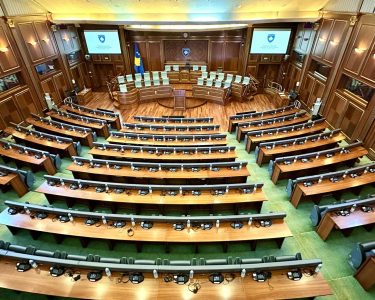
April 5, 2007: The Kosovo Assembly adopted a declaration on determining Kosovo’s status, supporting the proposal of chief negotiator Martti Ahtisaari.
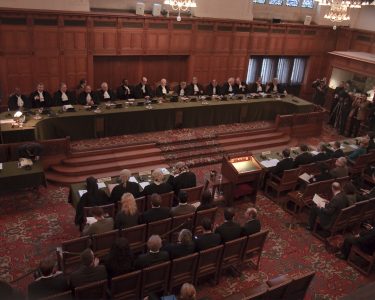
April 13, 2007: The UN Security Council announced that it had decided to send a fact-finding mission to Kosovo at the end of April, following a request from Russia, which holds veto power on the council.
April 17, 2007: U.S. Deputy Secretary of State Nicholas Burns said in a speech before the Council on Foreign Relations in Washington that the United States considered independence the most appropriate option for Kosovo and expected the UN Security Council to approve the independence plan presented by UN Special Envoy Martti Ahtisaari. He added that the autonomy offered by Serbia should have been offered 12 years earlier, not at that point. Kai Eide, a senior official at Norway’s Ministry of Foreign Affairs, said in Prishtina that Norway supported Ahtisaari’s plan for independence and that he did not intend to become a mediator, as requested by the Serbs.
April 25, 2007: The fact-finding mission, consisting of 15 ambassadors or deputy ambassadors to the United Nations representing Security Council member states, arrived in Brussels, where they held meetings with, among others, NATO Secretary General Jaap de Hoop Scheffer and European Union officials. Scheffer told the ambassadors that NATO supported Ahtisaari’s plan to grant Kosovo independence. The ambassadors came to Kosovo following a request from Russia, which holds veto power on the UN Security Council, to gain a closer understanding of the situation of minorities. The participating ambassadors represented the United States, France, the United Kingdom, China, the Republic of the Congo, Ghana, South Africa, Qatar, Indonesia, Slovakia, Panama, Russia, Belgium, Italy and Peru.
Developments continued until Kosovo declared independence on February 17, 2008.