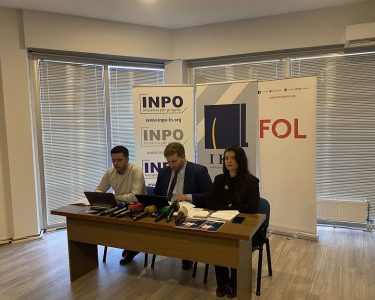
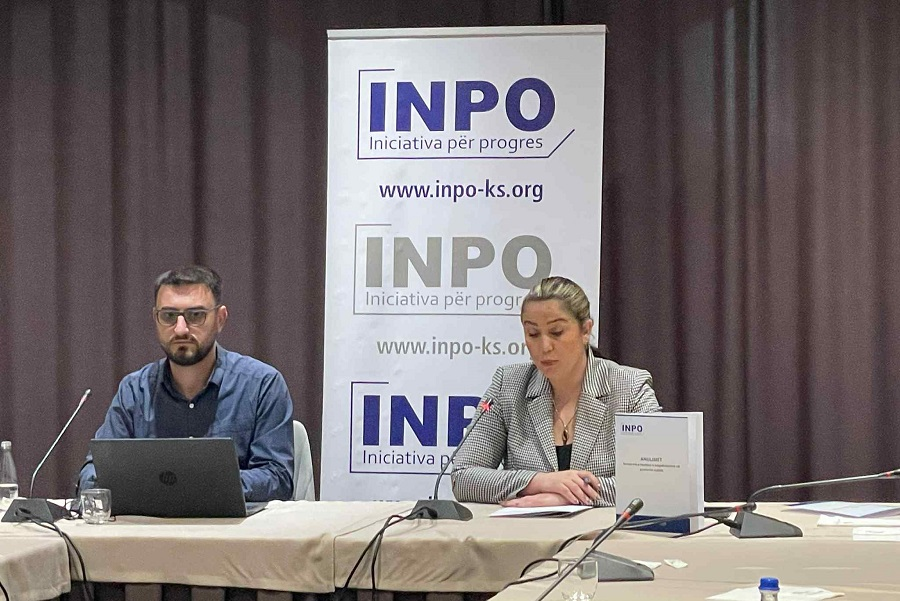
Over 90 percent of tender cancellations occur after the opening of bids, according to a report by the Progress Initiative (INPO) titled “Cancellations – the Quietest Form of Misuse in Public Procurement.”
This report was published as part of Anti-Corruption Week 2025, co-organized by INPO, the Kosovo Justice Institute (IKD), and the FOL Movement.
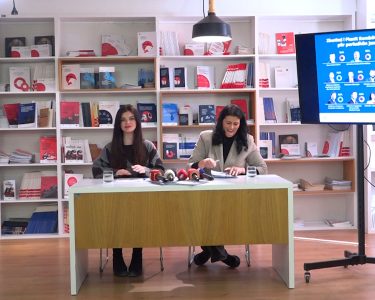
The Executive Director of INPO, Albulena Nrecaj, stated that the report highlights the most common reasons for cancellations.
“Today’s report, which will be published, contains a full analysis of tender cancellations over the past three years, presenting major tenders, the most frequent reasons for cancellations, the institutions with the highest number of cancellations, as well as structural problems that repeat year after year, such as poor planning, non-standardized dossiers, and lack of professional justification during tender cancellations. The report assesses the impact of cancellations on procurement efficiency, project implementation, and the integrity of the system, highlighting an increased risk of negotiated procedures and loss of competition,” she said.
Researcher Arbër Kabashi noted that the report provides an in-depth analysis of public procurement cancellations in Kosovo for the period 2023–2025.
“In 2023, a total of 2,784 procurement activities were published and canceled. In percentage terms, 23 percent of the activities were canceled by number, and 26 percent by value. In 2024, 2,720 procurement activities were canceled, also representing 23 percent of the activities initiated that year. Meanwhile, in the January–September period of 2025, 1,485 procurement activities were canceled. This data is limited to September 30, as our monitoring period ended then. There is no significant difference expected for 2025, as the total number of procurement activities has decreased, but our monitoring only covers the first nine months,” he explained.
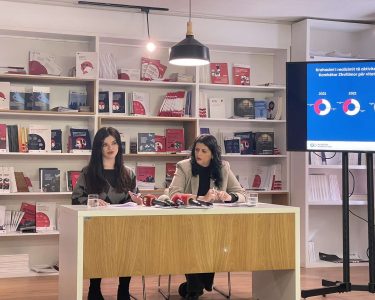
The INPO report shows that 94 percent of procurement activities are canceled after the bid-opening process.
“In 2023, six percent of procurement activities were canceled before bid opening, while 94 percent were canceled after bids were opened. The same situation occurred in 2024, with five percent canceled before bid opening and 95 percent after. Similarly, in 2025, six percent of tenders were canceled before bid opening, and 94 percent after. In total, 94 percent of cancellations happen after the bid-opening process concludes. The data was collected both by number and value. Financially, the largest cancellations are linked to works and supply contracts, which together account for about 75 percent of the canceled contracts,” he said.
“Kabashi highlighted a Ministry of Health tender for the construction of the Emergency Center valued at €22 million. This project faced delays due to appeals procedures and slow evaluation by the contracting authority, and ultimately it was canceled. Another tender involved the Ministry of Defense for food supply, valued at €13 million. Additionally, the Municipality of Gjilan’s tender for the construction of the city stadium, valued at €15 million, was canceled and later re-initiated by another contracting authority, in this case, the Ministry of Culture, Youth, and Sports,” he concluded.
Two other tenders mentioned in the conference were competitive negotiated procedures initiated by the Kosovo Energy Corporation (KEK) for food supply. Researcher Arbër Kabashi noted that these cases also ended in cancellation.
The report recommends substantial improvements in procurement planning, standardization and review of technical specifications, greater transparency in the justification of cancellations, and the creation of an early-warning mechanism.
INPO researcher Arbër Gashi discussed the five highest-value canceled tenders.
“Kabashi highlighted a Ministry of Health tender for the construction of the Emergency Center valued at €22 million. This project faced delays due to appeals procedures and slow evaluation by the contracting authority, and ultimately it was canceled. Another tender involved the Ministry of Defense for food supply, valued at €13 million. Additionally, the Municipality of Gjilan’s tender for the construction of the city stadium, valued at €15 million, was canceled and later re-initiated by another contracting authority, in this case, the Ministry of Culture, Youth, and Sports,” he concluded.
Two other tenders mentioned in the conference were competitive negotiated procedures initiated by the Kosovo Energy Corporation (KEK) for food supply. Researcher Arbër Kabashi noted that these cases also ended in cancellation.
The report recommends substantial improvements in procurement planning, standardization and review of technical specifications, greater transparency in the justification of cancellations, and the creation of an early-warning mechanism