
Albanian national activist Adem Demaci was a structural factor in the consolidation of the Kosovo Liberation Army in terms of military aspects and nationwide mobilization for the just war. And, according to him, if Kosovo’s politicians respected and valued Demaci’s life and work, they would not so often need to turn to the Constitutional Court and the ballot boxes.
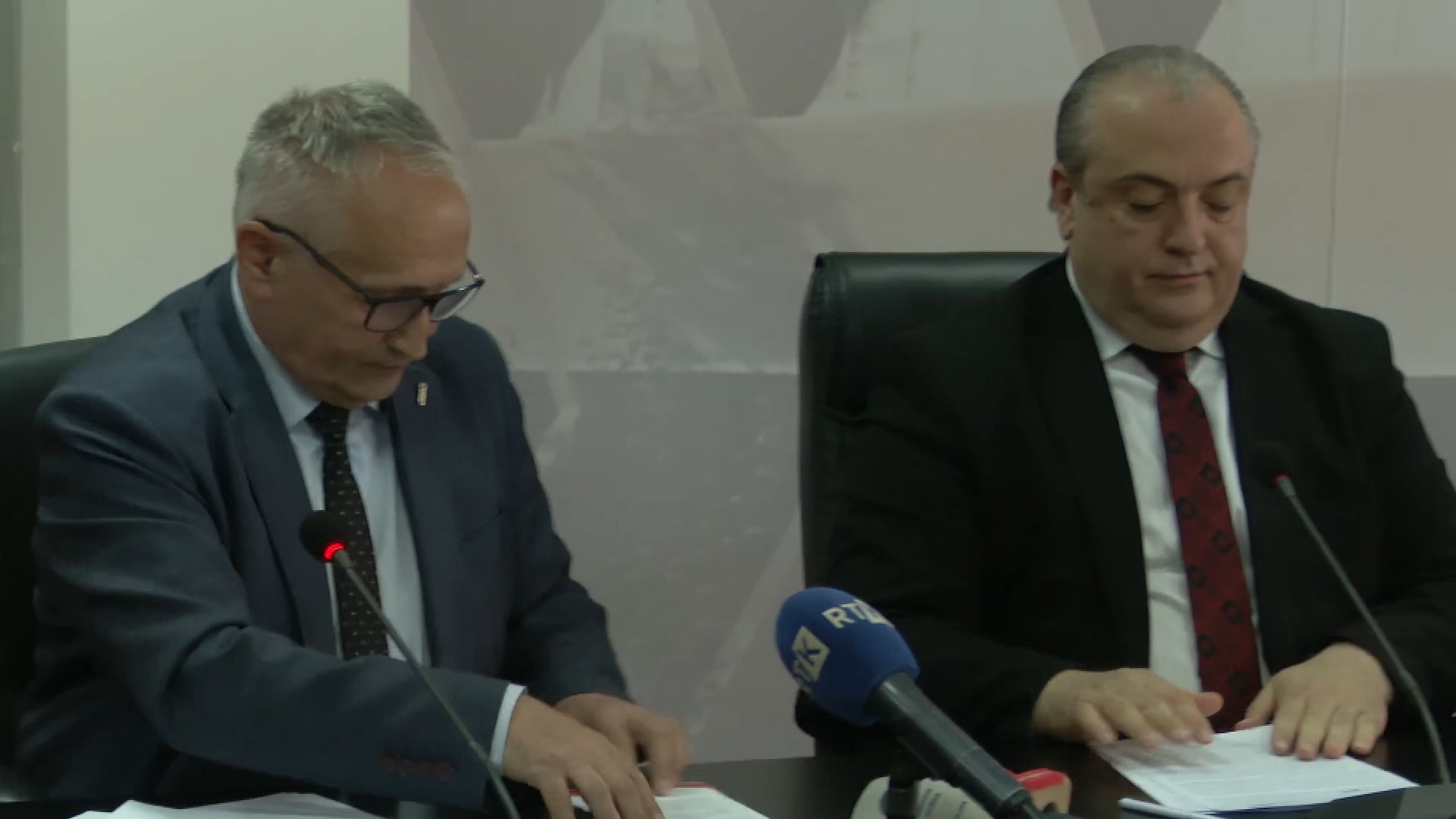
This was stated at the scientific roundtable organized by the Institute of Albanology and the Institute of History “Ali Hadri” on the occasion of the 90th anniversary of the birth of the national activist Adem Demaci.
The acting director of the Institute of Albanology, Fadil Grajcevci, said that without the name of Adem Demaci, the modern history of Kosovo cannot be written.
According to him, if Kosovo’s politicians respected and valued Demaci’s life more, they would not so often turn to the Constitutional Court, and citizens would not need to so frequently go to the ballot boxes.
According to the acting director of the Institute of Albanology, political leaders, if they understood and respected Demaci’s work, in these times of crises would be more selfless.
“Our leaders, if they understood, respected and valued the life and work of Adem Demaci, in this time of wars in different parts of the world, which are also influencing new political and military alignments and the most important political and military alliances in the world, would be more selfless, and party and clan interests, which currently dominate, would not overshadow the much more important interests of our future and those unifying interests,” he said.
The director of the Institute of History “Ali Hadri”, Teuta Shala-Peli, stated that Demaci’s figure holds an important place in the political, social, and cultural history across all Albanian-inhabited territories.
Shala-Peli said that Demaci was a symbol of our resistance for freedom.
“A tireless activist for the freedom and rights of Albanians. His long resistance in the prisons of former Yugoslavia made him a symbol of resistance and sacrifice for the ideal of freedom. Therefore, the organization of this scientific roundtable has a special importance; it aims, through academic and scholarly approaches, to analyze and shed more complete light on the dimensions of Adem Demaci’s activity as a political activist, as an ideal and symbol of resistance for freedom,” she declared.
Professor Hysen Matoshi described the national activist as a sui generis representative of the people’s voice, who, as he said, did not submit to any compromise or deal of political elites.
According to Matoshi, with the figure of Adem Demaci, Albanians can always be proud in front of the world.
“Adem Demaci is an important figure of our national history of the second half of the 20th century, with whose profile Albanians can present themselves before the world and take pride in the achievements he initiated as an ideologue and engaged intellectual—achievements that fundamentally changed their status in the region and beyond. I am convinced that his multi-layered work and activity has not been presented at the proper level of values and ideals, especially regarding the impact he had on the overall course of historical developments. This, in my opinion, has happened due to a prevailing mindset in our social life that equates a prominent historical personality with authority exercised through political power for a certain period of time. Adem Demaci chose to remain a sui generis representative of the people’s voice; he wanted to remain a political and corrective voice of society and the nation, in some cases, who did not answer to any leader or political faction for his unique actions and views. Because of this stance—his refusal to submit to compromises, let alone deals—even our political elites have hesitated to keep him close,” he said.
Regarding the role of the activist Adem Demaci in political representation and the mobilization of the war effort, Professor Arbër Kadri stated that Demaci was a structural factor in the consolidation of the Kosovo Liberation Army in military terms and in the nationwide mobilization for the just war.