
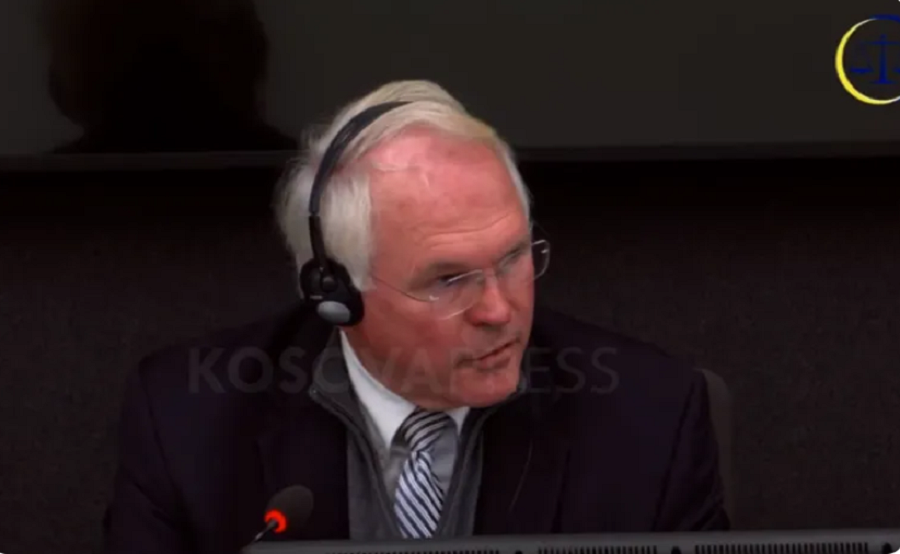
The U.S. Special Envoy during the war in Kosovo, Christopher Hill, will continue today his testimony in the court session against the former KLA leaders before the Specialist Chambers in The Hague.
Hill began his testimony two days ago where he explained how he started dealing with the Kosovo issue. He said that this was a request from the former U.S. Secretary of State, Madeline Albright, who made this request to him at that time.
“First of all, I became involved [in the Kosovo issue] by the U.S. in May 1998, I received a phone call from Madeline Albright who asked me to take on the post of Special Envoy in Kosovo, where I reported to the Secretary of State, Madeline Albright. I understood my role that we should provide support and a political solution and we should help to reduce the growing violence there. I tried with colleagues from the very beginning to build a plan of autonomy in order to restore Kosovo’s autonomy and in such a way that it would have its own governance. This was the main track we were following with Kosovo and Serbia,” he said initially.
In addition, Hill also clarified the meeting of the former president, Ibrahim Rugova with Milosevic, saying that this meeting was a request of the ambassador, Holbrooke.
“This was the first time when ambassador Holbrooke went to Prishtina, I went with him and we sat with President Rugova, even though we had not planned it in advance, the ambassador thought it would be a good idea for President Rugova to meet with Milosevic in Belgrade because he hoped that this meeting would solve many problems, I was more skeptical. The meeting happened in Belgrade at the end of May or beginning of June. I think this damaged him because he didn’t think there was a strong opinion in Kosovo that the meeting with Milosevic could help the situation in Kosovo, he was worried but didn’t want to be in a situation where he refused a suggestion from the ambassador. Rugova was the informal leader of all Kosovo and he thought that opposition against him was growing because there was a perception that he was not making progress. He was going through a difficult moment to legitimize his leadership and the feeling of achieving something in relation to Serbia, because Bosnia had a way out thanks to the Dayton Agreement,” said Hill.
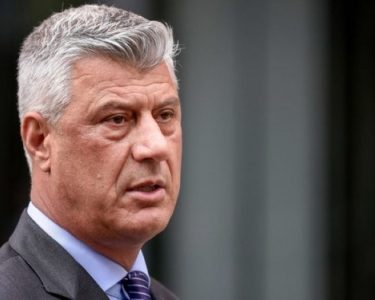
Furthermore, Hill recalled his first meeting with the former president, Hashim Thaçi, and the first impressions that Thaçi gave him during that meeting.
Hill says that after the meeting with Thaçi, he had the impression that Thaçi was more suitable for an academic environment than for a military one.
The American diplomat added that from the meeting with Thaçi he did not have the impression that Thaçi was leading and had control over the KLA.
“I remember the first meeting (with Thaçi), but I don’t remember because I said that we were sitting on the floor, because I remember that we were sitting on some benches, and I remember that they came with guns in their hands and I remember that I told them that ‘we don’t feel comfortable negotiating with people who have guns in their hands,’ and then I asked them to keep the weapons outside the house. He spoke softly, thoughtfully and I remember the impression that he was more suitable for an academic environment than for a military one. He was among three people who came, but I didn’t have the impression that he was in control (of the KLA),” said Hill.
Hill continues his testimony today from 09:00.
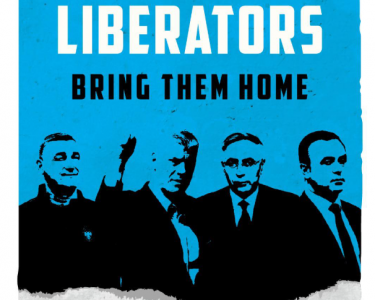
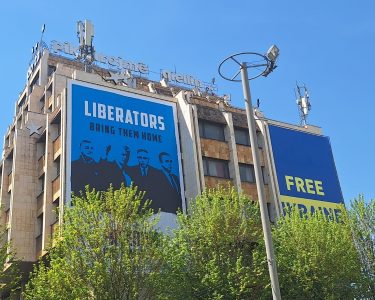
Let us recall that Hashim Thaçi, Kadri Veseli, Jakup Krasniqi, and Rexhep Selimi have been in detention since November 2020, accused of alleged war crimes for which they have pleaded not guilty.