The Director of the Kosovo Police, Gazmend Hoxha, stated that from the criminal group responsible for the terrorist attack at the Ibar Lepenc canal, two other serious cases have also been uncovered. According to Hoxha, this group has operated in Kosovo for a long time and was organized by Serbia’s intelligence services.
In an interview with KosovaPress, Hoxha emphasized that there are two other cases under investigation, but he did not provide details about their exact nature.
When asked if there are other suspects for the attack on the evening of November 29 last year at the Varagë canal in Zubin Potok, Hoxha confirmed that there are, and he added that “other investigative leads are being followed.”
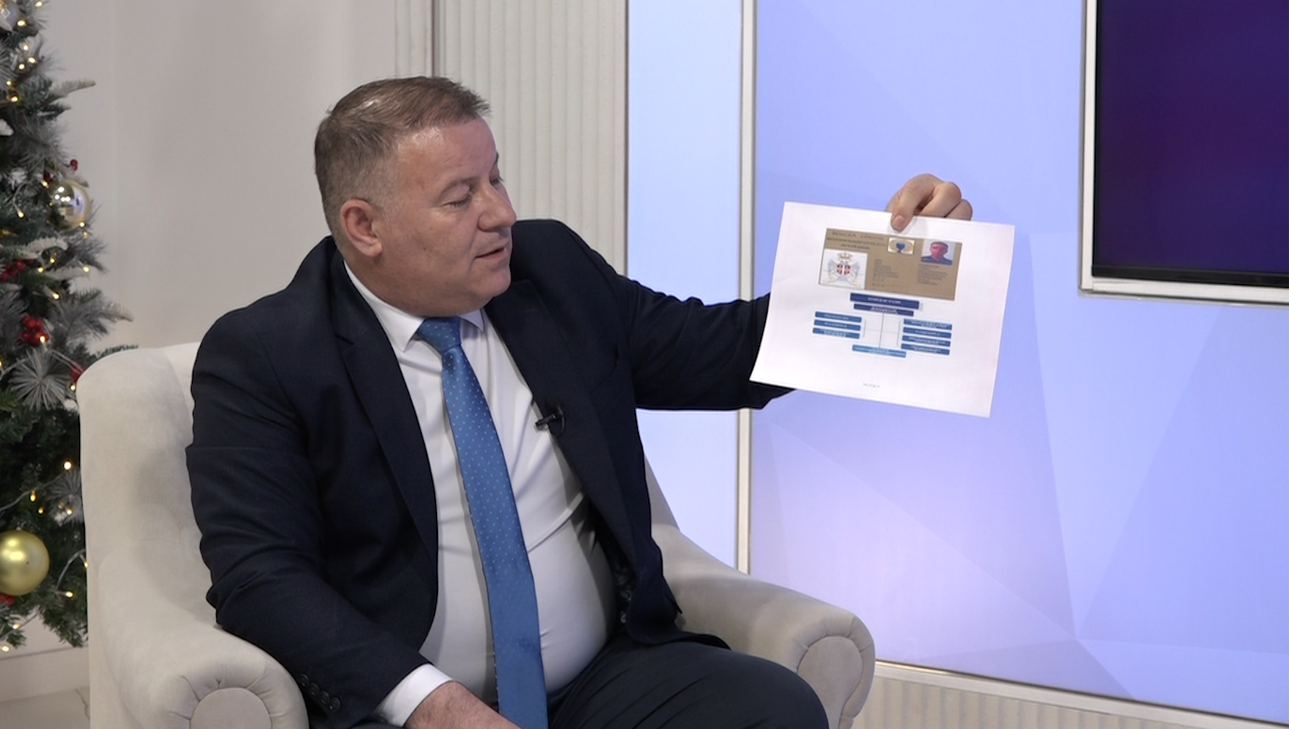
“What is important to document, if your camera can capture it, is that this is one of the individuals who was arrested. This booklet is a military ID showing that this person was part of the intelligence service of the Serbian Army. With the rank of toger, which they call poručnik. This shows their structure – a direct link to Serbia, to Serbia’s security institutions in this case. There are other individuals; they have been documented, and other investigative leads will be followed. What is important is that we have documented the connection of these individuals with others. In this case, we also have two other cases that are under investigation because the equipment, weapons, and devices found with these individuals are linked to two other serious criminal offenses that occurred in Kosovo after the war. We cannot disclose the details at this time because the investigation is ongoing, and we need to coordinate with the Special Prosecution regarding publication. Importantly, three serious cases have been uncovered by this criminal group. This group has operated for a long time. The weapons, target selection, knowledge of how to place explosives, quantity, and withdrawal methods all demonstrate that this was not a simple act but a planned, criminal operation, highly organized by the secret services of a neighboring state, with the goal of harming and creating chaos in our country, Kosovo,” Hoxha told KosovaPress.
Hoxha described cooperation with the Federal Bureau of Investigation (FBI) in investigating the case. To increase credibility, he sent a letter to the U.S. ambassador in Prishtina requesting FBI support. After a few days, officers arrived in Kosovo to monitor and assist the investigation. Based on searches conducted at the homes of the accused, Hoxha said “traces of how the explosives were used” were found.
“The individuals responsible have now been scientifically documented as linked to the explosion. The Kosovo Police carried out searches that day based on information they had and with authorization from the Special Prosecution. We had support from the special prosecutor in this case. In their homes and accompanying locations, we found evidence linked to the criminal act at Ibar Lepenc, in this terrorist attack. The evidence was sent for examination to a forensic laboratory, not Kosovo’s, and it was documented that the DNA found on the detonator used to trigger the explosive matched DNA from individuals we had previously arrested during searches on November 30, one day after the Ibar Lepenc attack. Other pieces of boots found at the homes of suspects were also taken for laboratory examination by the FBI. We received exceptional support from the FBI and the U.S. embassy to increase credibility in the investigation. If you recall, one day after the Ibar Lepenc attack, Serbian institutions and politics began criticizing the Kosovo Police as if they had carried out the attack themselves, and attempted to create the impression that Kosovo Police were involved, following the logic they have used in the past in Kosovo, starting from the BIA and police. I am referring to the Panda case in Peja, thinking that the Kosovo Police is like that too,” he emphasized.
Hoxha stated that the Ibar Lepenc explosion is among the most serious cases for the Kosovo Police.
“This case is one of the most serious. After the Banjskë attack, it is the most serious and critical case the Kosovo Police have faced. It must be understood that this was not carried out by two or three individuals. This proves that the Ibar Lepenc attack was a well-planned operation, organized in advance by security institutions and intelligence services of Serbia, using individuals in their service to cause major damage to Kosovo, our country, and to push it into economic and energy collapse, creating total insecurity in northern Kosovo,” he added.
Hoxha further emphasized that months of investigation were conducted for this attack, which “aimed to destabilize the entire situation in the north of the country.”
“The biggest case is the latest one, the indictment related to Ibar Lepenc, because we spent months investigating it. It was a very large and serious attack aimed at destabilizing the entire situation in the north, the economy of Kosovo, and causing an energy collapse, affecting industries supplied by the Ibar Lepenc canal. The production of electricity, the central heating supplied entirely by Kosovo A and Kosovo B power plants, was at risk. Our police had to perform exceptionally. I am truly satisfied with the professionalism shown by our officers that night because the response was highly urgent, involving all responsible institutions, the Ibar Lepenc facility, Ministry of Industry and Economy, Kosovo Police, Ministry of Internal Affairs, and the fire brigade. Everyone organized during the night to ensure that electricity production was not interrupted for a single hour, and they managed to repair the damage from the explosion in record time,” he stated.
One year after the attack, the Kosovo Special Prosecution filed an indictment against three individuals following an investigation conducted in cooperation with the Kosovo Police and international partners for the attack on critical infrastructure at the Ibar Lepenc canal.
The accused are: Jovan Viçentijeviq, Dragisha Viçentijeviq, and Igor Dimiviq.
The indictment charges them with: “Endangering the constitutional order by destroying or damaging public installations and equipment” under Article 122 in connection with “committing a terrorist act,” “illegal possession of weapons,” and “espionage.”
The Ibar Lepenc canal explosion, which Kosovo authorities assessed as a terrorist act orchestrated by Serbia, occurred on November 30, 2024.