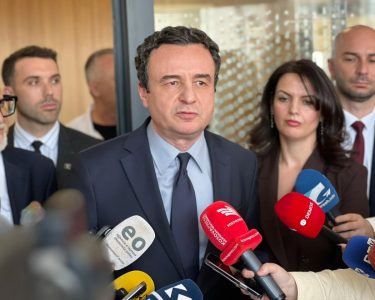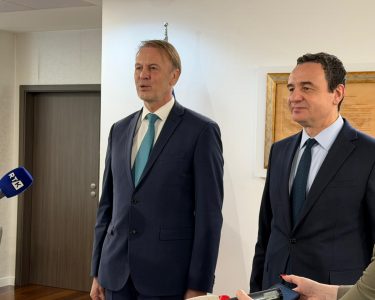
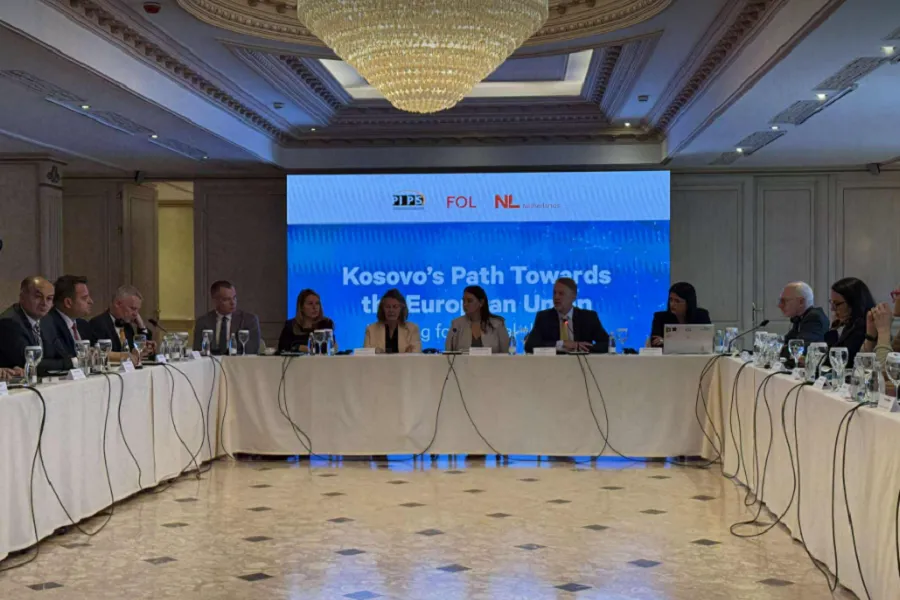
Diplomatic representatives of the European Union member states in Kosovo called for the swift formation of new institutions in the country following the parliamentary elections on February 9. They emphasized the need for Kosovo to have institutions capable of addressing the responsibilities of reforms in the European integration process as well as implementing commitments in the dialogue with Serbia, including the establishment of the Association of Serb-majority municipalities in Kosovo.
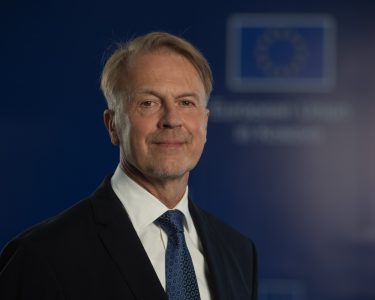
The Head of the European Union Office in Kosovo, Aivo Orav, said they need a partner in the executive power to discuss the next steps on how Kosovo can get closer to the European Union.
He stressed that moving forward requires good and close cooperation with Kosovo authorities, while reiterating that the measures against Kosovo have begun to be gradually lifted.
Emphasizing the need for the establishment of the Association, Orav gave a message to Kosovo to “not always look at what Serbia is doing, but to do its own homework.”
“We need a partner in the executive power. We need a partner with whom we can talk about the next steps to get closer to the EU. We hope the government will be formed as soon as possible. The closure of institutions in the north, again, the EU has made its position clear, privately, officially, and publicly. The measures against Kosovo—the EU High Representative, Kaja Kallas, announced a few days ago that there will be a gradual lifting of the measures against Kosovo, and this lifting has started. But to move forward, we need good and close cooperation with the authorities in Kosovo. One topic that everyone talks about but is not so popular among politicians in Kosovo is the Association of Serb-majority municipalities. The EU’s position is clear that it must be established and it is better to do it as soon as possible so we can move forward,” he said during the discussion at the conference “Kosovo towards the European Union: The road to a solution,” organized on Wednesday by the PIPS Institute and FOL.
Part of this discussion was also the German ambassador to Prishtina, Jorn Rohde, who said that citizens in Kosovo are “politically frustrated and irritated by the political deadlock created.”
He mentioned that tomorrow will be the 23rd continuation of the session for the constitution of the Assembly, and he asked what image this gives in their eyes.
“People are politically frustrated and irritated. Tomorrow we will have the 23rd session. What image is this in our eyes? I don’t want to go into it. Daniela mentioned it yesterday, but all of us call in our own ways. But in the end, politicians have to do their homework. We have had senior EU representatives, Costa and Kallas, and the messages were clear—do your homework,” he added.
Meanwhile, the French ambassador to Kosovo, Oliver Guerot, addressing the need to establish new institutions after the February 9 elections, conveyed two messages.
He said Kosovo is not isolated, except “if it isolates itself by not listening to friends and finding reasons and excuses not to respect commitments made in the dialogue process.”
Guerot reiterated that the draft statute of the Association prepared by the European Union is not a Republika Srpska.
“I have two simple messages. The first message is that Kosovo is not isolated except if you isolate yourselves. QUINT has supported Kosovo for years and recently I have read our legal opinion at the International Court of Justice explaining why France has historically supported Kosovo. You are not isolated. Kosovo is not an island but is in the middle of the region… You are not isolated except if you isolate yourselves. How does one isolate oneself? Simply by not listening to friends, by cultivating a form of self-righteousness and finding different reasons and excuses for not respecting commitments made. I repeat Jorn’s call—listen to your friends,” he emphasized.
A call for the formation of new institutions in Kosovo was also made by the Dutch ambassador to Kosovo, Karin Boven.
“Now it is important to demonstrate commitment and ensure that a new government is formed, so that the determination for EU integration takes shape through concrete results,” she concluded.
The constitution of the Assembly has stalled because the Vetëvendosje Movement is unable to secure the 61 votes needed to elect Albulena Haxhiu as Assembly Chairperson.
Opposition parties so far are seeking another candidate, as they consider Albulena Haxhiu an unacceptable name./KosovaPress