
The Kosovo Investment and Enterprise Support Agency (KIESA) has signed agreements worth €8.9 million with 198 beneficiary enterprises through the grant scheme for the purchase of advanced production and processing machinery, product certification, and the Information and Communication Technology sector.
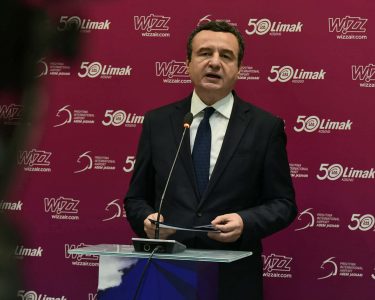
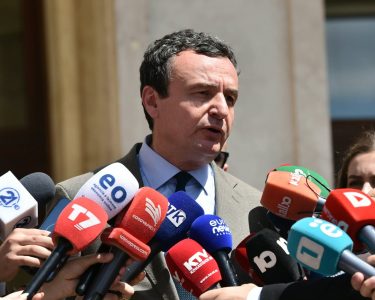
Acting Prime Minister Albin Kurti stated that this financial support for micro, small, and medium enterprises is evidence of their vision for good governance and sustainable development.
He added that local enterprises are the main pillars for Kosovo’s sustainable development.
“In line with our vision for good governance, sustainable development, welfare, security, and equality, creating a favorable business environment and increasing the competitiveness of our enterprises remain unchanged priorities. With this new investment, we are providing direct support to unleash the potential and growth of the local industry. Specifically for those who are key contributors to further economic, social, and environmental development in our country. These 198 enterprises are beneficiaries of three KIESA grant schemes. The first is the grant scheme supporting manufacturing enterprises with export potential, for the purchase of production machinery — 129 beneficiary enterprises with a total value of €7.3 million. The aim of this support scheme is to expand production and processing capacities and increase their competitiveness for the international market. The second is the grant scheme supporting enterprises operating in the information and communication technology sector, with 42 beneficiary enterprises valued at €1 million. The third is the grant scheme for product certification, with 27 beneficiary businesses valued at €600,000,” he said.
Acting Minister of Industry, Entrepreneurship, and Trade, Rozeta Hajdari, stated that the grant allocation process has been transparent and fair, noting that in the past, according to her, the practice of grant allocation had been problematic and non-transparent.
She emphasized that the grant for purchasing advanced production and processing machinery has increased to €7.3 million from €500,000 in the past.
He added that local enterprises are the main pillars for Kosovo’s sustainable development.
“In line with our vision for good governance, sustainable development, welfare, security, and equality, creating a favorable business environment and increasing the competitiveness of our enterprises remain unchanged priorities. With this new investment, we are providing direct support to unleash the potential and growth of the local industry. Specifically for those who are key contributors to further economic, social, and environmental development in our country. These 198 enterprises are beneficiaries of three KIESA grant schemes. The first is the grant scheme supporting manufacturing enterprises with export potential, for the purchase of production machinery — 129 beneficiary enterprises with a total value of €7.3 million. The aim of this support scheme is to expand production and processing capacities and increase their competitiveness for the international market. The second is the grant scheme supporting enterprises operating in the information and communication technology sector, with 42 beneficiary enterprises valued at €1 million. The third is the grant scheme for product certification, with 27 beneficiary businesses valued at €600,000,” he said.
Acting Minister of Industry, Entrepreneurship, and Trade, Rozeta Hajdari, stated that the grant allocation process has been transparent and fair, noting that in the past, according to her, the practice of grant allocation had been problematic and non-transparent.
She emphasized that the grant for purchasing advanced production and processing machinery has increased to €7.3 million from €500,000 in the past.
“During this government mandate, we identified many harmful business practices in Kosovo. One of them was the practice of grant applications. The process was not transparent at all, with all documents being submitted in envelopes to KIESA, and in most cases, the beneficiaries were not manufacturing enterprises, but many of them were trading companies. Through work and dedication, we eliminated these harmful practices,” Hajdari declared.
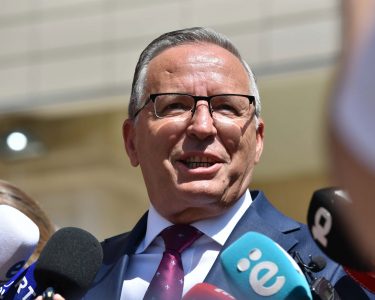
Meanwhile, KIESA Director Zef Dedaj stated that out of the 198 beneficiary businesses, 93 are businesses that are receiving support from the state budget for the first time, while the other 105 businesses had not received grants in the past three years.
“Among these 198 businesses, it is worth noting that 93 are new beneficiaries, not new in establishment but in receiving support. Accordingly, they have never benefited from the state budget, whether municipal or national. The other 105 businesses had at least not received support from KIESA in the last three years,” he emphasized.
After the speeches, the business representatives signed agreements with KIESA.