
The imposition of an interim measure by the Constitutional Court regarding the decree on the dissolution of the Assembly does not prejudge the final outcome of the process, says lawyer Ardian Bajraktari.
According to him, there have been cases in the past where the Constitutional Court imposed an interim measure but ultimately concluded that the contested act was in line with the Constitution.
He added that it remains to be seen how the Constitutional Court will approach this issue, emphasizing that Article 86, paragraph 2 of the Constitution clearly states that the election of the president must take place no later than 30 days before the end of the mandate of the current president. However, according to him, in this specific case the provision is silent, and therefore the Court may interpret it in a systematic manner.
Therefore, Bajraktari expects the Constitutional Court to extend the 60-day deadline for the election of the president, and only afterward proceed to elections if a president is not elected.
“Imposing an interim measure in no way prejudges the outcome of this process, because even in the past there have been cases where, for example, in the case of the decree of the Hoti government, as it was known, there was also an interim measure, but at the end of the process the Court concluded that the decree was in accordance with the Constitution. It remains to be seen how the Constitutional Court will approach this issue, because it is worth emphasizing the fact that according to Article 86, paragraph 2 of the Constitution, it is clearly stipulated that the election of the president must take place no later than 30 days before the end of the mandate of the current president. However, the provision in this case is silent and therefore it is important to note that within this mandate, within this period, at least formally the procedure has begun. Then it remains for the Court, if based on a systematic interpretation of constitutional provisions it considers it reasonable and grounded, to return the issue and possibly extend the 60-day deadline until its completion, so that elections can then be held,” he said.
Meanwhile, sociologist Artan Muhaxhiri assessed that the Constitutional Court has become the main address where politicians seek solutions to political crises. According to him, this is happening due to the lack of compromise and political agreements among parties.
He described this as a delegation of political powers to the Court and an indicator of the lack of political culture, adding that political blockades are costing Kosovo with consequences in politics and the economy, both domestically and internationally.
“Unfortunately, the Constitutional Court has become the only address for our politicians who fail to behave normally, to make compromises and reach typical political agreements. For this reason, it is now understood that all blockades will be resolved by the Constitutional Court. This is a delegation of political powers to this court and it is very disappointing that political parties and political leaders do not have even the slightest will, courage or knowledge to overcome these blockades through political behavior and political culture, so that Kosovo does not pay such a high price with precedents, blockades and multidimensional damages in politics and the economy, both internally and externally,” Muhaxhiri said.
Meanwhile, Bajraktari clarified that the government is currently continuing to function with full powers, while the activity of the Assembly is suspended.
According to him, the operative part of the ruling clearly states that the Assembly is prohibited from carrying out any activity until another decision is issued by the Constitutional Court.
“No, the government has full powers, while the Assembly is suspended due to the fact that, as stated in point 1 of the operative part of the ruling, which in fact is the ordering part in this case, the Assembly is prohibited from any work or activity. Therefore, until another decision by the Constitutional Court, the Assembly and its activity, namely its work, is blocked, just as the decree and the consequences of the decree on the dissolution of the 10th legislature are also suspended,” he added.
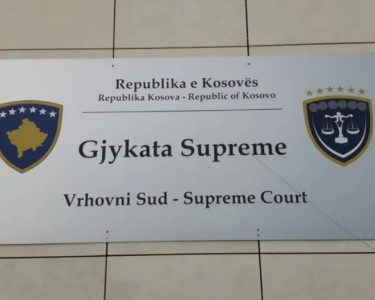
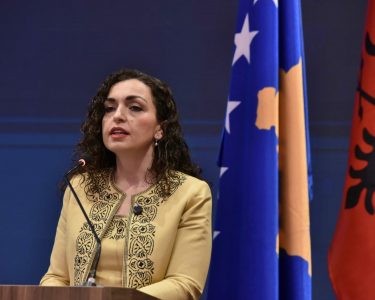
Since the Assembly of Kosovo did not elect a president by March 5, President Vjosa Osmani dissolved the tenth legislature through a decree. However, following a complaint from the Government of Kosovo, the Constitutional Court on March 9 imposed an interim measure until March 31.
The Constitutional Court also suspended the work of the Assembly ex officio. With this decision, the Court temporarily banned any activity of the Assembly and suspended the legal effects arising from the decree on the dissolution of the tenth legislature.